Showing posts with label 1976 murders. Show all posts

April 23, 2021

The Crimes of Patricia Columbo: The True Story of Illinois' Longest-Serving Female Inmate


(photo source)

A Family Is Annihilated 

It was Thursday, May 6, 1976 when the maroon 1972 Thunderbird was spotted parked at 140 South Whipple in west Chicago.  The officer responding to the suspicious vehicle report arrived around two o'clock and noted that the car had an Elk Grove Village sticker in the front window.  There were no hubcaps, the right front window had been smashed and covered by a piece of cardboard and the ignition had been pulled.  Seeing as how the car hadn't been stripped, though, the officer believed it had been stolen by amateurs.  A check, though, revealed that the car had not been reported stolen and was registered to a Frank Columbo of Elk Grove Village, a suburb 20 miles northwest from Chicago.  

At one time home to farmers and German immigrants, Elk Grove Village eventually developed into a residential community.  Its easy commute to O'Hare International Airport helped the population to double in the 1960s and the village itself to continue expanding with new housing, roads, schools and businesses.  The growth would continue throughout the 1970s and into the 1980s and eventually Elk Grove Village would house the largest consolidated business park in North America.   In 1976, Elk Grove Village was considered a safe haven from the crime that plagued cities like Chicago. 

Frank Columbo was a successful auto parts salesman who had no business being in the neighborhood and so the officer attempted to phone the Columbo residence multiple times over the next hour or so, getting only the insistent beeping of a busy signal.  He then transmitted the information to the Elk Grove Village Police Department.  

On Friday, May 7, at roughly 4:45 p.m., an officer was dispatched to the Columbo home at 55 Brantwood to inform the occupants that their car had been found in Chicago.  Upon arriving, the officer was immediately on alert seeing three days' worth of newspapers gathered around the front porch and while the storm door was closed, it was unlocked and the front door was ajar.   The officer received no response to his knocks, other than the sound of a dog barking from inside.   He called for backup and while waiting, walked the perimeter of the house's exterior, noting not only piled up newspapers and mail but the fact that there were no cars in the driveway or garage.  All the windows and doors appeared intact and secure, other than the front door.  When the backup officer arrived, both men then entered the Columbo residence. 

Frank and Mary in a joyful moment (photo source)


They found 43-year-old Frank first, in the family's living room.   He was lying on his back, dressed in a t-shirt, plaid pants and socks, surrounded by broken glass and with a torn and bloody lampshade nearby.  He had clearly been dead for several days.  

Forty-year-old Mary was found lying on her back on the landing outside the bathroom that featured gold filigree tiles she had painstakingly hand painted.  She had a bullet wound on the bridge of her rose, literally right between her eyes, and a one-inch slash across her throat.  Part of an artificial fern plant and a bloodied magazine were lying next to her body.  Broken glass and beads were scattered by her head.     

The officers immediately called for an investigative unit and evidence technicians.

At roughly 5 p.m., Investigator Raymond Rose of the Elk Grove Village Police Department became the first investigator to arrive on the scene.  He viewed the bodies of Frank and Mary Columbo and also made note that Mary was still wearing a large diamond ring on her left hand.  Her handbag was found in the bathroom, its contents on the floor, as well as a cigarette case and an ashtray.  

Rose observed four human teeth lying between the top of the stairs and the wall, as he continued his examination of the crime scene.      

Michael (photo source)

In his bedroom was 13-year-old Michael.  He was lying on his back on the floor, clad in a white t-shirt and blue sweatpants.  His head was bloodied and he appeared to have a bullet wound to the left side as well as one to the back.   He also had a multitude of stab wounds to his neck and chest.  A pair of gold-plated scissors with crossed blades was found on his desk and a marble-based bowling trophy was lying next to his body.  Both items were bloody.  

Walking through the rest of the house, Rose found a bloodied crumpled magazine, loose coins, beads and portions of artificial ferns on the floor of the foyer.  In the kitchen, the garbage had been dumped on the floor, which was bloody.  One of the cabinets was open, the telephone was off the hook and a personal telephone directory was open to a page that had the name and number of the Columbos' eldest child written on it.   In the master bedroom upstairs, the covers were pulled back, as if someone was readying for bed, but the sheets were smooth, indicating no one had slept there.  Everything appeared orderly, with no ransacking, and the bedside alarm clock, which had been set for 9 a.m. was buzzing.  

Outside the house, a nine-inch knife was lying next to the front stoop and a steak knife was found lying a rock garden.   

The scissors used to stab Michael  (photo source

Rose was immediately aware that valuable items in the home - portable color television sets, a CB radio, an eight-track recorder, stereo equipment, cameras, projectors, a .40 caliber shotgun, and two air rifles, not to mention the diamond ring that Mary Columbo wore - were all easily visible and had been left untouched.  There was also a wall safe that contained nearly $5,000 in cash.  No one had opened the safe or attempted to pry it open.  

In Rose's opinion, the valuable items being left behind, the fact that all the windows were intact, the back door was locked, the front door showed no pry marks or forced entry and the phone lines were not cut discounted robbery as a motive.     

Also noticeably absent, at least in the detectives' minds, was 19-year-old Patricia Columbo.  While the arrival of police cars, detectives and crime scene tape had aroused natural interest throughout the neighborhood, the lone survivor of the Columbo family massacre never appeared.  Detectives summoned Patty, as she was known, to come to the station and provide them with information.

While all detectives and law enforcement personnel know that people respond to tragedies and grieve in glaringly different, and even unusual, ways, Patty Columbo, rather than being distraught or in tears, showed up at the precinct with what she considered a lead:  her father Frank's ties with the mob.  According to Patty, Frank ran a mob chop shop for stolen cars behind the auto parts store and that probably led to the murders.  Detectives dutifully made note of her story, as well as the fact that she openly flirted with the male officers and was dressed rather seductively.  

On Saturday, May 8, the chief medical examiner of Cook County performed the autopsies on the Columbos.  The body of Frank Columbo contained irregular lacerations from a blunt object, probably a heavy crystal lamp and/or the bowling trophy found by Michael's body.  Frank had suffered four gunshot wounds:  one to the right side of his face, one to the left side of his face, one to his left lower lip, and one to the left side of his head behind his ear.  He had also sustained cuts from a sharp instrument and had four teeth missing from his jaw.  

Mary Columbo had died from the gunshot wound she sustained between her eyes.  She was likely dead by the time her body hit the floor and her heart had certainly stopped beating when her throat was slashed.  

Michael Columbo had died after being shot at close range in the head.  After being shot, he was bludgeoned with a heavy instrument before his neck and chest were stabbed or punctured more than 90 times.  The medical examiner felt the stab/puncture wounds were shallow enough that they could possibly indicate a female administered them.   A single foreign hair was recovered from the front of Michael's t-shirt at the time of his autopsy.   That hair would later be determined to be microscopically indistinguishable from the hair of his sister, Patty.  

Based on the stomach contents of the family, and the lack of rigor mortis, the medical examiner estimated the Columbos had died between 11 p.m. on May 4, 1976 and 1 a.m. on May 5, 1976.

The crime scene (photo source)

At the time the autopsies were being performed, the evidence technician for the Elk Grove Village Police Department pried open the trunk of Frank Columbo's Thunderbird at the PD garage.  He noted there were dark maroon or red smudges on the trunk, visible from five feet away and that the smudges could have been from either grease or blood.  Unfortunately, the smudges were contaminated and were unable to be compared.  Handprints were found on the fender and trunk of the car.  These prints came from the left hand of a person who was either missing a left index finger or wherein the left index finger did not make an impression.  Glass was recovered from the floor of the car's interior, as well as take-out bags from a fast food restaurant, a white box from back seat and a bloodied artificial plant stalk similar to that found by Mary's body.   When the glass fragments were analyzed using a refraction method, it was determined that they could have originated from the broken lamp base found on the Columbos' living room floor.    

Later on that same Saturday, less than five miles from Elk Grove Village, a Wood Dale police officer, responding to the teletype on Mary Columbo's missing car, located the 1972 Oldsmobile '98 in the parking lot of a condominium complex.  There was no damage or theft to the vehicle and nothing appeared to be out of place.  A resident at the condominium complex would later state that when he left for work around 5:30 a.m. on May 5, there had been no car parked in the space next to his but when he returned home around 5:30 p.m., the Oldsmobile was there. 

When the Oldsmobile was examined by evidence technicians, five fingerprints were recovered, as well as two different types of cigarette butts from the ashtray and a blue blanket in the backseat.  Part of the roof liner had red stains on it and was removed.    

Patty as a child with her mother, Mary (photo source)

All About Patty

On Monday, May 10, 1976, funerals were held for Frank, Mary and Michael Columbo.   As is standard operating procedure in a homicide investigation, detectives planned to attend with one minor change:  noticing how flirtatious Patty Columbo was with the male officers previously, they sent a young, handsome officer along.  Although Patty had brought her boyfriend, a man by the name of Frank DeLuca, to the service, DeLuca reportedly sat alone off to the side while Patty openly flirted with the cop.  So brazen was she with the cop that relatives, who had heard of DeLuca but had not met him, assumed the cop was her boyfriend.   Frank's older brother, who had lived only a block from the Columbo residence, recalled that he and Patty had verbally argued over Patty's desire to have her family cremated (it went against the Catholic Columbos' beliefs) and that at the wake, Patty did not cry or show any visible signs of emotion. 

Outside of Patty's flirtation with the officer, her behavior sent up red flags to the seasoned detectives.  She laughed and joked over cigarettes outside the church and then once inside, threw herself, wailing, on the slate gray coffins that held the earthly remains of her father, mother and brother, coffins that were closed due to the damage inflicted on them in their last moments of life. 

Detectives checked into Patty's suggestion that Frank Columbo had mob ties and came up empty. They found nothing to tie him in with the mob or any illegal activity.  Instead, they focused their attention on Patty.   

Patricia Columbo was the first child of Frank and Mary and the apple of Frank's eye, calling her "Princess" and treating her just as that.  Patty had been the center of her parents' world until she was six years old, when her younger brother Michael was born.  Although some family and friends would later say that Patty had always been very caring and maternal toward her younger brother, others would claim she was jealous and resentful over the attention Frank gave to his only son.  

By the time she reached adolescence, Patty was a very pretty girl who easily turned the heads of boys . . . and men.   She was known to be wild and uninhibited.  She was also headstrong, as demonstrated by her decision to drop out of school when she was sixteen.  She stole the credit card and the wallet of two fellow employees at Walgreens, where she was working the cosmetics counter, and racked up thousand of dollars in charges.  Although her father made restitution and paid off the amount, in July of 1974, she was convicted of deceptive practices and sentenced to two years' probation -- probation she was still on at the time of the murders.  

A young Patty with her father, Frank (photo source)

It was around this time that she met Frank DeLuca.  DeLuca was a Purdue University graduate with a pharmacy degree who had been working at Walgreens since 1961 or 1962.  He had been promoted to manager by the time he met Patty in 1972.  At that time, he was 36 years old, married and the father of five children but he had a reputation as being a swinger around town.  Sixteen-year-old Patty was not the first Walgreens' employee he had an affair with, although she may have been the youngest.  Patty was up for swinging with Frank, having sex with other women and allowing Frank to photograph her and make videos.  Neither Frank nor Mary Columbo were aware of the illicit relationship between their daughter and her boss and so when Patty decided to move out of the home on Brantwood in 1974 and into the DeLuca family home, it was apparently with the blessing of Frank and Mary.  At the DeLuca home, unbelievably, DeLuca and Patty continued their affair, engaging in sexual acts while Marilyn DeLuca and the DeLuca children were in another room or in the yard.  At some point, the Columbos found out that Patty was involved not only with a man nearly twice her age who was married and had children but had a reputation as a swinger.  Needless to say, Frank Columbo was understandably upset and disapproving.

Patty lived with the DeLucas for about a year before she came running back home in the summer of 1975 to tell her father that she was done with DeLuca and she wanted her own place.  Frank was likely thrilled that the affair was over, although Patty was lying.  She didn't tell her parents that not only was she still very much involved with DeLuca but that DeLuca and his wife had separated.   Frank helped Patty to find an apartment in Lombard, a small village known for their annual Lilac Festival about 15 miles south of Elk Grove Village.  He also agreed to foot her monthly rent.  

Needless to say, he was less than happy when he found out that not only was Patty still seeing DeLuca but the Lombard apartment he was paying for was essentially the couple's love nest - DeLuca had immediately moved in with Patty.   

In August of 1975, a month before Marilyn DeLuca filed for divorce, Frank approached Patty and DeLuca in the parking lot of the Walgreens where DeLuca worked, ordering DeLuca to leave Patty alone.  A violent confrontation ensued when, according to DeLuca, Frank pointed a rifle at DeLuca's head and said, "I'm going to blow your head off!"  When DeLuca crouched down, Frank hit him across the mouth with the butt of a rifle, knocking DeLuca completely to the ground.  When DeLuca began to get up, Frank hit him again with the rifle butt, this time in the stomach.  DeLuca claimed that Frank then said, "You're dead, you motherf*cker!"  

Patty filed a complaint and had her father charged with assault.  Frank was arrested and tossed in jail but Patty soon withdrew the complaint.  Reportedly, once he was out, Frank made plans to disown Patty.   

The Columbos apparently had little or no contact with Patty until the late winter or early spring of 1976, when they appeared to mend fences over Patty and DeLuca planning to marry.  As DeLuca's divorce would be finalized at the end of May, the couple said they were going to marry in June.  According to DeLuca, the Columbos had accepted the relationship and were even going to gift them with a new washer and dryer as a wedding gift.  

Police outside the Columbo home on May 7, 1976 (photo source)

The Plot Thickens

On May 12, 1976, fingerprints were taken of Patty Columbo and Frank DeLuca.  It was noticed and noted at the time that DeLuca was missing the index finger and the tip of his middle finger on his left hand.  No nicks or scabs were noticed on either his hands or Patty's.  

Two days later, on May 14, detectives spoke with 25-year-old Lanyon "Lannie" Mitchell who had plenty of information on Patty Columbo and Frank DeLuca.  Mitchell, a car salesman, had first met Patty in September of 1975 through a friend of hers.  Mitchell said that he had offered Patty money to go out with a friend of his, 34-year-old Roman Sobczynski.  Patty told Mitchell that she was living with her boyfriend but she needed the money.  She also mentioned that her father had struck her boyfriend in the head with a rifle butt.   In October, Mitchell and Sobczynski met up with Patty at the Where Else Lounge, where they drank and danced.  Under the impression that Mitchell was a "heavy" who did favors for his friends (helped by the gun he toted), Patty discussed the animosity between DeLuca and her parents and expressed a desire to have them killed.  Mitchell told her he would do it for $10,000 a person, or $20,000.  He quickly assured detectives that he never had any intention of killing anyone but was trying to impress Patty, so that he could have sex with her.

According to Mitchell, Patty called him multiple times throughout October of 1975, wanting to know when he was going to kill her parents.  Mitchell stalled her by asking for a rundown of her parents' activities and schedules.  In return, Patty provided him with floorplan drawings of the Columbo house and informing him about the wall safe, the televisions, the CB radio, furs and diamonds.  

By November, Patty was again demanding to know when the killings would take place.  According to Mitchell, she wanted them done around Christmas as some sort of demented gift to herself.   Sobczynski, who had been informed about the "contract" through a telephone call from Mitchell, demanded money up front to continue.  Patty told him that the money for payment would come after the killings from an insurance policy.  In the interim, however, she offered sex in exchange and both men accepted.   After their sexual encounters, Patty gave Mitchell photographs of her family and what amounted to a dossier on their activities.  

In early December, Mitchell accompanied Patty to the Columbo residence as Patty wanted him to case the house.  Mary answered the door and Mitchell panicked, leaving the property and driving down the street.  When Patty rejoined him, she told him that she and Mary had an argument about DeLuca and Patty wanted her parents killed that night.  She said she left a patio door unlocked so that he could enter the home.  

Another month went by and in January of 1976, Mitchell said that Patty told him and Sobczynski that her little brother was going to have to go too because he might figure out things later.  Later that month, Patty informed Mitchell that she had once again left the patio doors unlocked and that she and DeLuca were both getting anxious.

In mid-March, Mitchell called Patty and asked about the up-front money.  Patty told him neither she nor DeLuca had any money and again questioned when the hits would go down.

Mitchell reiterated to the cops that he was not a hit man, nor had he ever had any intention of killing Frank, Mary and Michael Columbo.  He had simply been stringing Patty Columbo along for sex and money.

Detectives picked up Roman Sobczynski, a recruiting officer for the Cook County Department of Personnel.  He was married and the father of three children.  Despite being held at the Elk Grove Village Police Department until five or six the following morning, he refused to talk.  He would also refuse to speak before the grand jury.  

Detectives corroborated at least part of Mitchell's statement after speaking to Carolyn Tygrett, Mary Columbo's sister.  Carolyn recalled visiting her sister in late 1975 or early 1976 and Patty had shown up saying she was there to pick up something.  She left soon thereafter, without picking up whatever it was she claimed to have been there for.  Mary, however, discovered that the sliding glass patio doors, locked before Patty's visit, were unlocked and she secured them.    

Patty at her arraignment (photo source)

Arrests

On May 15, 1976, just before seven in the morning, seven officers from the Cook County Sheriff's Department went to the apartment of Patty and DeLuca in Lombard with a search warrant.  Patty and DeLuca were then both arrested and charged with conspiracy, solicitation and the murders of Frank, Mary, and Michael.   
    .  
Although DeLuca was released on May 17, Patty was not.    The day she was brought in, she gave a written and oral statement admitting her guilt to soliciting two men to murder her family but claimed she knew nothing about the murders themselves.   She denied knowing Lannie Mitchell  until she was shown him at the station, where he was currently in another examination room.  She said she didn't think he had killed her family.   When asked about the dossier she had provided to Mitchell, Patty claimed that she had been forced at gunpoint to do so (later discounted by a handwriting expert) and then also forced to have sex with him.  She claimed she didn't go to the police because she thought the police would eventually uncover all this evidence themselves.  She also repeatedly stated that she was in fear for her life.  Detectives later stated that Patty became irate when questioned about her apartment rent being overdue.  

On May 26, Roman Sobczynski was offered immunity from the state in return for testifying against Patty (and eventually, DeLuca).   After accepting the deal, he spoke to detectives about Patty and DeLuca.  He corroborated everything that Lannie Mitchell stated, adding that he had spoken with DeLuca in a phone call in which DeLuca claimed that Frank Columbo had taken a contract out on him and that Michael Columbo would also have to be killed.  

(photo source)

On July 17, 1976, Frank DeLuca was arrested once more and tossed into a Cook County jail to await trial.  An inmate by the name of Clifford Childs became his cellmate for the next six months.   According to Childs, DeLuca had bragged that he had been the one to come up with the perfect plan to kill the Columbo family and he had personally shot each family member himself.  The plan was apparently for there to be a reconciliation between Patty and her parents, which would then pave the way for a meeting to be arranged on the evening of May 4.  DeLuca said the meeting had been scheduled for 8 p.m. but he purposely delayed his arrival until 10 p.m. in order to establish an alibi at Walgreens.  It had been Frank Columbo who answered the doorbell and he had turned and started to walk up the stairs when DeLuca had shot him in the back of the head with a .32 caliber revolver.  He then shot Mary and he and Patty had gone to Michael's room, where the boy had been sleeping.   They woke him up, forced him to stand and then DeLuca shot him in the head.  To make it appear as if a robbery had taken place, the house was messed up and DeLuca took $150 in cash, some jewelry and a few small household appliances that he put in Frank Columbo's Thunderbird, which was driven to a westside neighborhood in Chicago and left.  DeLuca and Patty had expected that the car would be broken into, the contents stolen and then traced back to the Columbos, solidifying the robbery motive.  DeLuca told Childs he had been in the Columbo residence  for no more than 25 minutes and that he had worn gloves, even going so far as to stuff the index finger of the left glove. 

Childs would later provide testimony for the prosecution that in September of 1976, DeLuca told him that he wanted two witnesses, both employees at Walgreens who were going to testify against him, to be killed and wanted to know if Childs could arrange for it to be done.  Childs said he would do it if DeLuca paid the money for his bail and it would cost $10,000 per hit.  DeLuca provided Childs with the physical descriptions of the witnesses, one of whom was a married woman that had had an affair with DeLuca before he met Patty, as well as detailed directions on how to get to their homes and dossiers on their activities.  DeLuca's ex-wife Marilyn was to bail Childs out and Childs would abduct both witnesses, kill them and then bury their bodies in lime somewhere in Indiana.  On November 25, 1976, Marilyn DeLuca sent two money orders totaling just over $3,400 to Childs and then another $830, as the two money orders were not sufficient.  On February 24, 1977, Marilyn DeLuca picked up Childs and drove him to her home, where she gave him another $1,300 in cash, plus the use of what had been DeLuca's car.  

Like Lannie Mitchell and Roman Sobczynski, Clifford Childs denied ever planning to kill anyone but said that he was playing DeLuca for financial benefit.  


Convictions


Patty and DeLuca went to trial just over a year after the murders and chose a trial by jury.  The physical and forensic evidence, combined with the testimonies of Lannie Mitchell, Roman Sobczynski, Clifford Childs and two of DeLuca's former coworkers who recounted statements and/or confessions he made about the Columbo family murders, guaranteed their convictions.  The jury returned after only a few hours' deliberation, to find them both guilty on all counts.  Judge Eugene Pincham sentenced both Patty and DeLuca to 200 to 300 years on each of the three murder counts.  Additionally, on the solicitation to commit murder, Patty was sentenced to 20 to 50 years, to run concurrently with her other sentence, and DeLuca was sentenced to 10 to 50 years, also to run concurrently.    The court ruled that the conspiracy charged merged in law with the murder charge and so no sentences were imposed on that count.

DeLuca moved for a new trial on July 25, 1977, a month after he was convicted.  On August 8, 1977, Patty filed a motion for a new trial.   The court denied both motions.  

Both defendants filed appeals and both were denied in 1983.  

Inmate C73216 (photo source)


Frank DeLuca was sent to the Dixon Correctional Center in October of 1977 to serve out his sentence.  After 1986, he had no disciplinary infractions or tickets.  Under Illinois law, he, like Patty, became eligible for parole after serving 12 years.   

In a parole hearing in May of 2014, DeLuca told the Illinois Prisoner Review Board hat he had no expectation of being paroled and that what he and Patty did was "horrendous" and they should never leave prison.  At that time, the parole board noted that he was in poor health, had hip and prostate problems and walked with a cane.  When parole was denied then, the parole board wrote that parole could not be supported due to the "heinous nature of the crime" and that parole for DeLuca would "depreciate the seriousness of the offense and promote disrespect for the law."  

DeLuca will be 83 years old in June.  Outside of being paroled, his earliest possible release date is 2116.

In 2020, his former wife Marilyn died at her home in Illinois, leaving behind their five children and sixteen grandchildren.

  
Inmate C77200 (photo source)


Patty was sent to the Dwight Correctional Center in October of 1977 to serve her sentence.  Two years into her stretch, in 1979, she was implicated in a prison prostitution scheme in which she organized sexual acts between the female inmates and the correctional officers.  

She also racked up approximately 20 infractions, or tickets, with the last noted being in 2004 for contraband/unauthorized property and in 2006 for unauthorized movement. 

She earned a Secretarial Science Degree, an Applied Science Degree in Computer Programming and an Associates Degree in Art from Joliet Junior College in 1981.  In 1991, she earned a bachelor's degree from Illinois State University.  

Patty received additional certificates for training in Literacy and HIV/AIDS peer education and volunteered as a reading and math tutor for the Literacy Volunteers of America from 1990 until 2006.  She was also a trainer for new tutors from 1995 until 2006.  

While incarcerated, she worked as a clerk and programmer for Leisure Time Services and Family Services Program, as a secretary in the placement office and helped to develop the prison media center.  

Throughout the years, Patty (who preferred to be called Tricia after incarceration) maintained a group of supporters, who would submit letters speaking on her behalf and of her good works at each of her parole hearings.  In 2011, in anticipation of a parole hearing, she was accepted at Leslie's Place, a transitional house on the west side of Chicago that houses and helps former female inmates navigate their way back into society.  Perhaps ironically, had Patty been paroled out to Leslie's Place, she would have been living only two-and-a-half miles from where her father's car was left by her or Frank DeLuca way back in 1976.  

In 2013 or 2014, with the Dwight Correctional Center closing, Patty was moved first to the Lincoln Correctional Center and then to the Logan Correctional Center.  In 2014, she asked for a continuance of her parole hearing as she did not want to leave the special needs inmates she worked with.  The continuance was denied and parole was denied, with the same notation as DeLuca received:  to grant parole would depreciate the seriousness of the offense and promote disrespect for the law.  

Patty remains incarcerated at the Logan Correctional Center and will be 65 years old in June.  Without parole, her earliest possible release date is 2116.  She continues to insist that she's changed.  

Patty Columbo and Frank DeLuca have not seen nor spoken with each other since 1977.

Investigator Raymond Rose, who was 29 years old when he set foot on the Columbo property back in May of 1976, continues to speak against the release of either Frank DeLuca or Patty Columbo.   He believes that DeLuca shot all three victims and Patty stabbed/cut them.  The motive, in his opinion, was money.    

The final resting place of Frank, Mary and Michael (photo source)


Sources:

Illinois Prisoner Review Board Meeting Minutes, 2014.

The New York Daily News, (2009).  Twisted Sister - New York Daily News (nydailynews.com)

The People of the State of Illinois vs. Patricia Columbo, 455 N.E. 2d 733 (Ill. App. Ct. 1983)
        

March 8, 2021

The Murder of Actor Sal Mineo


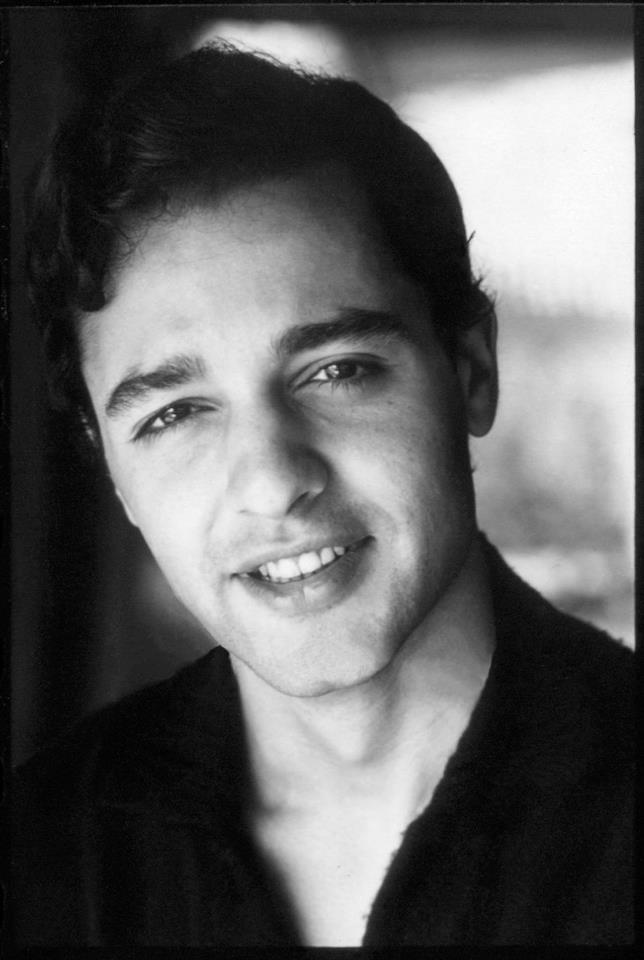
Sal (photo:  Fanpop.com)

The End

In the 1970s, West Hollywood was an enclave for those working in the movie industry, less expensive than Beverly Hills and Benedict Canyon, dotted with the irony of clubs and churches and mid-rent apartments.  One such apartment building was located at 8567 Holloway Drive, just off Sunset Boulevard and the famed Sunset Strip.  It was stucco with three floors and offered its tenants a carport; windows from the apartments overlooked the carport, which faced the narrow alley.  The Park Wellington Towers, a resort-style luxury condo complex built in 1972, were almost flush to the alleyway.     

The call came into the Los Angeles County Sheriff's Office at 9:42 p.m. on Thursday, February 12, 1976.  It was man down, assault with a deadly weapon at 8567 Holloway Drive.  The responding unit with two officers rolled up to a bloody scene.  The "man down" was lying motionless on the ground, roughly halfway down the alley.  He was dressed in blue jeans, a blue shirt with red and white flowers, a dark blue jacket and black tennis shoes.  Sunglasses, a red address book, a manila envelope, car keys, and a paper bag with a piece of cellophane-wrapped cake inside were scattered around the inert figure.   His wallet, with the contents untouched, was found in his pants pocket.  A blood pool ran for more than 10 feet east of his body, down the alley.  Upon closer inspection, the officers found that the man had a terrible stab wound to his upper left chest.  

An ambulance arrived, summoned by the upstairs neighbors who heard screams.   Despite resuscitation attempts, they were too late for the man on the pavement.  He was pronounced dead at 9:55 p.m.

(photo source:  billmichelmore.com)


A canvas revealed no weapons but did turn up multiple witnesses who heard the victim screaming "Oh God!  Someone please help me!" in addition to hearing fleeing footsteps, likely from his assailant, and the sound of a car starting up.  Two of the witnesses, one an upstairs neighbor, the other a security guard at The Park Wellington, saw a man fleeing that they described as white, young, slim around five-foot ten with long dark blonde or brown hair.    One witness thought the suspect got away in a yellow Toyota.  

Those neighbors who heard the screams and cries for help and ran downstairs to attempt to offer aid unfortunately contaminated the crime scene, leaving their own footprints in the victim's blood.  They, however, knew the victim.  His name was Sal Mineo and he was an actor.  


The Switchblade Kid

Sal Mineo had been born in New York in 1939, the third son and child to the Mineo family.  Sal's father, for whom he was named, was a coffin maker from Sicily.  Although the family was worlds away from the glitz and glamour of Hollywood, from a young age Sal demonstrated talent that destined him for greater things than his upbringing suggested.  He loved dancing and excelled at it, although by the time he was an adolescent, he was being teased by boys in his Hell's Kitchen neighborhood who dubbed him a "sissy" for the less than  macho pursuit.  Sal reacted by fighting, which could have led to the later stories that he had been a brawler and gang member and would eventually end up on the wrong side of a knife.  Regardless of his actual involvement in street gangs, his dancing landed him a gig on "The Ted Steele Show," a local New York program.  At only 11 years old, the boy debuted on Broadway, in Tennessee Williams' "The Rose Tattoo" opposite Eli Wallach and Maureen Stapleton.  That led to a leading role in "The King and I."  

As he entered his teens, he found a great deal of work on television, which was then entering into the American way of life.  It was his appearances in programs like "Hallmarks' Hall of Fame" and "Omnibus" that led Sal to his first motion picture:  a Tony Curtis film called  Six Bridges to Cross.  It would be his third film appearance that would shoot him into superstardom.

Sal in a publicity photo in 1955 (photo source: WorthPoint)

Rebel Without a Cause is considered the first teen angst movie, as well as only one of three in which James Dean would grace the screen.  While Dean is the clear star of the picture, as the troubled Jimmy Stark, Sal stood out as the sensitive Plato, who hero-worships Jimmy.  Dean and Sal became immediate friends both on and off the set, fueling rumors as it was whispered that Dean was bisexual.  Sal later said that at the time, he did not realize his sexual attraction to other men and that by the time he did, it was too late for him and Dean, who died in September of 1955, a month before Rebel Without a Cause was released.  Dean's death from a fiery car accident, an irony given the "chickie ride" depicted in the film, made his performance even more poignant and helped boost ticket sales.  Sal was recognized for his touching portrayal and nominated for an Academy Award for Best Supporting Actor.  He lost to Jack Lemmon in Mister Roberts but "Mineo Mania" had been born.  He was only 17 years old.

Sal found himself the subject of many movie magazine articles and pictorials and the heartthrob of screaming teenage girls.  He received fan letters by the thousands and was mobbed at any appearance he made, whether in Hollywood or New York.  Every pretty starlet he dated was splashed across the pages, guaranteeing positive press not only for the young actress but also for Sal - although leaving many of his adoring fans heartbroken.  

Sal and Jill Haworth (photo source: Pinterest)

For five years, Sal portrayed variations of Plato on film and on television, garnering him the nickname "The Switchblade Kid."  His first truly adult role was in 1959's The Gene Krupa Story, in which Sal, an accomplished drummer in his own right, played the drums himself in the biopic.  The following year he received another Academy Award nomination for his role in Exodus (1960) in which he played a Jewish Holocaust survivor.  He lost again (this time to Peter Ustinov in Spartacus), much to his disappointment as he hoped an Oscar win would reignite his career but he won a Golden Globe.  Perhaps most importantly, he met actress Jill Haworth, with whom he would have an on-and-off relationship for a number of years.   

After a brief stint into pop music in the late 1950s, after his appearance in Exodus, Sal's career began to slow.  He was considered too old to play the types of roles that had first made him famous (although he was only in his early twenties) and the whispers of his sexuality, despite his relationship with Haworth, led him to be considered "inappropriate" for leading roles.  Sal's loss of popularity, as sudden as his rise to stardom, was perplexing to him.  He was forced to audition for Lawrence of Arabia (1962), considered an insult to an established star -- and he did not get the part.  He was critically acclaimed for his turn as a stalker in 1965's Who Killed Teddy Bear but it led him to once again being typecast, this time as a criminal.  According to friends, he had hoped to portray Michael Corleone in Francis Ford Coppola's The Godfather (1972) but was once again disappointed.    

Sal in 1965 (photo source: Morrison Hotel Gallery)

Sal made a handful of television appearances during the 1960s before returning to the stage in 1969, starring opposite the-then unknown Don Johnson, and directing, "Fortune and Men's Eyes," an LGBT-themed play that scored positive reviews.  

In 1971, he made what would be last film appearance, as the chimpanzee Dr. Milo in Escape from the Planet of the Apes.  From that point on, Sal focused on stage work, where his career had begun, and episodic television.  

1976 seemed to be the year his career was going to turn around.  He got the role of a bisexual burglar in the comedy play "P.S. Your Cat is Dead," which had been on Broadway in 1975 for 16 performances, and ran successfully in San Francisco.  Sal's performance was singled out, with theater critics writing that he stole the show with his delivery and In Touch magazine wrote up a profile of him.  When "P.S. Your Cat Is Dead" wrapped its San Francisco run, it moved to Los Angeles and Sal went with it, renting Apartment No. 1 on Holloway Drive in West Hollywood.  

On  February 12, 1976, he was at rehearsals at the Westwood Playhouse early and, according to his co-stars, in tremendous spirits at the upswing his life was heading in.  Although it had rained earlier in the day, by the time rehearsal ended just after 9 p.m., the rain had stopped and although the roads were still wet, the Los Angeles air was clean and clear.  Sal jumped in his Chevy to drive home.   He had less than an hour to live.   


The Investigation

(photo source: The Dallas Morning News)


Robbery was almost immediately ruled out by the detectives once Sal's wallet was found in his pants pocket, along with $21 in cash and some change, a ring on his finger and a pocket watch on a chain in his jacket.        

Detectives tossed his apartment, a modest one consisting of a living room, dining room, kitchen, bedroom, bathroom and hallway.  The building, they discovered, was owned by celebrity attorney Marvin Mitchelson, who would go on to pioneer the concept of palimony - and be convicted of tax evasion.  According to Mitchelson, Sal had kept an apartment in the building for three years and had used it when he was in Los Angeles.  As far as Mitchelson knew, the actor lived alone. 

Although he had bought his parents a $300,000 home in the late 1950s in Mamaronek, New York,  Sal's own furnishings were decidedly downscale.  His apartment was overrun with books, many of them paperbacks with "lurid" covers.  There were also stacks and stacks of movie and play scripts.  Of greater interest to the detectives, in addition to the books featuring men on the cover, were the beefcake prints on the walls and a love letter found in a drawer.  The letter and many of the books were dusted for prints, with only Sal's identified.    

Acquaintances of Sal's were interviewed and checked out.  From those interviews, a picture of Sal emerged as a private man with a busy social life who had relationships with both men and women.  In the years of "Mineo Mania," he had been involved with a number of women but that had apparently begun to change at some point in the 1960s, the same time period when Sal was reportedly involved with fellow actor Rock Hudson.  His relationship with Jill Haworth had been a real and loving one and the two had remained good friends after their romantic relationship ended.  His last serious relationship had been with Courtney Burr, an actor with whom he had been involved with for six years.  They had been broken up for a while prior to Sal's murder.   

One neighbor claimed that Sal's apartment had heavy traffic of young men in and out at all hours.  Another knew who Courtney Burr was, as well as his relationship with Sal, but that Burr had not been seem around the complex for at least a year before Sal was killed.  

Detectives followed up on Courtney Burr, who had a solid alibi in New York.  

Drugs also came up, with some claiming that Sal was into smoking marijuana and doing cocaine.  Others hinted that he was dealing himself.  These illegal activities put him into contact with less than savory individuals, as did the suggestion that he liked to occasionally pick up hitchhikers for one-night stands.    

Checking into Sal's finances, however, as well as where he lived discredited the theory that he was a dealer.  When his autopsy results came back, the toxicology reports were clean, indicating no drugs or alcohol in his system at the time of his death.  If he had used drugs, it was clearly recreationally and not a serious habit.

He had died from a single stab wound that had perforated his heart, causing a massive hemorrhage.  Whoever had thrust the knife into his body had given him no hope for survival.  

Sal's casket leaves the church in New York (photo source: Newsmax)

On February 17, 1976, a funeral service was held for Sal at the Holy Trinity Catholic Church in New York.  The church could barely hold the onslaught of mourners.  NYPD detectives also attended, watching the crowd for anything of note.  Only three years earlier. Sal had been in the same church, giving a eulogy for his father.  

On February 23, 1976, a wake was held for Sal in Los Angeles at producer Bill Belasco's Bel Air home.  Los Angeles County Sheriff's Homicide attended, hoping to hear something that would give them a break in the case.  They got nothing. 

Detectives continued to chase the theory that Sal's murder had to do with his lifestyle, hitting the gay bars around town and speaking with hustlers on the street.  They went through his two address books (one professional, one personal).  His professional address book was neatly typed and contained contacts for some of the biggest names in Hollywood and across the pond to England, France and Italy.   His personal address book had hand-scrawled entries of pharmacies, pizza delivery spots, gas stations, adult theaters in West Hollywood and gay bars, as well as male names who had had contact with Sal.  

In all, they were left with nothing to solve their case.    


The Break

Although the investigation would span from California to Arizona, Nevada, Washington State, New York and Florida, the answer had been waiting patiently almost in Sal's backyard. 

On February 7, 1976, a couple had been entering an apartment house to visit friends on the west side of the city when they were accosted by three "young thugs."  One of them put a gun to the man's head and threatened to kill him.  The man had to watch helplessly as another of them manhandled his wife.  The couple was then robbed, with the criminal trio fleeing into the night. 

On February 12, 1976 at 9:55 p.m., roughly 13 minutes after Sal was attacked and at the same time he was being declared dead, a man by the name of Richard Roy was accosted after getting out of his car in his underground parking garage at 1323 North Harper in West Hollywood.  The two men who jumped him beat him to the ground before robbing him.  North Harper was less than a mile and no more than a three to five minute drive from Sal's residence on Holloway.   

On February 19, 1976, a week after Sal was murdered, a young woman walking to her car was grabbed by a man who snatched her handbag.  He then punched her so hard in the head, she permanently lost all hearing in one ear.  

On February 26, 1976, Peter Kirchen was driving down a road in West Hollywood and was blocked by two men in a Buick.  One of the men smashed his windshield with a ball peen hammer, one with a crowbar, demanding his money.  The incident caused glass particles from the windshield to spray into Kirchen's eyes, leaving him with vision trouble.  

Only 20 minutes later, police caught the two men, who were still in possession of the victim's credit cards and the ball peen hammer and crowbar.   One of the men was a 19-year-old named Lionel Ray Williams.

(photo source: EricReports)

When taken into custody, Williams allegedly told a sheriff's deputy  that he had been at a "dope den" and overheard "blood dudes" talking about killing Sal Mineo because there was a contract out on Sal for $1,500 over a dope burn.  Authorities didn't believe Williams' theory and he, along with his cohort, was released.  

On March 7, 1976,  a robbery took place on Rodeo Drive in front of the Gucci store.  Two couples, strolling down Rodeo one evening, were robbed at gunpoint.  One of  the female victims had a probation officer's badge taken from her.

Lionel Raymond Williams was on the police radar, yet neither he nor the burglaries was connected to Sal's homicide - at least not then - mainly due to the eyewitness descriptions of Sal's killer being a tall, slender white guy with long hair.    Williams was short, stocky, and black with a bushy Afro.  

It would take until April of 1977, over a year after Sal's murder, before the case was solved. 

A 19-year-old woman by the name of Teresa Collins contacted authorities on April 26.   Her husband had been extradited to Michigan that day for writing a bad check.  She was terrified of him and had known for many months about an unsolved murder but only with him safely behind bars and in another state did she feel secure enough to talk.  Her husband's name was Lionel Raymond Williams.

Teresa told the cops that Lionel was a burglar; she had gone with him on two jobs.  In February of 1976, the couple, then unmarried, lived with Lionel's mother on West 93rd.  Lionel owned a Buick and on February 12, that car was in the shop and he had a yellow Dodge Colt loaner.  That day of February 12, Teresa gave Lionel money -- money he used to purchase a knife at Western Surplus he had seen and wanted.  He felt he could use it in order to "make more money."  

According to Teresa, when Lionel left West 93rd that day, he wore all-black and soft-sole shoes.  She stayed home with his mother and watched television.  He returned later that evening, showing her a large knife and telling her that he had "just stabbed a dude."  He had hidden in a large apartment complex intending to rob somebody and saw "the dude" park his car.  "The dude" saw Williams and starting yelling for help, prompting Williams to stab him.  Williams freaked out and fled, scoring no money for his effort.  

Teresa Collins was taken to the Western Surplus store at 85th and Western, where she picked out a replica of the knife she said Williams purchased on February 12, 1976.  Cops took the knife to the L.A. coroner and the serrated edges were found to match the stab wound to Sal's chest, as well as leaving similar bruising marks and hilt patterns.  

Records obtained from Western Surplus indicated that such a knife was indeed sold on February 12, 1976, although there was no way to prove who made the cash purchase.  

In early May of 1977, Teresa was given, and passed, a polygraph.  The next day, investigators flew to Michigan to see that Williams' phone calls and cell would be bugged during his ten-month incarceration.  

Publicly, the case was cold but it continued to be worked.   Detectives spoke to mutual friends of Williams and Teresa, two of whom corroborated Teresa's story.  One claimed that Williams, in a fit of depression and tears, had confessed to killing a man in Hollywood.  The other, after a session of marijuana smoking with Williams, claimed he admitted flat out that he had knocked off Sal Mineo.  When she expressed doubt, he showed her the knife he said he had done it with.  He also showed her some dark clothing that appeared to be bloodstained and claimed he was wearing those clothes when he killed Sal.   

Another acquaintance of Williams, a Marine named Allwyn Price Williams (no relation), stated that Lionel had confessed the killing to him, even showing him exactly how he had stabbed Sal, with a right-hand downward thrust motion.   Under the grant of immunity, he told authorities that he had accompanied Lionel on March 7, 1976 to Beverly Hills to stick up the two couples outside of the Rodeo Drive Gucci store.  

Tipsters gave investigators the name of Michael Alley, a friend of Williams who could possibly help their case.  After being promised immunity, Alley admits to having gone out with Williams on the night of Sal's murder.  They were drinking and cruising for women, according to Alley.  When the search for women came up empty, Williams decided to drive into Hollywood, saying he had to see somebody about something.  He had pulled up to some apartments and walked off, leaving Alley in the car.  Alley said he watched Williams talking to someone and then saw him stab the man.  

The surveillance of Lionel Williams while in jail provided the LA authorities with more evidence to use against him.  Williams was overheard by a deputy telling another inmate that he had killed Sal Mineo.  The deputy had at first assumed that Williams' statement was of the bragging type, done commonly by new inmates as basic jailhouse talk but quickly changed his mind once he heard that Williams was the prime suspect in the Mineo case.  

Williams was due to be released from the Calhoun County jail on January 8, 1978 but on January 4, the Los Angeles District Attorney issued a warrant for his arrest for the first-degree murder of Sal Mineo.  Based on the evidence and statements, the D.A. believed that Williams had been lying in wait, meaning that he was eligible for the death penalty.  

On January 12, 1978, Lionel Williams was returned to California and ensconced at the Men's Central Jail.  He told reporters and anyone who would listen that he was not guilty but said nothing about the fresh tattoo of a knife on his arm.   The knife was identical to the one he was said to have purchased and used to murder Sal.    

As the case was being prepared, LAPD interviewed Peter Kirchen, whose windshield had been busted out by two individuals back in February of 1976.  His vision was improved and he was shown photo lineups and chose two pictures:  Lionel Williams and James Green.  According to Mr. Kirchen, Williams swung the hammer and Green swung the crowbar.  

James Green was indicted on May 2, 1978, the same day that the L.A. County Grand jury returned indictments against Williams.  Green was arrested a day later, waived his right to an attorney and quickly admitted his involvement in the Kirchen crime.  Eerily similar to Michael Alley's story, Green said that he and Williams had been out cruising, looking for girls.  They spotted Mr. Kirchen's car, followed him down the street and forced him up onto the curb.  After they had began beating on his car, Mr. Kitchen had thrown three or four dollars' worth of change out the window, which he and Williams had collected before leaving.  

According to Green, it was the only time he had done such a thing with Williams.  He knew nothing about Sal Mineo. 


Sal, 1960s (photo source: Vintage News Daily)


Justice

Between the time Teresa Collins had first approached the police and the murder case against Lionel Williams going to trial on January 9, 1979, Williams had managed to sweet talk her back to his side.  One thing she had initially neglected to tell cops was that she had married him back in the spring of 1976, only a couple of months after he had murdered Sal.  She chose to invoke spousal privilege and refused to testify against her husband and the father of her two children.  

Despite losing what should have been his star witness and having mainly circumstantial evidence (the murder weapon was never found), prosecutor Michael Genelin put on a strong case over the month-long trial.  He had James Green, Allwyn Price Williams and Michael Alley, all of whom testified as to Lionel Williams' confession of murder.  He had a rental agreement for the Dodge Colt loaner Williams was driving on February 12, 1976, a car that could easily be mistaken as a Toyota.    He had two deputies who had overheard Lionel Williams confess to the murder.  He also showed the jury a February 26, 1976 mugshot of Williams, taken when he was arrested for the Peter Kirchen attack.  His hair was slicked back and the prosecutor pointed out it was dark in the carport that night, dark enough that witnesses could confuse him for a white man.  

Although he had no eyewitnesses to the stabbing itself, Genelin was able to strengthen those tenuous cords between the murder of Sal Mineo and Lionel Raymond Williams enough that justice was served.  

The jury deliberated for seven days before finding him guilty of second-degree murder, sparing him from the death penalty.   He was also found guilty on ten robbery counts.

Judge Bonnie Lee Martin set March 15, 1979 for sentencing and offered Williams the opportunity to speak.  He criticized first his attorney, claiming he never wanted him and stating that the man wasn't in his corner, before turning on Judge Martin herself, blaming her for forcing Williams' attorney on him.  

Judge Martin, after reviewing Williams' lengthy record, found that "he was not susceptible to rehabilitation considering his escalating conduct of committing more and more serious crimes with more and more violence."  She sentenced him to the harshest sentence she could:  51 years, with eligibility to apply for parole in 14 years.  

(photo source: Antebellum)         

Williams served only a portion of that sentence and was paroled in the early 1990s.  He reportedly returned to his criminal lifestyle once back on the street and was soon back behind bars.  He continued to deny publicly that he had murdered Sal.  

 Although Williams' conviction closed the book legally on Sal's killing, some of Sal's friends and even some law enforcement continued to harbor doubts on whether Lionel Williams was the killer, or the sole killer.  

The official story, and the one most likely, is that Sal was in the wrong place at the wrong time.  He probably saw Williams approaching him with a knife and that's when he screamed and called out for help; it's unlikely he would have been able to say very much after the stab to his heart.  Williams, who had been looking for an easy burglary score, may have been worried that Sal's calls for help would be overheard (they were) and stabbed him.  The eyewitness descriptions could have been incorrect as prosecutor Michael Genelin pointed out or they could have seen a man unrelated to the murder.  Or, it's always possible that, as Sal's friends wondered, they could have seen an accomplice of Williams.


Back in 1955, after filming on Rebel Without a Cause wrapped, James Dean said in a press release that he considered costars Natalie Wood, Sal, and Nick Adams "the only friends I have in this town."    Dean died at 24 in a car accident shortly after making that statement.  Nick Adams was only 36 when he died in February of 1968 of a prescription drug overdose, a death which has been called suicide, accidental and murder by various sources.   Natalie Wood was 43 years old when she drowned in November of 1981, in a case that was initially classified accidental before being changed three decades later to undetermined.

Sal's brother Michael, who had followed Sal briefly into show business before running a business in New York, was buried alongside him when he died in 1985.  

Sal's final resting place (photo: Find a Grave)