September 9, 2020

The Murders of Kevin Ives and Don Henry: The True Story of Arkansas' "Boys on the Tracks"

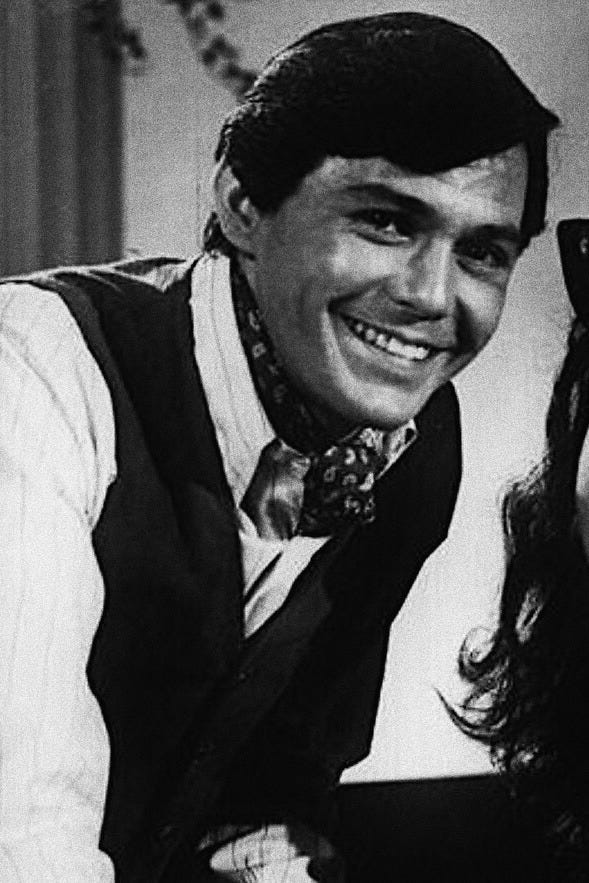
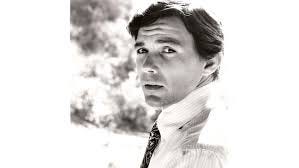
Kevin Ives (left) and Don Henry (right) (source: vocal.media)

The Deaths 

It started as a normal Saturday night on August 22, 1987 in Bryant, Arkansas.  Teenagers Don Henry, 16, and Kevin Ives, 17, popular students who were gearing up for their senior year at Bryant High School, had decided to hang out with a group of friends at a local commuter parking lot, a popular gathering place for teens.  Kevin and Don were typical teens who enjoyed working on their cars (a Firebird and a Camaro), hunting, and going out with their girlfriends.  Around midnight, they left their friends to go to Don's house, where the boys planned on spending the night.  Kevin waited outside on the porch while Don went inside to chat with his dad.  It was around 12:15 a.m. August 23 when Don grabbed his .22 rifle and one of his dad's spotlights and he and Kevin departed for the woods and railroad tracks that ran behind Don's home.  They were going "spotlighting," an illegal form of night hunting in which a bright line is shone in the eyes of the animal, transfixing it, and allowing it to be easily shot.  

Around 4 a.m., a 6,000-ton cargo train a mile long was making its regular nightly run north from Texarkana to Little Rock at a speed of 52 miles per hour.  Just passing the town of Bryant and approaching Alexander, engineer Stephen Shroyer noticed two immobile figures lying parallel across the tracks, covered from the waist down with a light green tarp, and with their arms straight down by their sides.  He immediately laid down the horn and placed the train into a frantic emergency stop.  Less than five seconds later, with no reaction or movement by either of the boys on the tracks, the train made impact with the two bodies, carrying them for a half-mile before the train came to a complete stop.

An EMT at the scene of the train tracks noted that the boys' blood looked darker than it should have, as though it lacked oxygen.  The same individual said the blood was oozing, instead of fresh, and that their skin was colorless, which indicated that Kevin and Don had been dead for some time before their bodies were put on the tracks.

The Investigation, the Rumors and Mena

Kevin (in foregound) and Don (in background) (source: Reddit) 

The boys, though mangled, were identified as Kevin Ives and Don Henry.  At their autopsies, Dr. Fahmy Malak, the state medical examiner, concluded that the two had smoked as many as 20 marijuana cigarettes, causing them to lay on the tracks in a stupor, pass out, and not hear, or feel, the approaching train.  He then ruled their deaths an accident due to marijuana intoxication.  

Interestingly, the hospital where the boys' bodies were taken, and where the initial examinations were performed, had no record of them being there.

Two persons came forward to say that they had heard gunshots shortly before Don and Kevin were hit by the train.  The Saline County Sheriff's Office assured the families that tests would be done on Don's gun to see if it had been fired -- but these tests were never conducted.

As early as Wednesday, August 26, the Arkansas Democrat was reporting that "the only thing Saline County authorities are sure of" in the case "is that foul play wasn't involved."  This, at the same time that the initial investigators had managed to miss locating one of Kevin's severed feet, which had been discovered by one of the Henry family, as well as parts of Don's gun and other personal belongings which had been inexplicably overlooked during the investigation of the crime scene.

The Ives and Henry families weren't so quick to agree with authorities.  Larry Ives, Kevin's father, (who worked for the railroad and until recently had the train route that would have put him on the train that struck his son), hired a private investigator to look into what happened but, as he later said, the investigator was met with resistance from different authorities, preventing them from getting anywhere.

James H. Steed, Jr. 
(source: SCSO)      

Linda Ives, Kevin's mother, criticized Saline County Sheriff James H. Steed, Jr., who had said repeatedly that there was nothing at the scene to suggest anything more than a simple, but strange, accident.  (In fact, the case was initially investigated as a traffic accident.)  Dan Harmon, a private attorney in Benton who, at that time, had no official role in the case, approached the families and offered to help them by making a deal with Steed in February of 1989 that if the Henrys and Iveses withdrew their criticism of Steed and supported him, they would receive the investigation they wanted.

At roughly the same time, about six months after the deaths, the Henry family received Don's belongings from the medical examiner's office.  Don's stepmother found a partial bag of marijuana (1.9 grams) in the pocket of Don's jeans, leading the family to wonder what else the so-called investigation had overlooked.  

The Ives and Henry families then held a joint press conference.  They announced that Dr. James Garriot of San Antonio, Texas offered a second opinion on Dr. Malak's findings.  Dr. Garriot concluded it was unlikely, highly unlikely, for any amount of THC (the main compound in cannabis) exposure to have the effects that Malak alleged.  Furthermore, Dr. Garriot said the only reliable test for the presence of drugs in the boys' systems was mass spectrometry and that had not been performed.  Dr. Arthur J. McBray, a toxicologist from North Carolina, deemed Malak's conclusions "very bizarre" and that he had never heard of anyone becoming unconscious from exposure to any amount of THC.

The families hoped that the investigation would be reopened by their speaking out and the tactic worked.  The following day, the case was officially reopened.  Newly assigned prosecutor Richard Garrett had Kevin and Don exhumed for second autopsies around the same time that Dan Harmon was appointed by a circuit judge to head a county grand jury investigation as a special prosecutor.

The second autopsies were performed by Georgia medical examiner Dr. Joseph Burton.  Dr. Burton found that Don and Kevin had minimal marijuana in their systems; the equivalent of one joint between the two of them, not twenty.  He also opined that Don had been stabbed in the back and Kevin suffered a crushing blow to the left side of his skull, not owing to the train.  In his professional opinion, one of the boys was already dead and one unconscious at the time their bodies were struck by the train.

A grand jury ruled that the deaths of Don and Kevin were probable homicides.

There would be third autopsies performed at Richard Garrett's request.  This pathologist took a closer look at Don's clothing and at Kevin's body.  He found evidence of stab wounds on the shirt Don wore that night, but which he was not wearing at the time his body was struck by the train, that corresponded with the wounds to Don's back that Dr. Burton had identified.  In Kevin's case, he found the bludgeoning would to the left side of Kevin's head was similar to the butt of Don's .22 rifle.  (The rifle had been seen lying parallel to both boys by the train crew before the impact.  Curtis Henry said that his son would never have risked scratching the gun by placing it on gravel.)

The second autopsy ruling was overturned, and the deaths were officially classified homicides. 

The area where Don and Kevin were killed 
(source: Google via Daily Mail)

Garrett questioned the green tarp that the train crew had seen and reported.  The tarp had disappeared, and Garrett wanted to know who had covered Don and Kevin and why.  Local police claimed that the train's engineer, Stephen Shroyer, had never mentioned seeing a tarp before impact.  Shroyer said they immediately began questioning the tarp's existence.

Leads surfaced that in the week before Don and Kevin were killed, a man in military fatigues was seen near the train tracks.  His unusual behavior around suspicion and police were called.  When the responding officer stopped to question him, the man opened fire and fled.  The officer, who had taken cover in his vehicle, was not struck; a search immediately following produced nothing and the suspect was never found or identified.

On the night of August 22-23, 1987, witnesses again reported seeing a man in military fatigues less than 200 yards from where the bodies of Kevin and Don would be found.  Once again, police were unable to locate him.

Barry Seal
(source: Wikipedia) 

Rumors began, and then intensified, that the murders of Don and Kevin were tied in with drug trafficking.  Nearby Mena, Arkansas, sitting 160 miles west of Little Rock, had ties to the cocaine trade thanks to Barry Seal, who had been gun-running and smuggling cocaine for the Medelin cartel out of Colombia and into the U.S. since 1981.  A pilot by trade, Seal used low-flying planes to airdrop drug packages in remote areas of Louisiana, where his ground team picked them up.  The number of planes (Seal had 12) and frequency of flights, however, soon alerted Louisiana State Police and Federal investigators and so Seal moved his operation to the smaller Mena area.  He was also a covert CIA operative who was murdered in February of 1986 in a hail of gunfire after a hit was put out on him by the Medelin cartel but het story was that the drug trafficking had continued, with a high profile politician involved.

It was whispered that Kevin and Don may have unintentionally stumbled upon one of these drug and/or cash drops and were killed as a result.

In the fall of 1988, a year after the murders, Unsolved Mysteries featured the case in one of their episodes.  Prosecutor Richard Garrett was asked his thoughts about the case by the show's host, Robert Stack.  Garrett alleged that Don and Kevin "saw something they shouldn't have seen and it had to do with drugs."  

Although the grand jury had announced that the boys' deaths may have been related to drug trafficking, Sheriff Steed refused any funds that might aid in the investigation.  It was also discovered that Steed lied about where he had seen Don and Kevin's clothing for examination.  Rather than sending the items to the FBI, as he claimed he had done, he instead sent them to the Arkansas Crime Lab.  Perhaps not unsurprisingly, Steed was not reelected following his involvement in the case.

More Deaths

Keith McKaskle
(source: Twitter)

On November 10, 1988, only two days after Steed lost his reelection bid, 43-year-old Keith McKaskle, an informant of Dan Harmon's, was killed.  Something of a legend for breaking up bar room fights, with or without weapons (he was a big guy who stood at six-foot-two and weighed over 200 pounds), McKaskle had been stabbed 113 times.  His body was found in the carport of his home, wrapped in a flowered shower curtain; the home throughout was spattered with blood from the ferocious and prolonged fight. 

McKaskle, believing he had been speaking with the "wrong people," and saying that he was being followed by two police officers who had been named as suspects in the Ives-Henry case (see the following section concerning potential police involvement), had prepared his own funeral arrangements and told his family and friends goodbye only days before his murder, believing he was not long for the world.

In August of 1989, Ronald Shane Smith, a 19-year-old neighbor of McKaskle's who was considered "slow" by others, was sentenced to 10 years for McKaskle's murder.  Following Smith's conviction, another prison inmate claimed that he had been offered $4,000 to kill McKaskle.  Smith later said that he had been at McKaskle's home to pay him for items he had purchased, including a silver tray for his mother, when three men in clown masks (or five men in all-black) burst into the home, with two carrying knives and one with a gun.  Smith claimed to have been held at gunpoint by one man while the other two killed McKaskle.  Then, according to Smith, the men ordered him at gunpoint to stab McKaskle, at which point they took a Polaroid photo of him doing so and used it to blackmail him into taking the rap for the murder.

McKaskle was a known drug user and assumed dealer and had been suspected of being at the train tracks when Kevin Ives and Don Henry were killed.  Two days before his murder and before it was announced that Steed had lost the election, McKaskle had reportedly said publicly that if Steed lost the election, his life would not be worth two cents.

Greg Collins
(source: idfiles.com)

On January 22, 1989, 26-year-old Greg Collins, who had been subpoenaed to testify before a grand jury with regard to the deaths of Kevin Ives and Don Henry, was found in the woods of Prescott, Arkansas, with three shotgun blasts; two to his chest and one to this face.  Greg had reportedly left his home to go hunting.  It was said prosecutor Richard Garrett and Dan Harmon had questioned Greg shortly before his murder.  Medical examiner Fahmy Malak ruled Greg Collins' death a suicide.

Keith Coney
(source: idfiles.com) 

Coincidentally or not, only six weeks before Greg Collins was killed and roughly six months after Kevin Ives and Don Henry were killed, Greg's friend Keith Coney had been killed in a motorcycle accident.  The official story was that Keith had run his motorcycle into the back of a semi-truck while traveling at a high rate of speed.  Witnesses, however, claimed that he had been accosted before being chased by a vehicle and while trying to escape, he had swerved into the back of the truck.  Witnesses who saw his body claimed that he had suffered a slashed or cut throat and other injuries that did not correspond with a vehicular accident.

Keith was an acquaintance of both Don Henry and Kevin Ives and told his mother he knew something about their deaths but wouldn't tell her anything further.  He did reportedly tell his father and a few friends, though, that he had been out with Kevin and Don the night they died and the trio were approached by a police vehicle with two officers inside.  Keith claimed to have fled on his motorcycle and either witnessed or merely believed that Kevin and Don were killed by those officers.  Shortly before his own death, Keith had been subpoenaed to appear before the grand jury.

Daniel "Boonie" Bearden
(source: idfiles.com) 

In March of 1989, police received a tip that a man by the name of Daniel "Boonie" Bearden, who had been missing for about eight months, had been buried in a remote location near the Arkansas River.  The search yielded a portion of clothing identified as Boonie's but no body and no other clues.  Boonie was alleged to have been a drug distributor and had been subpoenaed to appear before the grand jury in relation to the Ives-Henry case.  He is suspected to have been murdered but has never been located.

Jeff Rhodes
(source: idfiles.com) 

In April of 1989, a 21-year-old man by the name of Jeffrey Edward Rhodes, a reported dealer, told his mother he was in fear for his life and called his father in Texas to say that he needed to get out of Arkansas as he knew way too much about "the boys on the tracks" and Keith McKaskle.  Only days later, Jeff's motorcycle was found on the side of the road with the kickstand down, as if he had stopped for someone.  A week later, his body was found in a trash dumpster in Benton, Arkansas.  He had suffered a gunshot wound to the head as well as mutilation to his body that included his hands, feet, and head being partially sawed off.  His body had then been set on fire.

An anonymous caller said that she believed that Jeff may have stopped for a Benton police officer or officers and was then killed, as there were corrupt individuals in the department.

It was rumored that in the days before August 22-23, 1987, Don Henry had purchased a small amount of marijuana from Jeff and had told Jeff that he knew "the ultimate dealer" in Little Rock.  

A man by the name of Frank Pelcher was eventually convicted of Jeff's murder and sentenced to life in prison.

In July of 1989, Richard Winters was killed by a shotgun blast to the face in what was initially thought to be a robbery but was suspected to be a set-up.  Richard, at one point, had been considered a suspect in the murders of Kevin Ives and Don Henry but had offered to cooperate with the grand jury shortly before he was killed.

Also in 1989, James "Dewey" Milam had been found decapitated in his home and with his head missing.  Medical examiner Fahmy Malak claimed the death to be of natural causes, brought on by an ulcer.  He also claimed that Milam's small dog had eaten its owner's head.  Milam's head was later found in a trash bin several blocks away, leading Malak to state that the dog had regurgitated the head.  Milan was reportedly a witness to the Mena drug operation and to the murders of Kevin Ives and Don Henry.

In June of 1990, Jordan Kettleson, rumored to have information on the murders of Don Henry and Kevin Ives, and also rumored to have played a part in the murder of Keith McKaskle, was found shot to death in the front seat of his pickup truck.  His body was cremated before an autopsy could be performed and no police investigation took place.

Mike Samples
(photo: idfiles.com) 

In June of 1995, grand jury witness Mike Samples was shot to death.  Mike was allegedly involved in retrieving the drugs dropped from airplanes.  Authorities, however, have denied any connection between his murder and the Ives-Henry case.

The murders of Greg Collins, Daniel Bearden, James Milan, Jordan Kettleson, and Mike Samples remain unsolved.

The Possible Police Connection

 A witness using the name of "Jerry" came forward to say that he saw sitting in a convenience store parking lot the night of August 22-23, 1987 and saw three teenaged boys, one on a motorcycle, hanging out by the store and, he believed, smoking pot.  According to Jerry, a police car rolled up, the boy on the motorcycle took off, and the two officers ended up "beating the shit" out of the two remaining boys before throwing them in the back of the police vehicle.  When Jerry went to the authorities with his story, he was jailed for outstanding child support.  After being released from jail 90 days later with a suggestion to leave town, Jerry picked up and departed for parts unknown.

Another witness, this one named Ron, had been at a club on Saturday night, August 22, 1987.  He was driving home sometime after 12:30 a.m. or one o'clock when he noticed a vehicle he took to be an "undercover" police car around the area of the convenience store that Jerry had mentioned.  Ron claimed that he saw a young man that fit Don Henry's description being beaten by two officers.  He couldn't describe the second boy, as his head was down.  Both were thrown in the backseat of the vehicle and the car eventually headed down what Ron knew to be a dead-end road.  As he had been drinking at the club, Ron pulled his car over to wait for the police vehicle to pull out and go on its way.  He recalled it being 15-20 minutes before the car returned and he could not tell if either or both boys were still in the backseat.

Two police officers were specifically named as suspects by witnesses and tipsters.  Those officers sued for defamation and lost their case.  One of the officers later went to prison on drug-related charges and the other eventually became a police chief and head of a drug agency.

Dr. Fahmy Malak

Dr. Fahmy Malak
(source: Sword and Scale) 

On September 10, 1991, Dr. Fahmy Malak resigned as medical examiner for Arkansas after holding the position since 1979 and after years of questionable actions that included (besides what has already been mentioned) labeling a gunshot victim with five shots to the chest a suicide, testifying erroneously in criminal cases, mixing up tissue samples and DNA, and falsely accusing a deputy county coroner of killing someone when he misread a chart.

Once Malak had resigned, it came out that when the grand jury had overruled his findings in the Ives-Henry case, then-governor Bill Clinton, using his discretionary fund to cover the $20,000 cost, hired two out-of-state pathologists to review Malak's findings.  The two pathologists, in opposition to the doctors hired by prosecutor Richard Garrett, gave Malak high marks and suggested that he be given a raise.  Clinton and his board decided not to review Malak's files and cases and instead, sent a proposal to the Legislature to give Malak a 41.5% increase in salary, to $117,875.  Clinton had also elected not to fire Malak, despite four years worth of complaints about his practices. 

Malak had also allegedly protected Clinton's mother, a nurse-anesthesiologist, from potential charges of negligence and malpractice in autopsies performed on two patients under her care.

Following his resignation as medical examiner, Malak was hired at the Health Department as a consultant on sexually transmitted diseases for $70,000 a year.

It had also been discovered that when the previous medical examiner had retired, Malak, who had been working as his assistant, took over the role without proper medical credentials or qualifications to do so.

He died in Florida in 2018.

Dan Harmon

Dan Harmon in 1988
(source: idfiles.com) 

As the years rolled on, Don and Kevin's case remained unsolved but the rumors continued and law enforcement appeared, to some, to be unconcerned about bringing closure to the case.  Books and articles were written.

Attorney Dan Harmon, who had reached out to the Ives and Henry families to broker some sort of "assistance," ran into his own legal troubles.  As early as March of 1990, he was reportedly linked to illegal drug activity.  In June of 1991, U.S. Attorney Chuck Banks held a press conference to publicly clear Harmon and other Saline County officials of drug-related misconduct.  One rumor was that Banks was blackmailed into shutting down any kind of investigation due to Harmon having tapes of sexual encounters by Banks with prostitutes.  Harmon had also allegedly been facing seven counts of income tax evasion.  Several months after Banks held his press conference, he received a federal judgeship nomination by then-President George Bush.  (He never received his judgeship, as all Bush nominations were withdrawn when Bill Clinton won the presidency.)

In 1993, Linda Ives was contacted by a young man who was 12 or 13 years old in the summer of 1987 when her son was killed.  He told Linda that he had been out that night with friends around the railroad tracks and upon seeing lights, had hidden in some bushes.  He claimed to have seen Dan Harmon on the tracks, involved in killing Kevin and Don.  He personally knew Harmon as Harmon had dated his mother.  The authorities chose to give his tale little merit, even though he passed two lie detector tests and was put in the witness protection program.

Also in 1993, a witness by the name of Sharlene Wilson came forward to accuse Harmon in the murders of Kevin Ives and Don Henry.  She claimed that not only Harmon but Keith McKaskle and a man by the name of Larry Rochelle were involved in the deaths of Kevin and Don.  She said she believed that Kevin and Don were curious about the drug drop site and were caught.  In her first statement, she claimed to have been high on coke and meth and only witnessed the boys being killed.  In a follow-up statement, she claimed that under pressure from Harmon, and high on coke and meth, she stabbed one of the boys with her own knife but only a shallow, superficial wound.  She also brought up the long-forgotten green tarp, which she stated came from her car.

Shortly after providing her statement, Sharlene was busted on a drug charge and prosecuted by none other than Dan Harmon.  Despite it being a first-time drug offender charge, she was given a 31-year sentence.  (That sentence was eventually reduced by Governor Mike Huckabee, allowing her to be paroled.)

Sharlene had signed a statement in front of three law enforcement officers in 1993 and yet her accusation was buried in the case file until 2015.

In early 1994, a pilot claimed to have flown a drug drop to the location that Kevin and Don were murdered.

By November of 1996, when Harmon was the Saline County prosecutor, his then-wife was caught out of Harmon's jurisdiction with cocaine packages from the district's evidence locker.

That same year, he was driven out of office, resigning as part of a plea deal he took after beating a reporter from the Arkansas Democrat-Gazette who had asked him for a comment.

In April of 1997, a federal grand jury indicted Harmon with racketeering, dealing in cocaine, manufacture of methamphetamine, extortion, witness tampering, and retaliating against an informant.  Two other men, a local attorney and the administrator of the drug task force, were also charged in the scheme.  Harmon was convicted on five counts:  racketeering, three extortion conspiracies, and one marijuana distribution charge.  He was sentenced to eight years in prison, with an additional three tacked on for a subsequent drug charge.

Once Harmon was sentenced, stories began to leak out.  Some 900 criminal cases in Saline County had been dropped because Harmon, as then-prosecutor, did not bring the cases within the legal statutory time of one year.  Persons facing drug charges stated that Harmon demanded money in exchange for charges against them being dropped.  One woman claimed that Harmon offered to drop charges against her husband if she would have sex with him.  Harmon had been arrested previously and had not only refused to take drug tests when arrested but had attempted to flee during one stop.  He boasted of having physically struck another lawyer in front of a judge -- and faced no consequences.  He was accused of battery by several women, including his ex-wife, who claimed that he had not only physically assaulted her but had threatened her with death.  At every step, it appeared that Dan Harmon was protected, whether it be by judges, police, or the Committee on Professional Conduct, who did not revoke Harmon's license when he refused mandatory drug testing upon arrest.  

In 1999, the Arkansas Supreme Court disbarred Harmon.

In 2006, he was released from prison after assisting prosecutors in a murder conspiracy case.

In 2008, unbelievably, Harmon was again working for Saline County, and on their payroll, organizing files for the circuit clerk.

In February of 2010, he was charged once again, following a six-month drug investigation, for selling morphine and hydrocodone near a school.  The prosecution's case was weak as the only testimony against Harmon was that of an admitted drug user.  He was ultimately acquitted.

Two years earlier Harmon had told a reporter that he used drugs and deserved to go to jail for that but blamed his downfall on women and other people.

Further Developments

Linda Ives in 2017
(source: russiainsider.com) 

In 2016, Linda Ives filed a civil suit citing a Freedom of Information Act violation against multiple agencies, including the CIA, the FBI, and the Bryant Police Department.  Ms. Ives' action alleged a cover-up in her son's death.  Over a year later, in November of 2017, a federal judge ordered three defendants in the suit -- the Executive Office of U.S. Attorneys, the Drug Enforcement Administration, and the Department of Homeland Security -- to turn over documents for private review that had formerly been redacted.  The same judge dismissed several agencies from the suit, including the CIA, the U.S. State Department, the FBI, the Arkansas State Police, the Saline County Sheriff's Department, and the Bryant Police Department.  The suit was dismissed in 2019.

Billy Jack Haynes, 1980s
(source: Facebook) 

In February of 2018, former World Wrestling Federation (now the WWE) wrestler Billy Jack Haynes recorded and released a video in which he claimed that while providing security for a drug trafficking drop in August of 1987, he had witnessed the murders of Kevin Ives and Don Henry.  Haynes named six others that were at the scene, including three law enforcement officers, two attorneys/politicians, and a bouncer from a local club.  He claimed the corruption in the state went to very high levels.

Possible Connections

The final resting place of Billy Don Hainline
(source: Find a Grave) 

On June 25, 1984, 21-year-old Billy Don Hainline and 26-year-old Dennis Decker were found lying on a stretch of the Kansas City Southern railroad twenty miles south of Poteauin, Oklahoma.  Both were run over by the train and killed.  The autopsies revealed that there was a slight amount of alcohol in one of the men's blood, close to the legal limit for drunkenness, but none in the other body.  Their deaths were ruled accidental by the county coroner, who believed Billy and Dennis fell asleep on the tracks in a drunken state.  The state medical examiner's office, however, ruled the manner of death as unknown due to the small amount of alcohol and the fact the bodies were lying together, parallel.  Others felt convinced that Billy and Dennis were the victims of foul play.

Their case was reopened in 1985, with investigators focusing on the possibility that drugs were involved.  The new investigation discovered that one month after Billy and Dennis were struck by the train, a secret methamphetamine laboratory was discovered less than two miles from the tracks where their bodies were discovered.  In 1987, the deaths were ruled accidental.  

Sheriff Charles Hurley said he believed the bodies were put there.  Le Flore County District Attorney Ray Edelstein said he believed that people didn't "simply lay down on the tracks and go to sleep three miles from nowhere."  Edelstein also said that it was not uncommon in the drug industry for people who "don't play ball to be eliminated."  

The Ives-Henry case in 1987 caused the Hainline-Decker case to be looked into once again.  Le Flore and Latimer County investigator Claudie Higgins stated he felt any similarity between the two cases was purely coincidental, with no connection whatsoever.  Higgins also stated, erroneously, that the blood alcohol level in both men was at the legal level for drunkenness and the two had simply fallen asleep on the tracks.

There are no known suspects in the case and it remains unsolved.

Sean Reineke
(source: Find a Grave)

On August 20, 1985, best friends Sean Reineke, 15, and his neighbor, David Taylor, 13, were killed when they were struck by a Kansas City Southern freight train at a railroad trestle around five in the morning, three miles south of Joplin, Missouri.  According to Newton County Sheriff Mark Bridges, an investigation produced the theory that the boys were lying with their faces down between the rails when they were struck by the train but foul play was ruled out.  The train engineer reported that he did not see the boys when the train went over the trestle, which could be seen from both boys' homes.  Some gossips claimed that Sean and David committed suicide but according to their families, they were both looking forward to school and not exhibiting any behavior to suggest depression and/or suicide.

Norman Ladner
(source: Unsolved Mysteries Wiki)

On August 31, 1989, almost exactly two years after Kevin Ives and Don Henry left the Henry residence to go hunting, 17-year-old Norman Ladner left his parents' local store in Picayune, Mississippi to go hunting on the family farm.  A popular high school student known for his kindness who loved the outdoors, Norman knew his family's 122-acre property inside out.  He was also very punctual and responsible so when he hadn't returned to the family business by 7 p.m. as he had historically done to help close up the store, his father suspected something was wrong and organized a small search party to look for Norman.  Norman, Sr. found his son lying on the ground under a tree, cold, and with a bullet wound in his head.

The Pearl River County Sheriff's Department arrived around 10 p.m. and roped the area off.  Before the investigation had really begun, Pearl River County Sheriff Lorance Lumpkin said from the start that he did not believe a crime had occurred.  He said he ruled it out because he saw nothing that supported a crime.  He believed that Norman had been in a tree and had fallen, causing the gun to discharge and accidentally shooting himself in the head.  

The coroner informed Norman's parents, in the presence of two deputies, that he was 90 percent certain that their son's death was accidental.  When the official ruling came down, though, the coroner had determined that Norman had committed suicide.  His reasoning was that it was a typical suicide wound; a close-contact head wound, the bullet entered the right temple and exited the left.  Sheriff Lumpkin speculated that Norman had gone to an area that he felt comfortable in and for reasons unknown, decided to take his own life.  Neither Sheriff Lumpkin nor the coroner explained how Norman managed to shoot himself in the temple with a shotgun/rifle.  

Norman's family was horrified and offended.  Norman had been a happy and outgoing young man, not depressed, and would never have taken his own life.  They pointed out that the investigators never fingerprinted the gun, never ran a test to attempt to determine what kind of gun killed Norman, nor made any attempt to locate the bullet that had killed him.

The investigation also had no explanation for why Norman's wallet, with $140 inside, was missing or how he had received a one inch cut to the top of his head.  Authorities speculated that he had fallen on a bloody tree root found at the scene but the Ladners did not understand how Norman could have ended up with the cut to the top or crown of his head.

Discouraged, they began their own investigation and in so doing, found a bullet in the dirt underneath where Norman's head had lain.  The bullet had dried blood and hair on it and was not the size to fit in Norman's gun.  The Ladners believed that Norman was lying on the ground when he was shot by someone in a standing position.

Sheriff Lumpkin dismissed their finding and their claim, stating his belief that Norman was in a standing position when he was shot, making it impossible for the fatal bullet to end up underneath his head.  The bullet the Ladners found, in his opinion, was unrelated to the case.  (The Ladners turned the bullet over to authorities to be tested with the stipulation that it be returned to them. The bullet that was returned to them was a different make and caliber; not the same bullet at all.)

According to Norman's mother, on one of the Ladners' trips to the coroner's office to question his ruling, she was approached by a stranger who told her not to open the case up, that she had other children to raise, for her own good she should raise them and that she would never find the person who killed her son.  This unknown man disappeared before Norman, Sr. could locate him.

Norman, Sr. continued to investigate the scene of his son's death and during one of those visits found what appeared to be a homemade radio-like device hanging from a tree, 300 yard from where Norman's body had been discovered.  Authorities, naturally, said it was not important to the case but Norman, Sr. took it to a former DEA agent who said it was a type of device that drug dealers used to signal aircraft by sending out a low-range signal for the correct alignment to drop a shipment of drugs.

Sheriff Lorance Lumpkin was later charged with dogfighting and other illegal activities.  Rumor had it he had ties to the local Dixie Mafia group drug cartel although nothing was ever proven.  He died in 2007.  Norman Ladner, Sr. died in 2003.

Norman's case remains unsolved. 

Over Thirty Years On

The murders of Kevin and Don remain unsolved.  The Ives and Henry families have accepted they will likely never get justice for Kevin and Don.  Linda Ives still believes that the boys were killed after stumbling upon an illegal drug drop or deal.

Kevin's final resting place (source: Find a Grave) 


Don's final resting place (source: Find a Grave) 


August 18, 2020

The Unsolved Atlanta Ripper Case


The Five Points area of Atlanta, 1911 (photo source: georgiainfo.com) 


In 1911, Atlanta, Georgia was considered the gateway to the "New South," at least by Atlanta itself.  Less than four decades after Sherman burned Atlanta in a bid to destroy the morale of southerners and cripple the ability of major cities, like Atlanta, to transport goods from place to place, nearly a dozen railroads were now passing through Georgia's capital city.   There was a major boom in business, leading to Inman Park and Peachtree Street being much sought after as residences for the wealthy.

Atlanta wanted to project itself as being racially tolerant, touting Morris Brown, Atlanta University and Atlanta Baptist as some of the best "black" schools in the nation.  Black-owned businesses were also cropping up, lending credence to the idea of a New South.

However, the majority of the city's minority residents, rather than having their own business, worked long hours at menial jobs, doing manual labor, and living in the less-desirable areas of Reynoldstown and Pittsburg.

Five years earlier, in 1906, 40 black men had died as a result of a rampage in which a mob of white men had run rampant through the city after unsubstantiated reports of four white women being assaulted by black men.   The tension, and the ugliness of the riot, was still very much alive in Atlanta.

Segregation was law at the time.  Blacks could not walk through "white" parks; they could not eat in "white" restaurants; they could not drink in "white" bars; they could not drink from "white" water fountains; and they could not be buried in "white" cemeteries.  Accordingly, the city's white residents actively took steps to keep their white-only neighborhoods white.   In July of 1911, white residents of Ashby Street held a meeting in which they debated ways to keep blacks out, after four black families had moved in.

And so it wasn't surprising that when the murder spree started, the press and authorities gave it little concern. 

(photo source: American Hauntings) 


The Assaults and Murders

It's not possible to say with certainty exactly when the crime spree started and absolutely who the first victim was but on Monday, October 3, 1910, 23-year-old Maggie Brook's body was found at the intersection of the Atlanta and West Point Railroad Track and Hill Street.  A cook, Maggie's skull had been fractured.

On Saturday, January 22, 1911, 35-year-old Rosa Trice had the left side of her skull nearly completely crushed, her jaw stabbed and her throat cut so viciously that her head was nearly severed from her neck.  After being killed, the perpetrator drug her body some 75 yards from her house on Gardner Street in the Pittsburg neighborhood before abandoning it there, where it was discovered.  Two hours after her body was found, her husband was arrested for her murder but released the following night for lack of evidence.  The Atlanta Constitution reported her murder, including the grisly details of her killing. 

On Sunday, February 19, 1911, the body of an unidentified black female was discovered in some woods by the West Point Belt Car Line, just outside the city limits.  She was estimated to be 25 years old and her head had been crushed.  Beer bottles had been scattered around her body.  It was suspected she had been killed either on Friday, February 17, or Saturday, February 18.

On Sunday morning, May 28, 1911, the body of Mary "Belle" Walker was found just 25 yards from her home on Garibaldi Street.  A cook working in a private home on Cooper Street, Belle was found by her sister when she failed to return home from work the night before.  Her throat had been cut in a jagged fashion.  The Atlanta Constitution duly reported the crime in their May 29 edition on page 7, noting that a "Negro woman" had been killed and there were no clues.

In the early morning of Thursday, June 15, 1911, Addie Watts, a resident of 30 Selman Street, was found in some shrubbery at Krogg and DeKalb Streets, close to the Southern Railway.  Authorities believed she had first been hit in the head with a brick or a coupling pin from a train before her killer had stabbed at her skull with a coupling pin and then slit her throat.  After she had been killed, she was dragged into the bushes near the tracks.

It was only after Addie Watts was discovered that the local papers began to speculate that there may have been a lone, solitary killer preying on the city's young black women.  On June 16, 1911, the day after the Watts killing, The Atlanta Journal ran a headline questioning whether a "black butcher" was at work in the city.   It was this brief article (only four paragraphs) that first linked the Atlanta murders to those that occurred in London in the autumn of 1888, where five prostitutes were brutally stabbed to death and mutilated by the infamous Jack the Ripper.   According to the article, the police were advancing the theory that "Atlanta has an insane criminal, something on the order of the famed Jack the Ripper."  The competing Atlanta Constitution, however, was still holding firm that the killings were isolated, unrelated incidents.  

On Saturday, June 24, 1911, Lizzie Watkins, a resident of West Oakland Street, became the next victim.  She was found around 11 a.m. the following day at White and Lawson Streets.  Like Addie Watts, she was found in a clump of bushes.   Also like Addie Watts, Lizzie's throat had been cut and her body had been dragged to where it was found after the fatal injury.

Following the Lizzie Watkins murder, the crimes were (finally) moved to the front page of The Atlanta Journal.   The similarities between the victims and murders was pointed out, as was the fact that for five Saturdays in a row, young black or biracial women had been murdered.  Through these reports, the public found out for the first time that in each case, it appeared the women were choked into unconsciousness before they were assaulted and killed and that the victims had been mutilated in the same areas of their bodies.  Although not specified in the newspaper reports at the time due to the "delicate" nature, like London's Jack the Ripper's victims, Atlanta's Ripper victims were not raped but their injuries appeared sexual in nature.   Also like the British Ripper, Atlanta reporters claimed that the local killer had some type of anatomical knowledge.

Once again, The Atlanta Constitution was behind the eight ball.  Although it reported the most recent murder, the Constitution incorrectly opined that Lizzie Watkins' death was due to cocaine and whiskey. 

July 4, 1911 article from The Daily Mail (photo source: JTR Forums)


The first possible break or lead in the case came on Saturday, July 1, 1911 with the murder of 40-year-old Lena Sharpe.  The Sharpe case is notable not only for the eyewitness encounter but also for two varying versions of what happened.

In the first version, as reported by The Atlanta Constitution, Lena told her 20-year-old daughter, Emma Lou, that she was walking to the market.  When Lena had not returned to the Sharpe home on Hanover Street within an hour, Emma Lou headed toward the market in search of her mother.  As the Sharpes' neighbor, Addie Watts, had been killed only two weeks prior, Emma Lou was frightened to learn that her mother never arrived at her destination.  She was walking back toward the family home when she was confronted by a tall black man in a wide-brimmed black hat who asked her, "How do you feel this evening?"  Feeling apprehensive, she moved past him, and he responded with, "Don't worry.  I never hurt girls like you."  Emma Lou was then stabbed in the back while the man ran off, laughing.   She screamed, alerting a group of neighbors who came to her assistance.  While Emma Lou survived, her mother did not.  Lena Sharpe's body was found shortly after her daughter's attack, with her head in a pool of blood and her throat cut.

In the second version, as reported by The Atlanta Journal, Lena and Emma Lou were walking together to the store when the black man, who had been hiding, blocked their path and struck Lena in the head with a brick.   Lena fell to the ground and the man began slashing at Emma Lou, never uttering a word.  Emma Lou ran from the scene, screaming, but fainted due to blood loss.   It was then that the killer cut Lena's throat so severely that her head was nearly severed from her body.  He returned to Emma Lou, who had regained consciousness and saw him standing over her with a bloody knife.  Only the sound of feet running toward them sent the killer scurrying for cover.

Whichever version was accurate, Lena Sharpe was indeed killed -- and very nearly decapitated -- with her body found by the Seaboard railroad tracks, and Emma Lou Sharpe was stabbed.  The Atlanta Journal reported she was unlikely to live but it seems that she did indeed survive her wounds.  She also got a good look at the man who stabbed her and quite probably murdered her mother.

Detectives working the case almost immediately deduced that the same man who had stabbed Emma Lou had killed her mother and had gone so far as to connect that same man to the murder of their neighbor, Addie Watts, and the other victims.    

The Sharpe assaults and murder prompted The Atlanta Constitution to declare by July 4 that the Jack the Ripper theory had now been given further "substance."  The same article also reported that "while the ordinary Negro murder attracts little attention, the police department was . . . expecting a repetition of the long series of crimes which have baffled every effort of the detectives."  A $25 reward was offered by undertaker L. L. Lee for the capture of the man who killed Lena Sharpe.  Mr. Lee also requested that other black business owners open their wallets to increase the reward fund, making it more enticing and, hopefully, encourage residents to assist the police and bring the guilty party to justice.    

Coroner Paul Donehoo stated that the killings were the work of the same man; i.e., a single killer.  The city held its breath as another weekend approached; The Atlanta Journal headlined: "Will Jack the Ripper Claim Eighth Victim This Saturday?"   An unnamed policeman was quoted as saying the killer would take another victim Saturday before midnight.

The unnamed policeman was right -- and wrong.  On Saturday, July 8, 1911, 22-year-old Mary Yeldell left the home of Mr. and Mrs. W. M. Selcer on Fourth Street, where she was employed as a cook.  Walking by an alley, she heard a whistle and stopped.  A large black man, tall and well built, was moving toward her, as she later said, with a cat-like tread.  She screamed and ran back to the Selcer house, where Mr. Selcer grabbed his revolver and headed for the alley.  The man, surprisingly, was still there.  When Mr. Selcer ordered him to raise his hands or be shot, the man ran down the alley.  The police were called but turned up nothing.

If, like Emma Lou Sharpe, Mary Yeldell had come face to face with the Atlanta Ripper, she had been fortunate enough to not only survive but survive without injuries.  The Yeldell incident appeared to have broken the Saturday night streak but the Ripper wasn't done yet.

On Sunday, July 9, a meeting was held at the First Congregational Church in Atlanta where the church's pastor, Henry Hugh Proctor, along with other black leaders in the community, asked that every black resident in Atlanta use his or her resources to locate the killer.  While asking its black residents to cooperate fully with the police, the community also began requesting the police force to hire black detectives to assist in the hunt.   Due to the segregation that was present in the city, Reverend Proctor and others believed that black detectives would receive more cooperation from black community members, as well as being less invasive.  

On Tuesday morning, July 11, 1911, a workman by the name of Will Broglin discovered some loose dirt on his normal route to work.  Sensing distress, he followed the disturbance to a blood trail in the road at Atlanta Avenue and Martin Street, near the new Orme Street sewer.  He found the body of Sadie Holley, who worked at a local laundry, in a small gulley, where it had lain since the previous night.  Sadie's skull had been fractured with a large stone, after which she was dragged roughly 15 feet and her throat slashed ear to ear so violently, she was nearly decapitated.  Her shoes had been cut from her feet and a comb from her hair was found next to the bloody rock used to bludgeon her.   The soft dirt by her body indicated her killer's route of escape.

An estimated 100 onlookers were at the crime scene within 20 minutes of the body discovery.  By the time the coroner arrived, the crowd had swelled to some 500, leading to a general sense of hysteria.  The victim count was increasing but the police seemed no closer to apprehending the suspect. 

Sadie Holley received the dubious honor of being the first murder victim of the Ripper to make the front page of The Atlanta Constitution, which stated "Reign of Crime Grips Atlanta" and "Negro Women Slain, and No Arrests are Made."   The Constitution, which had been slow to accept that Atlanta had a serial killer on its hands, now made up for lost time by recounting the killings that had taken place over the previous year and insinuating they were all committed by the same individual.    

There was a brief glimmer of hope when 27-year-old laborer Henry Huff was arrested on July 11, less than 24 hours after Sadie Holley's body was found, at his home on Brotherton Street.  Huff reportedly had been the last person seen with Holley and possessed trousers with a bloodstain on them, dirt up to the knee and scratches on his arms.  A cabman by the name of Will Williams claimed that Huff and Holley had been in his cab, quarreling, before he let them off near where the murder took place.  Huff, however, was only held on suspicion.  

Not long after picking up Huff, police picked up 35-year-old Todd Henderson at a saloon on Decatur Street after  a man claimed that Henderson had been seen with Sadie Holley in a drug store on the night of her murder not far from the scene.  Emma Lou Sharpe was brought into the station to listen to Henderson's voice; according to The Atlanta Constitution, she "shrank back" upon hearing him.  Although Emma Lou's identification was not considered solid or absolute, the lady herself told reporters that Henderson was "the man," and if not, she would be badly mistaken.  For his part, Henderson was quoted as saying that if he were the Ripper, he would have begun on his wife, as she gave him lots of trouble.

Police, however, grew more suspicious of Henderson after he asserted to detectives that he had not owned a pocketknife or a razor in over a year and they found that on the morning after Sadie Holley's murder he had dropped off a razor to a barber to be sharpened.

The case against both Henderson and Huff were purely circumstantial but police turned them over to the prosecutor, thinking the grand jury would figure out which man to indict in Sadie Holley's murder.  

Several days later, Governor Hoke Smith offered a $250 reward for the capture of the Atlanta Ripper.

(photo source: Catlick) 


On July 16, Reverend Proctor, who had asked Atlanta's residents to assist in finding the Ripper, preached to his congregation at the Black First Congregational Church that the "hand of God" was seen in the work of the Ripper and that the sins of the victims themselves were to blame.

On August 9, 1911, the grand jury indicted Henry Huff for the murder of Sadie Holley and a new suspect, a man by the name of John Daniel Huff (no relation to Henry Huff), in a related case, although the grand jury wouldn't say which one.  

Despite the arrests, the Ripper's reign of terror on the streets of Atlanta continued.

On Thursday, August 31, 1911, more than six weeks after the ravaging of Sadie Holley, the body of 20-year-old Mary Ann Duncan was found in an area west of Atlanta called Blantown.   Lying in between railroad tracks, Mary, like previous victims, had suffered a horrific throat wound, going from ear to ear.  Like Sadie Holley, her shoes had been removed.

This newest slaying made the media and the police certain they had not arrested the real Ripper, despite the grand jury indictments.  


On Sunday, October 22, 1911, the body of Eva Florence was found in a field at Rockwell and Elizabeth Streets.  She had been killed the night before, beaten in the head and stabbed in the neck (but not slashed as the other victims.)  Her brother, John Clowers, a waiter, posted a $100 reward with the police for the apprehension of the killer.  The coroner's inquest found that a firearm had been discharged on Elizabeth Street shortly before or at the time of the Florence murder.

On Friday, November 10, 1911, Minnie Wise, described by the newspapers as a "comely mulatto girl" was found dead in an alley.  She had been bludgeoned with a rock, dragged into a field on Connelly Street, where her throat was cut and then dragged 20 more feet to where she was discovered, near the corner of Georgia Avenue.  Her right index finger had been hacked off at the middle joint and her shoes were missing.  Minnie was found close to where two other victims had been murdered.

Early Tuesday morning, November 21, 1911, middle-aged Mary Putnam fell prey, being slashed to death.  Her body was found around 7 a.m. in a ditch at Stewart Street and University Avenue, buried under some loose dirt.  Her throat had been cut, her chest mutilated, and her heart was found lying next to her.  Her autopsy would reveal she had also suffered a broken skull.  As prints were seen in the dirt around Mary's corpse, police brought a bloodhound in to attempt to track her killer.   The dog was able to follow the scent for about 200 yards before losing it.  Mary had been a recent Atlanta transplant, having moved to the area to keep house for an elderly black man, who the police did not consider a suspect.  More than 1,000 people viewed Mary's body at the undertakers, including Mary's stepson, Walter, who did not identify himself or his stepmother at the time but only after returning to work as an elevator operator, when he informed a passenger.  Walter claimed he feared he would be arrested if he had spoken up any earlier.   The coroner's inquest into the Putnam case revealed that, as in the Florence case, a firearm had been discharged around midnight.    

Following the Putnam homicide, an unnamed detective bemoaned to a reporter from The Constitution that the case would never be solved "until we get some help from the Negroes."  He felt that the community knew who was committing the murders but were afraid to talk; if the city had the money, the community would be willing to offer up what it knew.

At Big Bethel Church pastors warned their female congregants about going out at night, while collecting $1,200 to go toward the reward for the Ripper's capture.  

Henry Huff, who had been indicted for murdering Sadie Holley, was found not guilty by a Fulton County jury.  During his trial, Sheriff Plennie Minor suggested that jealous black women were responsible for the slayings, not men at all.  (This theory was roundly laughed at by the police officers and detectives.)

On Friday, January 19, 1912, Pearl Williams had her throat slashed.  She was found the next morning in a vacant lot at Chestnut and West Fair, only a block from her home.  Like so many others, Pearl had worked as a cook in a private home. 

(photo source: Alchetron) 

In March of 1912, according to The Constitution, the grand jury concluded that the Atlanta Ripper was a myth and each murder had been committed by a different man - the result of jealousy following "immoral conduct."   How the grand jury reached this conclusion, though, was never explained.

On Monday, April 8, 1912, 18-year-old Mary Kates was discovered in an alley, her throat cut, and her body mutilated.  Her clothing was found in a neat pile next to her body.  The Leader, Lexington, Kentucky's local newspaper, reported the murder in their April 9 edition, noting that the mutilation on Mary was done by a surgical instrument and "the slayer had some anatomical knowledge."   

On Monday morning, April 15, 1912, the body of an unidentified black female was discovered in the Chattahoochee River, by the Chattahoochee Brick Company and underneath the Southern Railway Bridge.  Discovered by the chief engineer of the brick company, he and two of his men brought the body back to the Fulton County side of the river.  Her throat had been slashed and around her neck was a string with a key tied very tightly to it.  She was estimated to be 15 years old.  

Also during that month of April, the body of an unidentified 19-year-old black female was found in a clump of bushes at the end of Pryor Street.  She had been stabbed in the throat. 

On Saturday, May 11, 1912 at 6 a.m., the body of an unidentified black female was discovered behind shrubbery at the corner of Atlanta Avenue and Fraser Street.  She had been stabbed in the throat at least twice, with one wound going through her jugular vein.  Her body had been dragged after death.  At the time she was found, she had been dead for approximately six hours.

On August 10, 1912, Henry Brown aka Lawton Brown was arrested for killing Eva Florence in October of 1911.  Brown's wife informed the authorities that he had come home on successive Saturdays, the same Saturdays that many killings had taken place, wearing bloody clothing.  While being questioned, Brown reportedly revealed details of other crimes and police felt certain they had their man.  

In October, Brown went to trial for Eva Florence's murder.  A man by the name of John Rutherford testified that the police had chained Brown's arms and legs to a chair and struck him in the head until he confessed.  Brown, while on the stand, testified that he suffered from "hallucinations."  The jury acquitted him on October 18, feeling he would confess to anything under pressure.  

On Tuesday, February 11, 1913, the body of a young black girl was found at Fair and Christian Streets.  Estimated to be no more than 20 years old, the victim had suffered a cut to the face as well as terrible slashing to her throat and was badly bruised about the head and chest.  The inquest determined that her slayer had stabbed her in the head until his knife broke, while holding her in a "vise-like grip."   Based on the direction of a number of footprints found by her body, as well as the marks of a small rubber-tired buggy, police believed that the killer had returned to her body and turned it over, to verify that she was indeed dead.  She had been wearing a blue corded suit, brown stockings and high-top patent leather boots.  

In March of 1913, Laura Smith was found with her throat cut.  She, like the others, was young, of mixed heritage and worked as a servant.

A year later, in March of 1914, firefighters found notes stuck to fireboxes throughout the city which threatened to "cut the throats of all Negro women" who were on the streets after a certain hour of the night.  The newspapers attributed the notes to the Atlanta Ripper.

On Sunday, June 24, 1917, two boys picking blackberries early that morning discovered the partially concealed body of an unknown black woman just beyond the Atlanta and West Point Belt Line, 300 yards from Stewart Avenue.  Her skull had been crushed and battered by a heavy and sharp instrument.  

On Monday, October 1, 1917, schoolchildren discovered the body of an unidentified black female by the Clark University campus around 2:30 in the afternoon.  The body was in a mud puddle with the head crushed and "numerous other marks of violence about her person."   She was dressed in a black skirt and estimated to be between 30 and 35 years of age.

In November of 1917, Laura Blackwell, a scrubwoman at the Fulton County Superior Court, was killed by a blow or blows from an axe.  Found in her home at 233 East Fair Street, Laura's head was crushed, her throat cut, and her clothing reportedly destroyed by fire.  In March of 1918, John Brown went to trial and was sentenced to life in prison for killing her.  Granted a new trial, Brown was convicted once again for Laura Blackwell's murder in 1920.  As three other black women had been found with their bodies burned, or partially burned, before Laura Blackwell, it's possible that Brown was responsible for those killings as well.

On Thursday, April 30, 1918, the body of a 35-year-old black woman was found around 2 p.m. in a ditch in the woods near the Southern railway tracks, about a mile from Hapeville, by a farmer named R. P. Wood.   The victim's skull had been fractured and her throat cut.  At the time Wood, walking from his home to Hapeville, had discovered her, she had been dead for several hours. 

On Sunday, March 10, 1918, the body of an "unidentified dark mulatto" was found at the top of a densely wooded hill above the West Point Belt Line Railroad in the vicinity of Grant Street by residents in the neighborhood.  The victim was reported to be 5'6", weighing 130 pounds, and with hair slightly gray at the temple.  She had been dead for roughly 24 hours when found, stabbed in the neck with a sharp instrument.  The Atlanta Constitution reported that the ground around her body was "thickly coated" with blood and a small half-open penknife was found nearby.

On Sunday, March 16, 1919, Queen Esther Jackson was attacked and stabbed several times.  She told police that she had stepped into her yard on East Harris Street for a drink of water from the hydrant when an unknown black male stepped from the darkness and stabbed her.  Jackson died from her wounds on Tuesday morning, March 19, at Grady Hospital.   

On Sunday, May 4, 1924, the body of an unidentified 25-year-old woman was found on the Southern Railroad tracks between Peyton Station and Chattahoochee Station.  She had a knife wound to the temple and there was evidence that a fight or a scuffle had occurred before her murder.  

On Friday night, September 5, 1924, the badly decomposed body of a 17-year-old girl had been discovered lying facedown in  a vacant lot on Pryor Street, near the Southern Railroad.  Her throat was slashed "from ear to ear."   The Atlanta Constitution reported that three black women had been found with their throats slashed in the previous two weeks and in each instance, the shoes and stockings of the victims, as well as any jewelry, had been removed.

On Monday,  September 8, 1924, The Atlanta Constitution printed "Another Ripper Victim Reported."  The unidentified woman had been found on Sunday night on Stewart Avenue near Dill Avenue.  The victim, estimated to be around 30 years of age, had a bullet wound to the head, her throat cut, and "terrible" slashes to her wrists and back, and had been dead for roughly 24 hours when she was found.   

Eliminations

Although there were clearly many murders from 1910 through 1924, not all of them can conclusively be linked to the Atlanta Ripper.   Some that were credited to the elusive killer(s) at the time were likely not his/theirs.

Lucinda McNeal, killed in her home on Friday, February 3, 1911 with a straight razor, was murdered by her husband Charles who, after a night of drinking, had cut her so badly he nearly decapitated her.  He was caught immediately following the murder, as not only had witnesses given chase to him but while running from them and two police officers, he ran directly into another officer.  Although the McNeal case was open and shut, as she was a black female murdered during the killing period of the Ripper, with her throat cut, she is sometimes mentioned as a potential victim.

In the case of Minnie Wise, murdered in November of 1911, she was married to a man known to be jealous of the attention the attractive Minnie got and had been heard to threaten to kill her.  Police suspected that he may have decided to use the unsolved Ripper killings as a cover for his wife's murder. 

Ida Ferguson was killed on January 12, 1912.  That same year, Lucky Elliott, who had been dating Ferguson and was known to be horribly jealous, was tried and convicted of her murder after his bloody knife was found by Ida's body.  As he was convicted almost entirely on circumstantial evidence, the penalty was set as life imprisonment.  Elliott's attorneys appealed his sentence to the Supreme Court but a new trial was denied.   

Pearl Williams had her throat slashed on Friday, January 19, 1912, and her body discovered the following day in the middle of a vacant lot at the corner of Chestnut and West Fair.  She had been on her way to her home on West Fair around 7 p.m., a block away from where she was murdered.  Pearl had quarreled with a black man in the days before her murder.  Presenting himself as an old acquaintance at the home where she worked, he was overheard stating that she had promised to marry him and if she did not, she would not marry anyone.  Police arrested Frank Harvey the day after Pearl's murder; he was seen with her prior to her death (it's unknown if he was the man she quarreled with), was in possession of a large knife and had small bloodstains on his shirt.  The following day, another suspect was arrested - 17-year-old Edgar Evans, who was picked up on Peters Street.   Nothing else is known about Williams' murder or the arrests of Harvey and Evans.

Alacy Owens was murdered on February 15, 1912 but her husband, Charley, was arrested in short order, although the evidence against him was circumstantial.  His first trial ended in a hung jury.  He was convicted after the second trial in late April of 1912 and given a life sentence.  Interestingly, most newspaper accounts of the time reported that he had been sentenced for one of the "so-called Ripper murders committed in Atlanta during the last 18 months," without specifying it was that of his wife. 

Victims Outside of Atlanta

On March 28, 1913, The Augusta Chronicle reported that Otto Pague, a young white man, had been attacked around 1 a.m. on Broad Street in August, some 145 miles to the east of Atlanta.   Pague had thrown his arm up to ward off the knife blow, which had laid his cheek open rather than his throat.  He had reportedly lost three quarts of blood before he was found unconscious and rushed to a doctor, where he was stitched up.   Once he regained consciousness, Pague told police he and a friend had been walking down Broad Street when he was attacked from behind by a black male who had lain in wait.  

The Chronicle article mentions that a black woman by the name of Hattie Parkman had been attacked and nearly knifed to death only days prior to the attack on Pague.  

On December 14, 1913, the Chronicle reported another attack, this time on 29-year-old Thomas Gordon, a black male, who had been found by a police officer near death around 1 a.m. on Marbury Street.   Gordon died shortly after being placed on an operating table at Lamar Hospital, without making any statement on who had attacked him.  Despite this, the paper asserted that the police considered the murder a matter of revenge.  

On Wednesday, February 11, 1914, the body of 17-year-old Zeulla Crowell was fished out of the Chattahoochee River in Columbus after the girl had been missing for three weeks.  Her skull had been fractured in three places by a blunt instrument.    

Problems with the Coroner

Although not publicized for obvious reasons, the coroner, Paul Donehoo, was legally blind.  While he had attended the Atlanta Law School and graduated in 1911, he never obtained a formal degree in medicine.  Most coroners make their findings by visual inspection; in Donehoo's case, he had to rely on the verbal and written descriptions of others who may or may not have tainted views, missed evidence, or not understood what they were seeing.  

To further complicate matters, Donehoo had stated unequivocally that the killings were the work of a single killer - which could have led the police officers and detectives to tunnel vision and attempt to connect cases that weren't actually connected.

(photo source: JTR Forums) 


The Role of the Media and Race

When the killings commenced in Atlanta, the media was fairly silent on them because the victims weren't white.   Even after it was obvious that the city had a killer on its hands, the reports were often buried in the back sections and seemed little more than titillation for the publication's readers.   The victims were often described as "negresses," "mulattos," and "octoroons."   Even when The Atlanta Journal ran a headline questioning whether there was "a black butcher" in their midst in June of 1911, the article itself was a paltry four paragraphs.  Four paragraphs, when some of the city's population was under siege by a human predator or predators.  

Racism, sadly, was still alive and well in Atlanta and it was reflected in media's attitude and somewhat ambivalent reporting on the case.  Even when the murder of Lena Sharpe and attack on Emma Lou Sharpe was recounted in the press, it was mentioned that "the problem of help is becoming serious."   In other words, it wasn't just an emergency that women were being killed; it was also an emergency that the wealthier (i.e., and white) residents of the area were losing their help.

The same article also reported that the "murder of  Negroes by Negroes are frequent enough on Saturday nights" when whiskey was flowing freely.  And while it is true that copious consumption of alcohol can certainly lead to altercations, the reporting made it appear that these kinds of crimes, in the poorer areas, was to be expected.

In July of 1911, following the murder of Mary Yeldell, it was the black churches that put together a reward for information on the killer.  It was also the black community that demanded that the Atlanta Police Department find black detectives to solve the case, whether it be because they felt the white officers were not giving a hundred percent because the victims were black or because they felt black detectives might winnow out more information in the black community.   

Afterword

Despite the black community requesting the local police to assign black detectives to the case, there was outrage that only black men had been arrested for the murders.  There were accusations that these arrests reeked of racism; surely, white men were capable of murder, too.

However, in looking at the facts and considering the era in which these murders took place, the Atlanta Ripper was almost certainly a black male - and there was more than one killer.  Even when not considering Emma Lou Sharpe's description of the man who stabbed her and most certainly killed her mother, it would have been difficult for a white man to move so freely and relatively unnoticed through black neighborhoods.  Once the killings started, any unknown person, and especially a Caucasian, would have been met with wary glances or outright defense.   Since the Ripper was able to continue to kill undetected, even after the city was on alert, he was almost definitely a black man.

The location of the bodies, nearly always found by a railroad track or something to do with the railroad, had to have meaning.  It's possible that the Ripper worked for the railroad and didn't stray far from the area he was familiar with.  As the trains would run in and out of Atlanta, usually on the weekends, it's also possible that the Ripper was not an Atlanta resident at all but simply came into town with the train.   His schedule may have changed, which resulted in the murders going from Saturday nights to the beginning of the week.

Almost certainly the Atlanta Ripper's motive is much the same as England's Jack the Ripper:  a deep and abiding hatred, and possibly fear, of women.  Black women could have been chosen simply because they were easier for him to approach, due to segregation at the time.   As many of them were also biracial, he could also have had a prejudice and hatred toward them.

The police were in a no-win situation.  Oftentimes they arrived at the crime scene, or body dump site, after dozens of others had trudged through the area to view the body, potentially moving or destroying evidence.  With each subsequent murder, patrols were beefed up but since the Ripper seemingly had no particular pattern for how he chose his victims and then struck, the PD was at a serious disadvantage.  When they did make an arrest, they were met with criticism and accused of making those arrests because they were racist.  Even the Atlanta Constitution, which had devoted little space in reporting the crimes, chastised the police department for its inability to solve the very crimes they seemed reluctant to give wide berth to.   Atlanta's mayor also got into the act, throwing shade on the police by claiming he couldn't understand why they were "unable to cope with the situation."   It seems like the anger that should have been directed at the killer was instead projected to the police department.

To date, the Atlanta Ripper cases remain unsolved.  

(photo source: American Hauntings) 


August 9, 2020

The Short Life and Tragic Death of Steven Parent

(photo source: Find A Grave) 


Other than Sharon Tate's unborn child, Steven Parent was the youngest victim of the Manson Family's August 8-9, 1969 slaughter and undisputedly the least known.  Up until his connection with the notorious crimes, he had a very ordinary, middle class upbringing. 

Steven Earl Parent was born on February 12, 1951, the firstborn child of Wilfred and Juanita Parent.  The Parent family moved to the Los Angeles suburb of El Monte - known as "Friendly El Monte" and "The End of the Santa Fe Trail" - roughly thirty miles from Beverly Hills but a world away around 1958.  Their three bedroom, two bath rambler on East Bryant Street, built in 1956, was soon bursting as Steven was joined by a sister, Janet, and two brothers, Greg and Dale.  

Steven attended high school at Arroyo High, beginning in 1965.  It was in 1966, halfway through his freshman year, that he was arrested for petty theft.  It's generally accepted that he stole several radios  - he was known to be a hi-fi bug and enthusiast and reportedly took those items apart to see how they operated.  There is, however, a February 2, 1966 Los Angeles Times article that mentions a 14-year-old El Monte teen who was arrested for committing one to six burglaries at area schools.  As the offender was a juvenile, no name was given.  Whether the teen mentioned in the Times article was Steven or not, he spent the next two years in juvenile detention.  While there, he was reportedly tested at near-genius level for electronics.  

(photo source: charlesmanson.com)
By the time he graduated from Arroyo in June of 1969, Steven stood just a whisper over six feet tall, with red hair that earned him the nickname "Carrot Top."  According to Vincent Bugliosi, the author of Helter Skelter and prosecutor of Steven's killer(s), Steven had dated a few girls in school but no one in particular.   He enjoyed listening to folk music and playing the guitar but his main passion continued to be electronics.  Planning to attend Citrus Junior College in Azusa, to the north of El Monte, in September, he was holding down two jobs to save up money for his tuition.    During the day he worked as a delivery boy for Valley Cities Plumbing Company on Rush Street in South El Monte.  In the evenings, he was a salesman at Jonas Miller Stereo on Wilshire Boulevard in Beverly Hills. 

In late July, Steven picked up a hitchhiker named William Garretson.  This seemingly innocuous act would set the wheels in motion to alter the course of his life.  Garretson, an Ohio native, was the summer caretaker for the property located at 10050 Cielo Drive in Benedict Canyon.  The home, owned by Rudi Altobelli, a manager and producer, was being rented out to director Roman Polanski and his wife, actress Sharon Tate.  Altobelli normally resided in the guesthouse but had hired Garretson on during the months he was in Europe.   After dropping Garretson off at the property, the caretaker told Steven to feel free to drop by anytime he should be in the area.

On Friday, August 8, 1969, Steven left home around 7:50 in the morning to begin work at Valley City Plumbing.  He came home for lunch and asked his mother Juanita to iron and lay out clothing for him so when he returned home after finishing his day at Valley City, he could quickly change and be on the way to Jonas Miller Stereo.  The day progressed normally, with Steven working his shift at Valley City, followed by Jonas Miller.  After clocking out at the stereo store, he stopped by Dales (a service station) in El Monte around 11 p.m. to chat with the brother of a girl he dated.  He asked the boy if he wanted to go for a ride; the boy declined.  From there, he made an innocent decision that would result in tragic consequences for him - he headed to 10050 Cielo Drive.  

Steve had a Sony AM-FM Digimatic clock radio he wanted to try to sell to William Garretson.  He arrived on the property around 11:45 p.m., noticing Abigail Folger and Sharon Tate in the main house as he made his way to the guesthouse.  Upon arrival, he asked Garretson who the pretty ladies were in the house and then showed Garretson the radio.  Garretson passed on the purchase but offered his guest a can of beer, which Steven accepted.  Steven also used the guesthouse phone to call a UCLA student by the name of John Friedman - he was building Friedman a stereo.  It was roughly around 12:15 a.m. when Steven bid Garretson farewell and left the guesthouse, headed for his car, his father's white 1966 Nash Ambassador, in the driveway.

Just over eight hours later, his body was found behind the steering wheel, slumped over toward the front passenger side, the clock radio beside him.  

The official story was that as Steven was leaving the property and had rolled his window down to access the button to open the gate, he was accosted by Charles "Tex" Watson, who, with Patricia "Katie" Krenwinkel, Susan "Sadie" Atkins, and Linda Kasabian, were entering the property to slaughter everyone present as part of Charles Manson's ludicrous Helter Skelter motive.  As Tex ordered the boy to stop, Steven pleaded with him, "Please don't hurt me.  I won't say anything."  Armed with a bayonet and a gun, Watson at first slashed at Steven, who instinctively held up his left hand to protect himself, causing a gash on his wrist that severed his wristband and caused it to fly into the backseat, where it was found later that morning by police.  Watson then took out his gun and fired three times, hitting Steven in the left cheek and twice in the chest, the latter two wounds of which were fatal.  Watson then pushed the car back up the drive, away from the gate.  This recounting has Steven Parent being the first victim of the Manson Family that night.

Recently, however, there have been theories that Steven was not the first victim and may have been the last, or nearly so.  In these theories, Steven was walking back to his car from the guesthouse and came upon the horrific slaughter going down at the main house.  Panicked, he literally ran for his life, with a hopped up Tex Watson in pursuit, reaching his car and attempting to tear out of the property.  In his desperation, Steve backed into the split rail fence and Watson caught up to him.  It was then that Steven pleaded for his life and that Watson went after him with the knife.  Finding that it was difficult to achieve his goal with the knife while his victim was seated behind the wheel, Tex unloaded his gun three times into the boy.  

Whichever version is the correct one, the split rail fence was broken with chips of paint from the Parent car found on the fence and pieces of the wood found under the back bumper of the car.  It was agreed by the Manson Family members present that Steven did plead for his life with those exact words, leading anyone to wonder what he meant when he said "I won't say anything" if he didn't see anything, as he wouldn't if he had been the first victim. 

For Wilfred and Juanita Parent, that Friday night was long and unnerving for them.  Steven had never stayed out all night and not come home.  The police, upon finding Steven on Saturday morning, did not locate his wallet or driver's license and so he was dubbed John Doe.  A reporter on the scene managed to make out the license plate of the car and had it run, finding out it belonged to a Wilfred Parent in Elm Monte.  That reporter managed to track down the Parents' parish priest and notify him that the dead John Doe might be Steven Parent.  While the priest was headed to the morgue on Saturday evening to possibly make an identification that would spare Wilfred and Juanita, the Parent family headed out to dinner, hoping that Steven would be home when they returned.  Instead, an El Monte police officer appeared and handed Wilfred a business card with a phone number on it and instructed him to call.  Wilfred called the unidentified number and was stunned when he was connected to the L.A. County Morgue.  He was told the morgue had a body they believed was Wilfred's son.  The physical characters and clothing matched; the priest was also able to positively identify the Parents' oldest son.  That night, the Parent family, minus Steven, crawled into one bed and cried until the early hours.

Steven's funeral (photo source: RXSTR) 

Steven Parent was buried at the Queen of Heaven Cemetery in Rowland Heights on Wednesday, August 13.  

Arroyo High School dedicated its 1970 yearbook to four students and a teacher, with Steven being one of the students.  Part of the memorial stated: "Life goes on with all its joy, sorrow, love, pain, and laughter . . . yet death continues."  

His family eventually left California, finding the memories and publicity of the notorious killings too painful.  They relocated in Texas, where Juanita had lived during her later childhood and before her marriage to Wilfred.  

In 1972, the UCLA student Steven had spoken to before leaving the Cielo guesthouse published a sci-fi book under the name David Gerrold.  He dedicated the book to Steven.    

In 2009, Linda Kasabian participated in a documentary where she admitted for the first time that, on Tex Watson's orders, she crawled over Steven's dead body, searching for a wallet and/or money.  This explains why no wallet or identification was found on him (and also further supports a burglary angle or motive.)  

In the decades since his untimely and terrifying death, people who once knew Steven leave memorials for him on the Find a Grave website.  They mention summers past, of swimming together, of playing in fields behind homes, and pretending to be radio announcers and that Steven was always thrilled to share a birthday with Abraham Lincoln.  The girl named Tina - now a woman in her sixties - who had Steven as her prom date only months before he was killed still muses on whether they would have eventually married, had children and grandchildren together.  It can never be known.  


Steven's final resting place (photo source: Find a Grave) 


August 8, 2020

Remembering Jay Sebring


Image for post
A smiling Jay (source: Tumblr)

Fifty-one years ago tonight, Jay Sebring became one of six people (if you include an unborn baby) who lost their lives in one of the most violent, gruesome, and senseless murders in U.S. history. But Jay was so much more than just a victim.

Born in Birmingham, Alabama as the fourth and final child of an accountant and housewife, he was raised in a very average middle-class existence in Southfield, Michigan. Following graduation from Detroit Catholic Central High School, he enlisted for what would turn out to be a four-year stint in the Navy. That enlistment changed the course of his life, as he found a passion for cutting hair — which he did for the enlisted men during the Korean War.

Finding his calling, he journeyed to Los Angeles, where he changed his name from Thomas John Kummer to the more stylish and sexy Jay Sebring. Following barber school, he spent three years in tutelage at women’s beauty parlors before striking out on his own. His Sebring salon, one of the first salons for men in the United States, became as trendy as its location — the corner of Fairfax and Melrose in West Hollywood. Sleek and modern, with masculine wood paneling in the main salon, Sebring catered to his celebrity clientele, which began flooding the salon, by having a private entrance for them, as well as a VIP room. At a time when barbers charged $1.50 for a haircut, he could command $25 and up, thanks to his revolutionary Sebring Method, which involved using scissors rather than clippers and cutting the hair to the style of the head and in the direction of the hair growth. Sebring also encouraged daily washing of the hair before styling and using hair spray rather than Brylcreem or pomade, which was the standard (along with infrequent washings.)

A kind, deep-thinking and stylishly sophisticated man, Jay became the first male celebrity stylist to such stars as Warren Beatty, Marlon Brando, Henry Fonda, Paul Newman, and many others. He designed Jim Morrison’s famous shaggy ‘do and flew to Las Vegas every three weeks to tend to the locks of Frank Sinatra and Sammy Davis, Jr. Wealthy oilman Saul West paid him $500 (plus expenses) to fly to Dallas to cut his hair.

His success and popularity led him to going directly to the set of 1960’s Spartacus to personally tend to star Kirk Douglas’ hair and to be the lead hair stylist for The Thomas Crown Affair in 1968 and Butch Cassidy and the Sundance Kid in 1969.

Jay was instrumental in the film career of Bruce Lee, who he met in 1964 in Long Beach at the International Karate Championships. Jay introduced Lee to Bill Dozier, a television producer who cast Lee in The Green Hornet.

Although he had no acting aspirations himself, Jay appeared in a December 1966 episode of Batman (also produced by Dozier) playing a character called Mr. Oceanbring, a clever take on his own name. He also played a frontier barber in a 1967 episode of The Virginian.

In 1967, he founded Sebring International, as a means to franchise his salons internationally, teach his hair cutting method, and sell his haircare products. In addition to his flagship salon in Los Angeles, he opened salons in New York, London, and San Francisco. His San Francisco salon opened less than three months before his death; he was due to be in San Francisco the day after his death.

Although married in 1960 to a model, most of Jay’s acquaintances agreed that the love of his life was Sharon Tate, whom he met in 1964, after he and his wife separated and their divorce was pending. He and Sharon dated for three years, the relationship only floundering when she met director Roman Polanski on a film set and fell in love with him. Despite this, Jay and Sharon remained the best of friends. Sharon’s last home, the one on Cielo Drive that she shared with Roman, was only a mile from Jay’s Easton Drive residence.

That night of Friday, August 8, 1969, Jay drove his black Porsche up the hill to Cielo Drive where he, Sharon, and the Polanskis' two houseguests, Voytek Frykowski and Abigail Folger, went to dinner at El Coyote restaurant.  Returning home around 10:30, he and Sharon went to the master bedroom, where she could rest and he could sit and talk to her. Frykowski took a nap on the sofa in the living room and Folger changed into a nightgown and read “Madame Bovary” in her bedroom. They had less than two hours to live.

Jay, who had trained in karate with Bruce Lee, was no match against the knife and gun-wielding Tex Watson, who was high on speed and stood a good half-foot taller than the stylist. He was reportedly defending Sharon when he was shot, stabbed seven times, and kicked repeatedly in the face by the boot-wearing and blood lusting Watson. When he was found the next day, only feet away from the body of Sharon, Jay was still wearing her high school graduation ring, which she had given him during their courtship, on a chain around his neck.

In the half-century since his death, Jay has been remembered primarily as a murder victim; a famous one, thanks to the grisly nature of the crimes and the celebrity connection. But he was so much more than that. He was a revolutionary genius in his industry, a person that changed it so much his hair cutting method is still used today and is considered an industry standard. Sebring International survives today, although had Jay lived it’s hard to know how many salons and products he would have today.

Jay is remembered by those who knew him as a kind, thoughtful man who was unfailingly loyal. His last actions in life were those of being thoughtful and loyal to Sharon Tate, whom he defended until the very last.

Image for post
Jay Sebring, October 10, 1933 — August 9, 1969 
(source: Hollywood Reporter)

July 27, 2020

Gary Hinman: The Forgotten Manson Family Victim


Gary Hinman (photo: charlesmanson.com)

On July 25, 1969, Gary Allen Hinman was 34 years old, a UCLA student who was aiming to add a PhD in Sociology to his existing degree in chemistry.  To support himself, he worked at a music shop teaching piano, drums, the trombone and the bagpipes.  He also reportedly sold relatively small amounts of mescaline and/or marijuana for extra money.  

A year earlier, he had become interested in Nichiren Shoshu Buddhism and by the summer of 1969, he was planning a religious pilgrimage to Japan with his parents, who were going to pay for the trip.  A kind and gentle soul, Gary was known to open his Topanga Canyon house to friends and acquaintances in need.  Unfortunately, this generosity would cost him his life.

He had met Bobby Beausoleil and other so-called Manson Family members through the commune scene and counterculture that enveloped Los Angeles in the late Sixties.  An open-minded man who had once played at Carnegie Hall, Gary allowed Bobby (and others) to stay in the basement of his home in 1968.    

Beausoleil was 20 years old when he met and moved in with Gary.  He was a musician and an actor, having appeared in Mondo Hollywood and Kenneth Anger's 1967 film Lucifer Rising, as well as contributing to the movie's soundtrack, which was a condition in order for him to appear in the film.  (He would eventually produce the soundtrack from prison.)   He was living with Gary when he was cast in a supporting role in  the X-rated The Ramrodder, which was filmed at Spahn Ranch in late 1968.  It was Beausoleil's first introduction to Charles Manson and his so-called "Family."   Although he would never become a full-fledged member, he did associate with them and the girls.  

At some point, an invitation to join The Family was reportedly extended to Gary, who, being devoted to Buddhism, declined.  However, he did give Beausoleil and Manson guitar lessons.  

Gary's home at 964 Old Topanga Canyon Road
(photo: cielodrive.com) 

There are conflicting accounts as to what exactly led to Gary's murder.  Some say The Family was given incorrect information that he had recently come into $30,000.  There was also the story that Manson was offended that Gary had refused to join The Family, which would have included turning over all his assets to Manson.  Beausoleil, in a 2018 interview, claimed that he had purchased 1,000 tabs of mescaline from Gary and then turned around and sold the drugs to another person, who complained of the quality.  Beausoleil went to Gary's home on July 25, 1969, looking to get his money back with two girls in tow, Mary Brunner and Susan Atkins.   Mary, a former librarian at the University of 'Wisconsin, was Manson's first follower and mother to his then 15-month old child.  When the baby had been born, it was Gary who had donated formula, baby food, and clothing for his benefit.  Susan, a former stripper and devoted Manson follower, had a nine-month old baby behind at Spahn Ranch.  Both girls were allegedly sent along as Manson felt they could help to encourage Gary to hand over money as it was said that Gary had been intimate with both at times in the past.  

The trio found that Gary did not have the money to refund Beausoleil.  Nor, apparently, did he have any recent financial gains, much less $30,000.  He showed the people he considered friends that he only had $50 in his checking account.   When threats with a gun didn't work, Beausoleil beat the peace-loving Gary, while Mary and Susan apparently looked for anything worth selling in his home.  At some point, Gary either voluntarily signed over title to his two vehicles or did so by force.  

Mary Brunner recalled later that Manson was called at the Ranch and informed that Gary was not forthcoming with any money.  Shortly afterward, Manson, armed with a Samurai sword and fellow Family member Bruce Davis, arrived at Gary's residence and after walking through the front door, without a word, slashed Gary's left ear and down the side of his face.  It bled profusely.  According to Beausoleil, Manson told him he had cut Gary to show Beausoleil "how to be a man."  Manson then left in one of Gary's vehicles, leaving the bleeding and pleading man with Beausoleil, Brunner, and Atkins.  

Over the next 24 hours, Brunner and Atkins stitched up Gary's damaged ear with dental floss while Gary chanted and prayed.  According to Mary Brunner, he told the trio he would forget what had happened and would call his wound just a scratch, so long as they just left.  

Reporting following another phone conversation with Manson, Beausoleil informed Brunner that he was going to kill Gary.  

Beausoleil said that Gary had insisted on receiving medical attention, leaving Beausoleil to realize there was no way out of the situation he had gotten himself into.  

At some point on July 27, 1969, Beausoleil stabbed Gary twice in the chest.    However, Gary lingered for hours with the wounds before Beausoleil, Brunner, and Atkins took turns holding a pillow over Gary's face to speed his death along.  It was Atkins that was holding the pillow when Gary took his last breaths.  Once he had died, they used his blood to write "Political Piggy," along with a cat's paw, on the wall, thinking it would implicate the Black Panthers.  

The three then left the home with the whopping $20 they managed to score from their crime.  They used the money to buy coffee and strawberry cake.    

On Thursday, July 31, authorities received a report of a possible homicide and found the body of Gary Hinman.  He was still clutching his prayer beads in his hand.  

A week later, on August 7, 1969, Beausoleil was found on the 101, between San Luis Obispo and Atascadero, sleeping in Gary's other vehicle, with the murder weapon secreted in the tire well.  He was arrested for the murder and on April 18, 1970 he was found guilty of first-degree murder and sentenced to death.  His sentence was commuted in 1972 to life imprisonment with the possibility of parole.

Beausoleil under arrest
(photo: thejuicyreport.com)


Over the years, it was speculated that the Tate-LaBianca murders, occurring on the evenings of August 8-9, 1969 and August 10, 1969, were committed in a haphazard attempt to free Beausoleil by showing copycat murders happening while he was in jail on charges for Gary's murder.  

Beausoleil himself would change details regarding the killing of Gary.  In 1981, he would claim that the murder was solely the result of a botched drug transaction, although a drug deal was never brought up during his trial.  He also claimed that he had unknowingly supplied members of the Straight Satans motorcycle gang with a bad batch of drugs and they had demanded their money back from Beausoleil.  In that interview, he denied that Manson had ever come to Gary's home and that it was Beausoleil himself who had cut Gary's face with a knife when the two were struggling over the gun.  

In 1998, Beausoleil reversed course again, saying that it was indeed Manson who had inflicted the facial wounds.  

Before her death in 2009, Susan Atkins said she had never heard mention that the trio went to Gary's home over drugs.  "In hindsight," she said, "the death of Gary is perhaps the hardest thing to understand or make sense of."  

Gary in life 
(screenshots from Helter Skelter: An American Myth)


Bobby Beausoleil remains incarcerated for taking the life of Gary Hinman.  He was recommended for parole on his 19th suitability hearing, in January of 2019, although the governor of California reversed that decision in April that same year.  Today, he claims to regret what he did to Gary Hinman, a man he considered a friend, and says he should have faced the music but "instead, I killed him."     

   
Gary's final resting place in Glenwood Springs, Colorado
(photo: findagrave.com)