October 7, 2021

Murder in Little Washington

Could a Vicious Attack and the Murder of a North Carolina Businessman Lead Back to Dungeons and Dragons? 

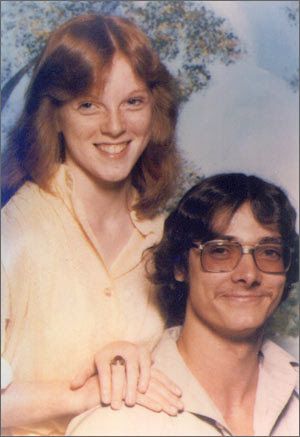
Lieth Von Stein around the time of his murder (photo source)


The Crime

It was 4:24 a.m. on Monday, July 25, 1988 when the call came in to North Carolina's Beaufort County Law Enforcement Center.  It had been a slow night, with dispatcher Michelle Sparrow reading a Stephen King novel throughout much of her 10 p.m. to 6 a.m. shift.  The woman on the other end of the emergency call was speaking so softly that Michelle couldn't fully understand her.  The woman asked for police and an ambulance and when Michelle asked her to speak up, she demurred.  She claimed that the intruder could still be in the house.  The dispatcher at first wondered if the caller was one of their "regulars," those few mentally disturbed people who would call emergency services to report terrible, yet false, acts.  She asked the woman her name and upon learning it -- Bonnie Von Stein -- and that the woman, Bonnie, said that she, as well as her husband, might be dying, Michelle Sparrow knew this was no crank call.  She advised the officers on duty, as well as rescue, to respond immediately to 110 Lawson Road for the possible beating and stabbing of two people.  "Please hurry," Bonnie Von Stein begged Michelle Sparrow.

The first officers to arrive at the scene, Danny Edwards, Ed Cherry, and Sergeant Bradford Tetterton, approached the two-story house with their weapons unholstered, fearing the intruder Bonnie Von Stein mentioned might still be in the house.  The house itself was dark and the men scoped it out with heavy flashlights, noting the enclosed back porch, with the porch door open and the broken window beside it.  Edwards and Tetterton entered the home through the open door where, in the kitchen, they found a fluorescent light on over the sink, cabinet doors opened under a microwave oven and a woman's white handbag on a stovetop with its contents strewn.  Edwards immediately detected the coppery scent of blood and mentioned it to Tetterton in a whisper, correctly ascertaining "Somebody's dead."  The pair made a sweep of the downstairs, finding no one or nothing unusual, and after turning on the hallway light, headed upstairs.  There were five closed doors and they took the first one on the right at the top of the stairs, a room that turned out to be the master bedroom.  In the darkness, they couldn't see Bonnie Von Stein but she called to them in desperation.  Sweeping his flashlight throughout the room, Tetterton was confronted by the most horrible sight he had ever encountered in his twenty-six years of service.  The room was awash in the red of the blood that was splattered everywhere.  On the bed, lying diagonally across it, was a stocky man clothed only in cotton briefs that had once been white but were now stained red with blood.   Stab wounds were visible in the man's upper back and left shoulder area.  Worse was the massive crater in the back of his head, so horrible that Tetterton believed he could look directly into the man's skull.   He immediately knew that this man was beyond human help.  Bonnie Von Stein, 44 years old, who lay on the floor next to the bed, told Tetterton that her husband, Lieth, 42 years old, was trying to help her and the intruder had attacked both of them with a "big club" or "baseball bat" and a knife.  

Meantime, Danny Edwards had gone into another bedroom after being advised that Bonnie's seventeen-year-old daughter Angela Pritchard was in the house.  He found the teenager asleep in her bedroom, the room directly next to the master bedroom, dressed only in a t-shirt and with a big square fan humming and blowing.  Despite the humidity and the heat of summer in North Carolina, a glass of ice water, with the ice cubes having not yet melted, sat on her bedside table.  Edwards awoke Angela, advised her there had been a situation in the house and asked her to get dressed as quickly as possible, which she did without question.  Leaving her to do so, he checked the remainder of the upstairs rooms and found no one else.  

Dispatcher Michelle Sparrow's husband, David, had been an EMT before becoming a police officer.  On duty that night, he responded to Lawson Road, armed with his shotgun and his medical equipment.  Let in the house by Edwards, he hurried upstairs to the master bedroom, finding Bonnie Von Stein lying on the floor in a bloodied nightgown.  He gave a compulsory check on Lieth Von Stein, agreeing with Tetterton that it was too late to render any aid, before turning his full attention to Bonnie.  He noted that she had been stabbed in the chest and was having difficulty breathing and so put an oxygen mask on her.  Although Bonnie was fading fast, she begged the officers not to let Angela in the room and to not harm her many cats and pet rooster that were roaming through the house.

The two EMTs that arrived by ambulance only moments later were stunned by the Von Stein bedroom.  They had expected some blood but the room was literally awash in it.  Blood had been sprayed and spattered on the ceiling and on three walls of the room.  The carpet was bloodied on both sides of the bed for more than three feet out.  They went first to Lieth, turning him over and discovering that in addition to the stab wounds in his back and the horrific head injury he had sustained, there was also a large and mean stab wound in the center of his chest, right above his heart.   Both his eyes were swollen and closed, his neat beard was matted in blood and his left hand was clenched.  Of the five gaping wounds on his head, three of them were across his forehead, one above and slightly to the side of his left eyebrow and the worst, above and to the back of his left ear.   There were six stab wounds from a large-bladed knife in his upper back, near his left shoulder and the one vicious stab wound to his chest, which would later be revealed to have gone straight through his heart.  His body appeared to have been bathed in his blood.   He had no pulse and the blood on his chest was already beginning to gel.   

Having done what they could do for Lieth, they began working on Bonnie.  They found she had cuts on her head and a stab wound to her chest that no longer appeared to be bleeding but she had lost a massive quantity of blood and her blood pressure was dangerously low.  The local hospital was notified to be prepared for her, as she was gravely injured and quickly fading, and permission was given for an IV drip and to wrap Bonnie in anti-shock trousers.  After a dressing was placed on her stab wound, a stretcher was brought into the house to transport Bonnie as quickly as possible to the emergency room.  

Tetterton had been speaking with Angela downstairs while the EMTs worked on Bonnie.  She claimed to have slept through the violence that went on in the room next door to hers, not even hearing Lieth's screams as he was being murdered.  She seemed oddly detached to the news that her parents had been beaten and stabbed.  She said she had a brother named Chris who was away at N.C. State University and Tetterton advised her to call her brother.  

(photo source)

Detective John Taylor was the youngest detective in the Washington Police Department at twenty-seven and he arrived at the crime scene after Bonnie Von Stein had been taken out of the house on a stretcher.  It seemed apparent that the intruder had entered and departed the home by the back porch but the broken window by the door was curious, as the door itself had nine individual panes of glass.  Furthermore, it would be impossible for someone to reach an arm in through the broken higher window to unlock the door (and silly, as one of the panes of glass by the lock itself could have been broken instead.)  Taylor found that the cuts in the window screen did not match the breaks in the glass.  Also curious was a faded and torn military knapsack that seemed out of place, lying on the back porch by a plastic garbage can. 

Although the white handbag found on the stovetop in the kitchen had been rifled through - and two additional handbags were found on a countertop - there were too many other things left behind that robbers typically take, like televisions, VCRs, stereos and computers.  A twenty-dollar bill and change were in plain view on a dresser in the master bedroom.  Lieth Von Stein's wallet and watch were untouched.  Bonnie's wedding rings were in a small bowl and other jewelry was in an unlocked box on a chest.  Detectives quickly came to the conclusion that robbery was highly unlikely and it whoever had entered the home had done so with the sole purpose of killing Lieth and Bonnie.


At the Beaufort County Hospital's emergency room, the doctor on duty found that Bonnie had suffered three very ragged lacerations on her head, two near her hairline at the center of her forehead of about an inch in length, and another, in a C-shape, over her right eyebrow.  Her left thumb, swollen and bruised, was likely broken.  Above her right breast was a grapefruit-sized bruise and to the right of her sternum was a two-inch stab wound.  The blade had bounced off bone and cut into the chest wall, causing a partial collapse of her lung.   But she was still alive. 


Chris Pritchard arrived in Little Washington around 8:30 that Monday morning, driven into town by N.C. State Safety Patrol officers, who had found him, hysterical, at one of the university's emergency call boxes.  After receiving the call from Angela that his mother and stepfather had been attacked, he had woken his roommate and torn their dorm room apart in search of his car keys, which he had been unable to locate.  He had then gone outside and seeing the emergency call box, used it to beg for help in getting home.  During the two-plus hour drive back to Little Washington, Chris had curled up in the backseat of the patrol car and gone to sleep, awaking only when they arrived at the Washington Police Department.  He was informed there that his mother was in the hospital but expected to survive and his stepfather was dead.  While Angela had been oddly unemotional, Chris, according to the officer who informed him, attempted to be grief-stricken "but he wasn't quite making it."  Chris asked to go to the hospital to see his mother before speaking with authorities, a request that was granted.  He was allowed to sit and hold her hand in the ICU while she recounted what had happened and Chris cried.


Lieth and Bonnie

Lieth, in his 1963 high school senior photo (photo source)

As with any homicide investigation, the authorities looked closely at the victims to discern who might want to harm them and why.  

Lieth Von Stein had been born in Queens, New York, the only child of parents of German descent who both came from prosperous families.  The Von Steins moved to Winston-Salem, North Carolina when Lieth was a baby and began running a laundry that would expand to become one of the most successful in the country, with several branches and more than 130 employees.  Lieth, after graduation, went to the School of Engineering at N.C. State University but flunked out by the end of his junior year and, with the Vietnam War raging, was soon drafted and sent to Germany for clerical work.  Honorably discharged in 1970, he returned to North Carolina and enrolled at Guilford College in Greensboro.  He was well known for his intellect, outspokenness, and wry sense of humor, as well as his continued close relationship with his parents, whom he unfailingly introduced to all of his friends, male and female.  He became enamored with computers during his time at Guilford and following graduation, he got a job working with them at Integon, an insurance company in Winston-Salem.  

While working at Integon, he met a woman who had also taken a strong interest in computers.  Bonnie Bates Pritchard was two years older than Lieth with two small children and had recently separated from her husband.  A native of Welcome, North Carolina, located in the rolling farmland of northern Davidson County, she had grown up in a family with three sisters and a brother and regular churchgoing parents.  Quiet and shy, Bonnie's main passions were reading and animals.  She had gone to work at Integon two years after graduating from high school and three years before she had married Steve Pritchard, who was only seventeen at the time of their wedding and attending his senior year of high school.  Fifteen months after the wedding, a son, Christopher, was born; under two years later, daughter Angela joined the family.  The addition of children to the already shaky marriage proved the death knell and the couple separated days before Bonnie's twenty-eighth birthday and weeks before Chris's fourth birthday, with the divorce becoming final the following year - the first in the Bates family.  

Lieth and Bonnie began to see each other outside of work in October of 1976, with their first date being dinner at Bonnie's house and then watching television after Chris and Angela were put to bed.  Two weeks after this dinner date, Lieth moved to Cincinnati, where he had taken a job with Federated Department Stores.  He had seen Bonnie for the two weekends before he moved and although she expected things to fizzle with him out of town, he continued to call and write to her.  Each trip he made home to visit his parents, he saw Bonnie as well.  About six months after he moved, he introduced Bonnie and her children to his parents, an indication that things were serious.  As Chris and Angela had had little to no contact with Steve Pritchard after he had left the marriage, Lieth stepped into the role, watching the kids in their school plays, taking them out to eat and even traveling together as a family on vacations at the beach.  Following a visit to Welcome at the home of Bonnie's parents, Lieth arranged to have a washing machine and an air conditioner delivered to their home, telling the Bateses that it would make him feel so good knowing they would be comfortable in the North Carolina summers and that Bonnie's mother could have more time to herself if she had help with the wash.  

In early August of 1979 Lieth accepted a new job at a finance company in South Bend, Indiana and asked Bonnie to go with him as his wife.   She said yes and the two were married on August 17.  Bonnie gave up the job she had held for fifteen years and she and her children moved with Lieth to a suburb in South Bend.  The winters didn't suit him and he worried about his aging parents and so in 1981 he accepted the position of head of internal auditing at National Spinning Company in Washington, North Carolina.   In July of that year, Lieth, Bonnie and the two children moved to the Smallwood subdivision, where they purchased the two-story frame house at 110 Lawson Road.   Although Lieth was happy to be back in North Carolina, he never cottoned on to Little Washington, as it was known, wanting instead to be in a larger city like Winston-Salem.  

In 1983, Bonnie began teaching data processing at a local community college.  The following year, she accepted a job as a programmer analyst with Hamilton Beach at the appliance factory only a handful of miles from the Lawson Road home, a position she would hold for two years.

In 1987, Lieth's father died suddenly of an aortic aneurism, leaving an estate valued at more than $1.2 million (nearly $3 million in 2021 dollars).  Lieth's mother, already suffering with health issues herself and thoroughly grief-stricken over her husband's sudden passing, followed him in death only four months later.  The loss of both of his parents in so short a time not only left Lieth relatively wealthy but had him thinking hard on his own life, which he felt had fallen into a rut.  He had apparently never much liked his job and by the last weekend of his life, he was talking to Bonnie about quitting by the end of the year and perhaps traveling or starting a business of his own.  Bonnie would later say that on the last day of his life, Sunday, July 24, 1988, Lieth had been jovial and in good spirits, looking forward with great anticipation to their future.  

In addition to the $1.2 million-plus inheritance, Lieth also had around $1 million in life insurance.  As expected, Bonnie was his beneficiary although she was fairly quickly ruled out as a viable suspect, not only due to her life-threatening injuries but also after speaking to the Von Steins' neighbors, who all said that they were decent, if less than sociable, even standoffish, people.  Should Bonnie also die, that left Chris and Angela Pritchard to inherit. 


The Investigation

Detectives spoke to Chris Pritchard that Monday night around 10:30 p.m., at a friend's house where he and Angela were staying.  Although he was nineteen, in appearance he looked closer to sixteen, a slight young man who wore a baseball cap and chain-smoked nervously.  He told them he had come home to visit that weekend, spending Friday night in the family home on Lawson Road.  He had had a term paper due that Monday though and so had headed back to school on Saturday evening after dinner.  On Sunday night, he had gone out with friends and then returned to the dorms, where he had stayed up until three or three-thirty drinking beer and playing cards.  He had only been in his dorm room and in his bed a very short time when Angela had called him about the attack.  The school's public safety officers had driven him back to Washington because he had been distraught and he couldn't find his car keys.   As far as Chris knew, his parents weren't having any problems and he knew of no one who disliked them, much less would would want to hurt them.  When asked if he and Lieth had gotten along, Chris assured the detectives they had and very well, something that was contradicted by other family members and friends who said that Lieth and Chris had frequently butted heads.  Chris claimed that he knew that Lieth had come into stocks or money but he really knew no details about it.  This too was contradicted by Bonnie, who told detectives that she herself had told Chris not only how much Lieth inherited but how much he was insured for.

Detectives go not only on facts but also on their gut feelings - and the detectives not only did not trust Chris Pritchard, they did not like him.

The map that broke the case and the house on Lawson Road (photo source)

What would eventually break the case came courtesy of  a Pitt County farmer by the name of Noel Lee.  Around four-thirty in the morning on Monday, Lee had just finished the hour-long process loading up hogs at his farm that was roughly one mile over the Beaufort County line and seven miles from Little Washington.  He had just been heading back home when he noticed a fire burning in the pre-dawn darkness.  He had been curious enough to drive his truck over and note that the fire was about three or four feet in height and a foot or two in diameter.  It burned so brightly that Lee instantly knew it had been fueled by something.  He didn't get out of his truck -- perhaps exhaustion, perhaps an ominous feeling -- but when he heard about Lieth Von Stein's murder, he instantly thought of the unusual fire and called authorities. 

Lee proved to be an excellent witness who remembered the exact time he first noted the fire and recalled precisely where it had been burning.  On Tuesday evening, he was able to take detectives to where he had spotted the fire and then over to Grimesland Bridge Road off State Route 264, where it had been burning.  The fire, naturally, had burnt out, leaving a blackened circle and charred debris.  In those debris were what appeared to be a socket for an extension wrench, burned remnants of blue jeans, molten remains of a sweater, the bottom of a Reebok sneaker and a large hunting knife, its handle melted and its six-inch blade blackened.  Also found were some wadded sheets of paper, one of them partially burned, that had blown out of and away from the fire. 

On Wednesday morning, detectives returned to photograph the area in daylight and give a more thorough search (although nothing more of significance was found).  

The knife was found to be consistent with the wounds that Lieth Von Stein had suffered.  More amazingly, once the singed sheets of paper were examined, one of them was determined to be a map, crudely drawn with a ballpoint pen,  One word was notated on the map - Lawson.  Blocks were drawn in, obviously to represent homes, and the one with an "X" had 110 written on it.  110 Lawson Road, the Von Stein home. 


The funeral service for Lieth Von Stein was held on Thursday, July 28.  What started as a gray drizzle turned into a raging thunderstorm by the time the service began.  Lieth's body was not present; he had been cremated and the cremains would be buried in Winston-Salem following a second, later, service.  The chapel was packed with Lieth's co-workers, neighbors and Bonnie's family.  Bonnie, attired in a black bedroom gown, was brought from the hospital in a car sent by the funeral home.  Chris and Angela rode with her and Chris, along with a mortuary employee, assisted her up the aisle and to her seat.  Following the service, she returned to the hospital, where she remained for four more days.   

On Friday, July 29, Washington's annual Summer Festival began, bringing in record crowds to enjoy the live music, food stands and arts and crafts exhibits.  Two of the attendees on that opening night were Chris and Angela Pritchard.  


Chris

(photo source)

Given the estimated timing of the attacks on Lieth and Bonnie, when Noel Lee had observed the fire and the location of the fire, detectives believed that after killing Lieth and attempting to kill Bonnie, the perpetrator or perpetrators had driven west on 264, stopping off at Grimesland Bridge Road to search for a good area to dispose of the evidence.  After doing so, if they then continued west on 264 they would end up in Raleigh and N.C. State University, where Chris Pritchard was a student.    The focus of the investigation enlarged to include Raleigh and N.C. State.

Before speaking to anyone outside the Pritchard family about Chris, however, investigators asked Chris to draw a map of the Von Stein neighborhood.  This he did, with a ballpoint pen, even going so far as to label the streets.  That second map would be compared with the first, with the professional and expert opinion by a handwriting analyst that the "Lawson" Chris had printed (twice) on the second map was identical to that on first map.

Speaking to former coworkers of Chris' and a girl he had dated, detectives learned that Chris had reportedly begun using marijuana and cocaine after his high school graduation and that although he liked to think and say he was lucky with the ladies, he was anything but.  The girl he had dated briefly broke up with him after he wouldn't keep his hands off her, even after she repeatedly told him no.  That girl had had no contact with him since that time but mentioned that he had talked incessantly about a game called Dungeons & Dragons.  

Chris' roommate during his freshman year told detectives that he and Chris never hung out together as their habits were different.  Chris never studied, to the point of barely making it through his first year.  The roommate knew of Dungeons & Dragons, as Chris read books about it in their room, but had never played the game there.

Detectives also spoke to a local sixteen-year-old who had often sold Chris pot and a mutual friend who confirmed Chris' marijuana use, as well as LSD, which he said Chris had started taking in the middle of his first summer session.  Chris had been a braggart, throwing money around on alcohol and drugs, and telling his friends that his parents were wealthy; they had bought him a Mustang, a nice computer, and they sent him a weekly allowance.  Chris was easily influenced by others, they said, and the main reason he was doing so poorly at school, besides the drinking and drugs, was that he spent practically all of his time playing Dungeons & Dragons.  

Detectives located the two female students who had hung out with Chris and another friend on the night of Sunday, July 24, going out to eat and then returning to the dorms, where they recalled that Chris had parked his car in the outer, fringe lot rather than closer to the dorms.  They remembered the evening well because their card game had not started until ten o'clock or later in their dorm room and beginning around one or one-thirty in the morning, one of the girls had started to ask Chris to leave.  Chris had ignored her requests until three-thirty when, after learning the time, he left at once.   One of the girls recounted that Chris had told her that he had an outline on his computer of how to come into a lot of money but when she asked to see it he had refused, saying it was secret.  She further said that Chris was resentful of Lieth, angry that Lieth spent his money on Bonnie but not on Chris and Angela.  Chris, she said, felt that he and Angela should have better cars and better clothing.   

Other acquaintances of Chris' said the same; that Chris was resentful of Lieth, did not like him, while others claimed that Chris never spoke of his stepfather at all.  

Unsurprisingly, Chris was not a good student and was better known around campus for his alcohol and drug consumption and his utter obsession with Dungeons & Dragons, although he had been a good student in school until about his senior year.  Despite that difficult year,  he had still been accepted at NC State as a nuclear engineering student.  Perhaps coincidentally, perhaps not, it was the same school that Lieth Von Stein had taken and flunked out of twenty years before.

Detectives, when speaking with Lieth's coworkers, learned that the Thursday or Friday before his death Lieth had been upset with Chris over his studies, going so far as to say that if Chris' grades did not improve that semester, he would be cut off. 

The detectives felt they might have a good motive for Lieth's murder and the attempted murder of Bonnie - an inheritance the rapidly failing Chris was certain to receive should both of them die.   Unknowing to Chris, however, was the fact that even if Bonnie had died, her will and that of Lieth, stipulated that neither Chris nor Angela could receive their share until they reached the age of thirty-five.   

 The Game

Dungeons & Dragons circa 1980 (photo source) 

Dungeons & Dragons first hit the market in 1974, a precursor to the immersive videogames that would flood the market decades later.  A fantasy role-playing game derived from miniature wargames, D&D allows players to to create their own character and assume that role.  Playing with a participant that takes on the role of Dungeon Master, who is the game's referee and storyteller, they form parties who explore, gather treasures and information and do battle.  The game allows the Dungeon Master to create his or her own unique storylines and adventures.  

By 1981, Dungeons & Dragons had a reported three million-plus players around the world and three-quarters of a million copies of the rules were being sold annually by 1984.   While the game won many awards in the role-playing genre, it also came under fire for its violent incentives and allegations of devil worship and witchcraft and for leading to suicide and murder.  In 1979, nearly a decade before Lieth Von Stein was murdered in his bed, Michigan State University student James Dallas Egbert III went missing from his dorm after playing Dungeons & Dragons.  He was located by a private investigator a month later and returned to his family, where he killed himself with a gunshot to the head. 

In 1982, sixteen-year-old Bink Pulling, an honors student and avid D&D player in Montpelier, Virginia, left a note saying that his soul was no longer his after another player put the curse of the werewolf on him.  He then got his father's handgun, went out onto the front lawn of the family home, and shot himself through the heart.  

Four months after Bink Pulling's suicide, eighteen-year-old Tony Gowin of Bardstown, Kentucky walked into a local hobby shop to ask about a Dungeons & Dragons book he had ordered.  He got into an argument with the twenty-year-old clerk and impaled her with a medieval broadsword, killing her. 

In 1984, 12-year-old Steven Erwin of Colorado fatally shot his 15-year-old brother Dan and then himself.  Both boys were avid fans of Dungeons & Dragons and left suicide notes saying that death was the only way they could get out of the game.

On May 26, 1985, a trio of Ragland, Alabama high school honor students playing Dungeons & Dragons shot and killed 26-year-old convenience store clerk Missy Macon.   

In November of 1985, sixteen-year-old David Ventiquattro of New York, a Dungeon Master, took a .20 gauge shotgun and killed his eleven-year-old friend Martin Howland.  Ventiquattro claimed that in his D&D world, his role was to extinguish evil and Martin was an evil demon who had to die. 

In 1987, Long Island teen Daniel Kasten murdered his parents as they slept.  An avid Dungeons & Dragons player, Kasten believed that he was under the control of the Mind Flyer character.    


Although the company that produced the game denied any legitimate connection between it and violence, in 1983 it added a warning about players becoming too closely identified with their characters.

Like James Dallas Egbert had in 1979, Chris and his D&D friends liked to play the game in the steam tunnels at school, fortifying themselves with alcohol, pot and/or acid before playing out the scripts they were given by the Dungeon Master, roleplaying which would often run throughout the night.  The two friends that Chris had that seemed as dedicated to the game as he was were a current student named Bart Upchurch and a former student named Neal Henderson.

Bart

(photo source)

James Bartlett "Bart" Upchurch III was from eastern Caswell County and, like Bonnie Von Stein, had grown up on a farm.  Although his parents would stay married for years, they endured breaks in which Bart and his younger siblings were separated from their father.  In elementary and high schools, he had been a good student with above-average grades but he tended to bore easily.  He was an avid reader, though, with particular interest in the science-fiction and fantasy genres.  It was while reading one of his books that he was first introduced to Dungeons & Dragons.  He acquired the board game and soon had friends playing with him after school and even over the telephone.  By ninth grade, Bart brought the game to school with him and it would be played in the cafeteria during lunch.  So popular did it become that soon other students were creating their own groups to play.  Teachers were aware the students were involved in the game but in an isolated area like Caswell County, Dungeons & Dragons was seen as a positive outlet for kids to stimulate their creativity and imagination.   The game required intense concentration and a commitment, neither negative attributes.  For Bart, who loved to tell stories and loved to be in charge, it answered an innate need he had.  That the game had a lack of moral base, that the people who "won" weren't necessarily "good guys" but those characters who had outsmarted others, troubled him not at all.  As the Dungeon Master, he liked the power and the recognition far too much. 

Although Bart had acquired a reputation as a loner and "weird," his teachers recalled him always being very obedient and respectful to them, if with no apparent direction or goals in life.  

By the time Bart began his senior year of high school in the fall of 1985, he and his fellow players had moved into advanced stages of play and the game had taken on a new and different cast.  No longer were their characters going after monsters but were now facing off against each other, to seize each other's "treasure" and conspire to destroy other characters.  

It was at this point that Neal Henderson joined Bart's circle and D&D group.

Neal

Like Bart, Neal Henderson came from a broken family but unlike Bart, who did not communicate his feelings easily, Neal found the separation from his adored father heart wrenching.   Precocious in his youth, he had an exceptionally high IQ of 180 and was considered gifted.   So far ahead of his classmates that he made perfect scores on any tests he took, he, like Bart, became bored at school.  He turned his attention to books, books of all genres, and created his own comic books.  In the fifth grade, Neal attended eighth-grade classes in the morning and then returned to elementary school in the afternoon.  Although he could have handled a full day of a high school curriculum, Neal's mother worried about his social development if he spent all day with older classmates.  

Although the ten-year-old was considered an oddity, he was not bored at school for the first time although he was a terrible procrastinator.  At twelve, Neal went off to high school and took the SAT for the first time, outscoring the gifted academics in the senior class.  At thirteen, he heard of Dungeons & Dragons for the first time and read everything he could find on the subject.  

When he was fourteen, Neal was accepted at the prestigious North Carolina School of Science and Mathematics in Durham, where joined other students who were considered the state's best at the tuition-free boarding school.  Shortly after his arrival at the school, he became involved with several groups that engaged in role-playing games that included Dungeons & Dragons.  Also for the first time in his life, he made friends, including his first girlfriend.  His habit of procrastination was still present though, as well as a lack of self-discipline and it reflected in his schoolwork.  He was placed on academic probation and although he managed to pass with Bs and Cs, he was not invited to return to the school the following year.

Although Neal felt badly about letting his mother down, he later said the school and its freedom wasn't for him, as he didn't have the self-discipline required to do the work.  He started his senior year of high school back home, where he played tuba in the band, worked on the high school yearbook, helped raise money to go towards the purchase of a computer for the Junior Engineering and Technical Society (a computer that he helped program), and organized groups for fantasy role-playing.  Like he had done in the year previous, Neal spent more time playing games than he did on his schoolwork and so repeated his senior year.  

He had also found a girlfriend.  Kenyatta Upchurch was Bart's first cousin but she met Neal through Bart's younger brother.  Their relationship would be a typical teenaged tempestuous one, peppered by Neal cheating on her with other girls during his second senior year.  Neal felt these indiscretions should not matter, as he did not love them and he was only satisfying a physical need.  He found girls easy to use and thought it their fault if they got hurt.  When told he shouldn't use people, his only reply was that people were so easy to manipulate.


A Perfect Storm

Bart had his first run-in with the law in February of 1986, when he and three friends were arrested and charged with breaking into the high school and stealing a computer and breaking into a lake house, where they stole cases of beer, wine, a television, two clocks, and a pair of binoculars.  Bart admitted his guilt to his angry and embarrassed parents, who later said that while Bart worried about the outcome (he could have faced the maximum of twenty years in prison), he had no remorse over what he'd done.  

A plea deal was worked out in March, in which the two charges would be consolidated and reduced to misdemeanors in exchange for Bart pleading guilty, paying restitution and completing 150 hours of community service in the six months following his plea (neither of which he did).    Over the next two years, he would be arrested twice more: a misdemeanor larceny charge for stealing a cooler of beer and for driving without a license and careless and reckless driving.   

He tried marijuana for the first time around graduation, allegedly because he thought it something he should do before he started college.  Initially, due to his interest in the military, he wanted to apply to the U.S. Naval Academy but realized his chances of acceptance were slim.  A chance meeting with an army recruiter led him to decide that a three-year enlistment, in which he saved his money and earned college credits, was perfect for him - until his arrest curtailed that.  His probation officer refused to give the permission for him to enlist, saying that he had to complete at least half a term at college before he could come off probation.  Bart had applied to three or four colleges in the fall of his senior year, although he had absolutely no idea what he wanted to do with his life.   He was accepted at North Carolina State University and while he wasn't particularly thrilled, he didn't want to stay in Caswell County.

Neal too had been accepted to NC State on a full scholarship.  He had achieved a near-perfect score on his SATs, the only 1500 the admissions director said he had seen.  Although not a particularly close or good friend of Bart's, Neal was friends with Bart's younger brother and he suggested that he and Bart room together at college.  Given Bart's propensity toward neatness and order and Neal's disorganization and sloppiness, as well as Bart's love of attending parties nightly and returning to the dorm drunk and Neal's dislike of any groups of more than three people, it did not turn out to be the best suggestion.  They remained roommates for their freshman year and even roommates at an apartment off campus during that summer of 1987 but went their separate ways, at least residentially, by the fall of their sophomore year.

Bart had flunked out his freshman year and was informed he would not be invited back.  Neal too had struggled, ending up on academic probation and with his scholarship in jeopardy.  Instead of applying themselves over the summer semester, they watched MTV, played games, smoked marijuana, and shoplifted from a variety of stores, despite Bart's earlier convictions.     

By the end of his sophomore year, Neal too had flunked out, with his scholarship revoked and he was forced to move off-campus.  

Bart was back in school for the summer session by the time he was hanging up posters in search of new D&D players around the campus (with a promise of "Free Beer!").  Neal was working at a local retail store but scheduled his hours around their projected game time.  Also taking the summer session, and against his parents' advice, was Chris Pritchard.  

Confessions

It would take many months but ultimately, it would be Neal that would break and confess all to the investigators.   Unlike Bart, who had been calm and alternately cordial and flippant when questioned, Neal seemed vulnerable and nervous to the detectives.  They played a hunch, telling him they knew Chris was involved and they felt Neal knew something and it would be better for him to tell them what he knew.  The story Neal told was chilling.

Neal said that within a week or so of meeting Chris, discussions turned toward future plans and Chris had mentioned that it would only be a matter of time before he was wealthy; his family, according to Chris, had millions, including multiple houses and cars.  Someone - Neal couldn't remember who - had made the suggestion that Chris should just go ahead and off his parents for the money.  Once they were dead and Chris inherited, he could buy a house in the woods for all of them to live in, where they could spend their days doing drugs, drinking, and playing Dungeons & Dragons.  Neal assumed that it was just bullshitting until July of 1988, when Chris and Bart informed him they had come up with a plan for Chris to inherit early by killing his parents.  

Their first plan had involved Chris sedating his family with sleeping pills and then setting the house on fire.  That plan was scrapped after Chris decided that it would be best if he were not in the home; he thought a home invasion would be a better choice.  Angela was not really discussed other than Chris saying at one point that he was okay splitting the inheritance with her (an amount he told Bart and Neal was around $10 million) and also saying that should she awaken on the murder night, she would also have to be taken out.

According to Neal, Bart agreed to be the actual killer.  Neal's job was to drive Chris' car to Washington, since Bart's driver's license had been revoked.  Neal believed he was going to paid either $2,000 or $20,000 for chauffeuring Bart to and from the scene.  Chris drew them a map of the neighborhood, showing not only the Von Stein house but the neighboring houses with dogs that might bark.   

The day before the murder, Neal said that Chris told him that his parents were about to disinherit him over his poor school performance and lack of ambition and if disinherited, he would have to leave school and likely find a job.  

Neal did not know when the murder plot was going down until the day of Sunday, July 24, 1988 when Bart showed up with Chris' car keys and told him to meet in the fringe parking lot behind the Lee dorms that night around midnight.  Neal said that Bart had applied black shoe polish to a white pair of batting gloves, as well as to the bat he said should "get the job done" on both of Chris' parents.  Just in case, though, Chris had purchased a hunting knife as backup.  According to Neal, Bart was excited and hyperactive about the upcoming murder mission.  

Neal maintained that even while driving Bart to Washington, he was under the impression that he was only going to commit a burglary of jewelry that Chris said was in the house.  Even when they pulled off where Chris had told them to and Bart changed into all black clothing, smeared black shoe polish around his face and put a dark ski mask on, Neal still insisted he had no idea that people were going to get hurt.

Neal told the detectives that he waited in the car while Bart went off with a key that Chris had provided.  He wasn't sure how long Bart was gone but when he returned he told Neal that he had "actually done it" and he had "never seen so much blood in my life."  Neal at first said that he had seen blood on Bart's hands and then later recanted that statement.  

It was Bart who directed Neal on where to go to dispose of the clothing, weapons and map and Bart who set the items on fire.  

Neal drove the two back to Raleigh and left Chris' car in the same lot.  He put Chris' keys on a high shelf in a shared bathroom per Bart's instruction. 

He had spent the last nearly twelve months trying to forget that night and claimed he had been in a state of depression ever since.  He knew he needed to atone by telling all but claimed that he had not come forward out of fear of Bart Upchurch and Chris Pritchard.  

On Thursday, June 15, 1989 Bart Upchurch was arrested for the murder of Lieth Von Stein and the attack on Bonnie Von Stein.  He refused to say anything and asked for a lawyer.

Although officers had done their best to keep Bart's arrest and arraignment secret so as not to tip Chris off, a friend of Bonnie's in Washington had called her in Winston-Salem to tell her that a friend of Chris' had been arrested for Lieth's murder.  Bonnie let Chris know, who had been living with her after leaving school for "psychiatric" reasons, and Chris spent Thursday night at a friend's house. 

On Friday, June 16 detectives turned up at Bonnie's home in Winston-Salem with a warrant for Chris' arrest.  Chris called his attorney before returning to the house, where he was promptly taken into custody.  On the drive back to Beaufort County, he chatted about the tornadoes that had recently struck Winston-Salem and Wake Forest, where he had enrolled in summer school.  He did not speak about the charges leveled against him but acted certain that he would not be under arrest for long.

On the morning of Tuesday, June 20, Neal Henderson was arrested in Raleigh.  He had known it was coming and was waiting for the detectives.  

The Trials

Chris, Bonnie and Angela, January 1990 (photo source)


On Friday, July 21, Neal was released on a bond of $200,000 and moved in with his mother in Danville, Virginia.  As he had been working at a Wendy's in Raleigh when he was arrested and was within days of a promotion, he was allowed to work at a Danville Wendy's while out on bail.   

On Monday, July 31, following a bond motion hearing in court in Washington, Chris' bail was set at $300,000, half of which was to be secured.  Bonnie used two certificates that had been Lieth's to secure Chris' bond.  Neal Henderson had also been in court that morning and Bonnie had a visceral reaction to him that necessitated her to briefly leave the courtroom.  She felt his thick, stocky frame may have been what she had seen that morning when she and Lieth had been attacked and not the lean and lanky frame of Bart Upchurch.

Three days later, Bart reported to the same courtroom where his bond was set at a half million dollars, all of it to be secured.  His family could not meet that requirement and he was returned to jail to await his trial.  

By December, a plea deal had been worked out with Neal and his attorneys.  In exchange for pleading guilty to the felony charges of aiding and abetting second-degree murder and aiding and abetting assault with a deadly weapon and intent to kill, all other charges would be dropped and Neal would testify against Bart and Chris.  Sentencing would be left to the discretion of the judge, who could sentence Neal to as much as life plus twenty years.  On December 5, the plea agreement was accepted by the judge with sentencing to occur after the trials of Bart and Chris.  Neal was allowed to return to Danville with his family.

The trials were scheduled to begin on January 2, 1990 but on December 27, 1989, Chris plead guilty and agreed to testify against Bart after spending nine hours telling his story.  Although there were some inconsistencies, Chris' account backed up Neal's that Bart was the murderer.  Despite this crushing development for Bart's defense, he refused to admit his guilt in the crimes and attempt to seek a plea deal from the state.  He would go to trial.

Bart on trial (photo source)


Bart's trial began on Monday, January 8, 1990 in Elizabeth City, at the Pasquotank County Courthouse.  His jury compromised eight women, four men and two alternates - a man and a woman.  All of them said they could in good conscience sentence Bart to death should they find him guilty and determine the circumstances warranted such punishment.

Beginning at the end of that first day and into Tuesday, January 9, Bonnie Von Stein took the stand and recounted the horrible events of that night in July when she was attacked and her husband was killed.  Two days later, on Thursday, January 11, Chris, considered the prosecution's star witness, took the stand.  He recounted his relationship with Lieth, his troubles with drugs that included marijuana, cocaine, LSD and ecstasy, his faltering grades at college and his obsession with Dungeons & Dragons.  He then recounted the murder plot, which was the first time the general public had heard it.  It was also the first time that Angela, seated beside Bonnie in the courtroom, heard her brother say that if she had awakened on that night back in July of 1988, she was to have been killed as well for the main reason being that Chris would then stand to be the sole beneficiary of their parents' estate.  She showed no outward signs of emotion and had no change in expression.  Chris admitted to having bought the knife used to stab Lieth at a Kmart only days before the murder and testified that only the knife was discussed as being used, not the baseball bat.  

Responding to questions from his own attorney, Chris said that upon learning his mother had survived the assault, he had been "happy."  He also said that he had "incredible remorse" over the attack and murder and he was "thoroughly disgusted."   He admitted the initial idea to murder his parents had come from him.

On Tuesday, January 15, Neal Henderson took the stand, testifying as to his background in a monotone voice so low that the judge had to remind him to speak up.  He recounted meeting Bart back in high school, going to NC State with him, playing Dungeons & Dragons, meeting Chris and taking drugs.  He went over the plot to murder Lieth and Bonnie and testified that Bart had always carried around an army green knapsack, like the one found at the crime scene, and a baseball bat.  He was still on the stand Wednesday, recounting the night of the murder and asserting that neither Bonnie nor Angela nor anyone else had conspired to murder Lieth Von Stein; only Chris, Bart and Neal himself.  Neal was asked why he had gotten involved the plot to kill the Von Steins and he responded that he had poor self-esteem and was desperate to make friends and fit in.  When shown a color photograph of Lieth as he was found dead in his bedroom, Neal teared up and said he not only did not do that, but that he could not have done that.  

Chris and Neal testifying at Bart's trial (photo source)


Bart's attorneys called Jim Upchurch, his father, to the stand, then his great-uncle and then a friend of Bart's from high school.  To everyone's surprise, the defense then rested.  

In closing, which ran over an hour-and-a-half, Bart's attorneys stressed there was not one piece of physical evidence that linked their client to the crime, but both Neal Henderson and Chris Pritchard had admitted their guilt.  The "cold, callous and bloodthirsty" Chris had hired Neal to kill his parents.  The medical examiner had testified that the object used to bludgeon Lieth and Bonnie had been swung by a right-handed person.  Bart, seen writing at the defense table, was clearly left-handed - but Neal was right-handed.  The jury just needed to use common sense with the case.  They closed with a reminder to the jury that despite the testimony, no one knew exactly what had happened and by whom that night at the Von Stein house.

The case went to the jury on the morning of Tuesday, January 23.   Their deliberations continued through lunch and into the afternoon until 5 p.m., when the judge called the end of the day.  Deliberations resumed on Wednesday morning, continuing through lunch until the jury reached a verdict at 4:05 p.m.  None of them looked at Bart as their verdict of guilty was read.  Bart, who on Tuesday morning, had expected the jury to return within minutes with an acquittal, paled visibly and put a hand to his mouth.   His mother, whose birthday it was that day, sobbed and grabbed her son's shoulder.

(photo source)


The jurors' jobs were not yet done.  Under North Carolina law, they had to decide the punishment for Bart: life in prison or death in the gas chamber.   

The sentencing hearing began on Friday, January 26.  As expected, Bart's family took the stand to beg that his life be spared.  What was unexpected was Bonnie taking the stand outside the presence of the jury to speak of her general objection to the death penalty and that she did not want Bart Upchurch to be executed.  Feeling that her words would invite the jury to use passion and emotion in their decision, the judge found her testimony constitutionally unconscionable and did not allow the jury to hear it.  

Shortly after 3:30 p.m. on Monday, January 29, the jury began its deliberations on sentencing.  They were sent home at 5 p.m. and picked up deliberations on Tuesday morning.   When they returned later that day with a verdict, two of the female jurors were openly crying and once again, none would look at Bart.  Bart's attorneys knew that they had not chosen to spare his life and instead, sentenced him to death.  

Angela Pritchard, who had sat through Neal Henderson's testimony and who had heard the painful details of her brother recounting his plans to end their parents' lives, and possibly her own with boredom bordering on thorough disinterest, burst into tears upon hearing that Bart had been sentenced to death.  


End Game

(Photo source)

Neal Henderson was sentenced to 40 years for aiding and abetting second-degree murder and six years for aiding and abetting assault with a deadly weapon, with the sentences to run concurrently, and was sent to the Harnett County Correctional Institution south of Raleigh.   He was given a recommendation for a "study release," which meant that Neal could have been out of prison in as little as five years.   He ended up serving double that, being released from the Orange Correctional Center in Hillsborough on December 11, 2000 and still resides in North Carolina, where he manages a restaurant.  During the entirety of his incarceration, Neal did not commit a single infraction or have one write-up.   

(Photo source)

Following his conviction and sentence of death, Bart Upchurch filed an appeal and in October of 1992, the Supreme Court of North Carolina found that errors had been made in his sentencing trial and vacated his death sentence, remanding his case for a new capital sentencing proceeding.  At the new hearing, he was sentenced him to life imprisonment.  After serving time at Alexander Correctional Institute and Hyde Correctional Center, Bart was transferred to Davidson Correctional Center, near Lexington, where he remains.  

Unlike Neal Henderson, Bart has had seven infractions since 1995, ranging from theft to disobeying orders.  His last infraction, in September of 2021, was for substance possession.    

He is eligible for parole in 2022.    


(Photo source)

Judge Thomas Watts, who had presided over Bart's trial and who had sentenced Neal Henderson, also sentenced Chris Pritchard.  Before handing down the sentence, Chris spoke on his own behalf, saying that while he had forgiven Neal and Bart for their parts in the crime, he had not yet forgiven himself.  Judge Watts believed that Chris was remorseful but also stated, "The midwife may have been Dungeons & Dragons and drugs - I would not argue with that - but the genesis was Christopher Pritchard." 

Judge Watts imposed the maximum sentence on Chris; life plus twenty years.  He was allowed to step into a side room with Bonnie and his attorney for a final, brief, goodbye.  Angela, for whatever reason, did not accompany them.

Chris was sent first to a prison in Goldsboro, southeast of Raleigh, where he underwent a drug and alcohol rehabilitation program before transferring to the Craggy Correctional Institute, north of Asheville.  While in prison, he became a born-again Christian.  Shortly before he was convicted, Bonnie reestablished her relationship with him.  She stayed in touch with him while he was incarcerated and drove to visit him every visitation day.     

He was released from the Davidson Correctional Center near Lexington on May 13, 1997 and moved in with his mother.  He finished his probation on May 31, 2012.    

He currently resides in Winston-Salem with his wife and works with at-risk youth, an advocation he began while imprisoned.  He remains close to his mother.


And yet unanswered questions still remain.  

During Lieth's autopsy, the coroner found undigested chicken and rice in his stomach.  Bonnie always said that she and Lieth had dinner that night and then returned home, where Lieth went to bed at 9 p.m.  Rice and chicken, being easily digestible, should have long since left his stomach between three and four in the morning, when the attack would have happened.   Extreme stress can slow down the body's normal digestive functioning but this fact, combined with the abnormal lack of emotion shown not only by Chris and Angela but by Bonnie herself had some wondering whether she had been telling the truth.

Bonnie's initial and visceral reaction to seeing Neal Henderson for the first time supported the theory of some experts who believed that two people were involved in Lieth's murder.  Bonnie had described the assailant, whom she had only glanced briefly in the dark and without her glasses, as being big and bulky with a neck that sat right on his shoulders - a description that would never been given to Bart Upchurch, unless Bart had padded himself substantially that night.  The experts believed that Lieth had been struck by an instrument wielded by a right-handed person; Bart was left-handed.  If the experts were correct, Bart used his less dominant arm to strike Lieth and Bonnie or someone else was in the Von Stein bedroom wielding a weapon.    

In Neal's statement to the police and in his testimony, he claimed that he got nervous while waiting for Bart to return and left their prearranged meeting place and drove without purpose to another location, where Bart apparently found him.  Neal never could explain exactly how Bart would find him in an unfamiliar area in the dark.

Chris testified that he had given Bart the key to the Von Stein back door but Bonnie had told authorities that the porch had been redone and the back door rekeyed with a new lock.  The key that Chris had no longer worked - and yet Lieth Von Stein's killer had managed to enter the home.

Chris always maintained that Angela knew nothing of his murder plot but when asked a year after his conviction about a conversation he had with her on Saturday, July 23, 1988, he had no answers. Chris has been on his way back to Raleigh, supposedly to write a term paper, and had stopped by a friend's house where Angela was.  He had taken her aside for a short, private conversation with her but when pressed later, he could not recall stopping off to see her or having the conversation.  

He also denied that Angela had ever known Bart Upchurch, contradicting Angela herself who said that she and Bart had met a few times when she had traveled to NC State to visit with Chris and one of Angela's girlfriends, who recalled meeting Bart as early as January of 1988 at a Def Leppard concert (notably, five months before Chris claimed to have first met Bart).  Angela presented her relationship with Bart as more acquaintances but friends of Bart had said that they two had been involved in a sexual relationship and that Bart had been in love with Angela.  While incarcerated, Neal Henderson told author Joe McGinniss that Bart had told him, "Finally, I've met a girl I'd like to marry."  

Angela always insisted that she had slept through her stepfather and mother being bludgeoned and stabbed in the bedroom next to hers.  Only hours earlier, Bonnie had knocked on Angela's door, asking her to turn her radio down because the music could be heard through the walls.  Angela not only slept through murder, she also apparently slept through the police, EMS and ambulance coming down the street, up the driveway, into the house and up the stairs.   And she elicited no panic or fear at being woken by a police officer in the wee hours and apparently did not immediately run to his mother's room - next door to hers - upon seeing the police officer or hearing from him that something had happened. 

Some investigators wondered not only how Angela could have slept through Lieth screaming (according to Bonnie more than a dozen times) but if she had unlocked the door downstairs in order to let Bart in.  They theorized that perhaps she had been told Bart was only going to burgle the house and she did not know murder was on the menu until it was happening or had already happened.   The glass of water, with the unmelted ice cubes on her nightstand, in the heat of a North Carolina July evening more than four hours after she claimed to have gone to sleep never made logical sense.  

As late as two years after her brother was incarcerated for Lieth's murder and the attack on their mother, Angela still insisted that Chris and Lieth had a loving relationship.

Lieth's final resting place (photo source) 


Sources

Bledsoe, Jerry.  Blood Games.  Penguin Group, 1992.

McGinniss, Joe.  Cruel Doubt.  Simon & Schuster, 1991.

State v. Upchurch, 421 S.E. 2d 577 (1992).   

The Crime Bus (2021).  Dungeons & Dragons Murderers.

Washington Daily News (May 26, 2007).  Pritchard To Be Paroled. 


New York Post (December 12, 2000).  "Dragon' Up Old Fears.


September 21, 2021

Two Officers Down in El Segundo: The Cold Case Murders of Richard Phillips and Milton Curtis


Fingerprints and a Signature Crack a 45 Year Old Case 


It was Sunday night, July 21, 1957 in Hawthorne, California.  Bob Dewar was 17 years old and had attended a summer party with three friends earlier in the evening.  It was before midnight when the quartet, consisting of two boys and two girls, decided to make a stop at the local Lover's Lane on Van Ness Avenue.  After parking, Bob rolled the window of the 1949 Ford down - and that's when the barrel of a gun poked through.  A voice told him "This is a robbery."  Bob initially thought someone was pulling a prank on them but it was all too real.   All four handed over watches, jewelry and cash.

Armed with a flashlight, the robber had also brought surgical tape which he used to cover the teenagers' eyes, before forcing them to undress and then binding them.  One of the girls, only 15 years old, was raped by the man after he moved from the driver's side of the car to the passenger side.

Bob later remembered that the man asked them to get out of the car and then said, "I think I'm going to kill you.  I want you to march out into the field."  The girls were crying and Bob figured it was the end of the line for all of them - when they heard the car door close and the Ford take off.  The four were left, bound and taped, naked and helpless but alive.  Officers Richard Phillips and Milton Curtis would not be so lucky.

The Crimes

El Segundo in the 1950s was a quiet, safe and well-to-do suburb of Los Angeles.  The night shift usually consisted of traffic stops of impatient or intoxicated people.  Officers Richard Phillips and Milton Curtis were working the graveyard shift, sitting in their patrol car at the intersection of Sepulveda and Rosecrans.  Phillips was 28 years old, a veteran who served in the Air Force during the Korean War and was known to be an excellent marksman.  He had been with the department for nearly three years.  He was married and had three children.  Curtis was 25 years old, a rookie who had just graduated from the academy in Riverside and had been in uniform only two months.  He was married and had two children.

It was somewhere between 1:15 a.m. and 1:20 a.m. on Monday, July 22, 1957 when the two officers, with Curtis at the wheel, noticed the 1949 Ford pull up to the intersection and stop at the red light before then proceeding through it.  Neither Phillips nor Curtis knew about the robbery, assault and rape that had taken place in the hour before when they decided to pull the car over.

Phillips had gotten out of the patrol car and pulled his citation book out, as another patrol car with Officers James Gilbert (Milton Curtis' partner until two weeks previous) and Charlie Porter drove by.  Seeing Phillips writing in his citation book and Curtis behind the wheel and phoning it in, it appeared to be a routine traffic stop with no need for any kind of backup and so Gilbert and Porter drove on.  They had no idea that other than their killer, they would be the last people to see Richard Phillips and Milton Curtis alive.

The call that Curtis made, requesting that the plates on the Ford be run came through around 1:28 or 1:29 a.m.  Only seconds later came a call over the radio from Officer Phillips requesting an ambulance and saying that he and his partner had been shot.  Porter and Gilbert raced back to the scene, where they found Phillips, mortally wounded on the ground beside the patrol car, with three gunshots in his back.  His service revolver lay next to him, emptied of bullets.  His citation book was on the hood of the police car, with only the date filled in.  Phillips died before he could get to the hospital.  Curtis, still in the driver's seat of the patrol car, was dead from three gunshot wounds: one to the upper right chest, one to the right side, and one to his right forearm.  Both men had been shot with .22 caliber short rounds.  The killer was gone.

A woman by the name of Margaret Osburn had been heading home from work on westbound Rosecrans Avenue and had stopped for the signal.  She noted the patrol car that Phillips and Curtis were sitting in and also noted a Ford pull up in the left lane next to her, briefly stop for the light and then run it.  She saw the officers take off in pursuit of the Ford and once the light had changed, she proceeded through the intersection, continuing on Rosecrans.  She saw the police car, with the Ford, pulled off the road at Rosecrans and Palm.  She recalled seeing the driver standing outside the car and one of the officers shining a flashlight into his face.  Osburn said the driver was taller than the officer, with "husky" shoulders.  She estimated him to be around 25 years old, with either curly blonde or light brown hair and wearing a red plaid shirt with the tailed pulled out of, rather than tucked into, his pants.  

Nineteen-year-old Alan King had also been traveling on Rosecrans that night and had seen the patrol car, with its lights and siren on, coming up behind him.  He had pulled off to the side and watched the car speed by him.  Having just finished his shift at a local gas station, he continued on to his home on Poinsettia, around the corner from where Phillips and Curtis pulled the Ford over at Rosecrans and Palm.  King later claimed to have seen from the back porch of his house Phillips and Curtis forcibly remove the driver from the vehicle, where there was a brief "struggle," before the driver quieted down and Curtis returned to the patrol vehicle and talked into the radio mic.  King then went inside, running back outside when he heard gunshots.  He saw the driver get into the Ford and "speed down Rosecrans." 

The police car of the fallen officers, with Officer Phillips' citation book on the hood
(photo source) 


The Investigation

An immediate BOLO went out for the Ford, starting what would be the greatest manhunt in California's history at the time.  The four teenagers from Hawthorne were discovered on the street and they, along with Alan King, Margaret Osburn, and Officers Gilbert and Porter, helped to develop a composite sketch of the killer.  

With hundreds of officers from El Segundo and the neighboring communities scouring the area, the Ford was found fairly quickly, roughly four blocks west of the crime scene.  It had been struck with three gunshots, thanks to Richard Phillips.  A bullet hole was noticeable in the trunk.,  Two bullet holes were easily visible in the back window.  Two rounds were recovered inside the vehicle, leading investigators to hope that the killer had been struck by one of the bullets.  Two latent lifts (fingerprints) were taken from the steering wheel; they were later determined to be left thumb prints.  The skirts belonging to the teenaged girls that had been assaulted several hours earlier were found on the back seat and floorboard.

Once again, the killer was gone.

Milton Curtis with his wife and children (photo source)

The fallen officers were buried on July 26, side by side, at Inglewood Park Cemetery (in April of 1958, Richard Phillips' remains would be moved to Spokane, Washington).  The hunt for their killer went on.   Several promising leads surfaced, as well as a multitude of tips, but led nowhere.  In 1958, the case was featured in True Detective magazine with a plea for public help to solve the murders.  Two years later, in 1960, a man pulling up weeds at his home on 33rd Street in Manhattan Beach discovered a watch and a chrome-plated revolver; the location was a mile from the crime scene.  A second watch was found after a search.  Both watches had been taken from the Hawthorne teens in July of 1957 by the killer that had since obtained the nickname of "The Lover's Lane Bandit."  It was theorized that after he dumped the bullet-riddled car, he had run through the yards off Rosecrans, dropping not only the items he had stolen, but the murder weapon as well. 

Richard Phillips' widow and children (photo source)

Having been on and in the ground for three years, no prints were able to be lifted off the nine-shot Harrington & Richardson .22 revolver.  Ballistics tests could only say that the weapon was "consistent" with the bullets that had killed Officers Phillips and Curtis; the poor condition of the gun made it impossible to be more conclusive than that.  The gun was able to be traced to a Sears store in Shreveport, Louisiana and had been purchased for $29.95 on June 18, 1957 by a man using the name of G.D. Wilson and a Miami address (the address turned out to be fictional).  Assuming the man was not from Shreveport, investigators began searching nearby motels and hit pay dirt at a YMCA, where a George D. Wilson of Miami had checked in on June 16, 1957.  Detectives would not know it then but the accompanying signature would eventually help to break the case four decades later.

The Shreveport connection also confirmed the investigators' suspicions that their killer was not from California.  The Hawthorne teens had mentioned that he had an accent, possibly southern, and that he had been almost polite in the midst of the assault.   

The police worked hard to track down every George D. Wilson in the United States but ultimately realized the name was a fake.  The case went cold once again.  Although the case moved on to the back burner as the years ticked by, Richard Phillips and Milton Curtis were not forgotten.

A Break in the Case

In September of 2002, the El Segundo Police Department received a phone call from a female claiming to have information on the case.   She said that her uncle had bragged that he was responsible for killing the two cops in El Segundo.  With a new suspect, the fingerprints lifted back in 1957 were sent to the Los Angeles Sheriff's Department crime lab, along with information on the suspect.  Specialists Dale Falcon and Don Keir found that the new suspect was not a match to the 1957 fingerprints - but they decided to use modern science in an attempt to solve the case.  Following the terror attacks of 9/11, the FBI had created a nationwide database of fingerprints containing convicted criminals from every state in the country.  Falcon and Keir cleaned up the original fingerprints, digitized them and loaded them into the system.  And just like that, they got a match.

A young Gerald Mason (photo source) 

Gerald Fiton Mason had been born in Columbia, South Carolina in 1934 into a family with four other sons.  He served time in the Army in the early 1950s before being honorably discharged.  In 1954, he had spent a semester at the University of South Carolina, where he studied business.  He had his first brush with the law in April of 1956 when he was arrested for burglary and larceny.  Sentenced to three years incarceration, it was suspended to one and Mason served eight months.  

In 1960, Mason married his wife Betty and the couple went on to have two daughters and grandchildren.  He had owned and operated several service stations in the Columbia area before retiring in the 1990s.  


Investigators were stunned that the match was not to a career criminal.  In fact, his record did not have a violent offense on it.  Further searches revealed that Mason had not gotten so much as a parking ticket after April of 1956.  

The old YMCA records were pulled out and the handwriting for George F. Wilson was examined by forensic expert Paul Edholme who found the Wilson sample "identical" to samples of Gerald Mason's handwriting.  Armed with the fingerprint match and Edholme's assertion that he was "99.9% certain" that Mason and Wilson were one in the same, California detectives felt assured they had their man.  


Arrest and Conviction

Mason had been put under surveillance in December of 2002 as detectives waited to make their move.  On his last day of freedom (although he wouldn't have known that), Tuesday, January 28, 2003, he played golf.  On Wednesday, January 29, around 7 a.m., he was arrested at his home.  The large number of officers present for his arrest reportedly shocked Mason and he inquired where they were from.  Told they were from the El Segundo Police Department and the Los Angeles County Sheriff's Office, Mason replied, "You're homicide detectives?  I think I need a lawyer."   He was then informed he was being arrested for the murder of two police officers in 1957, to which Mason said, "My god, you're here for that?  That happened so long ago.  I can't believe you're bothering me with that."    

Booking Mason into the local jail while awaiting a request for extradition, a decades-long question was at long last answered.  Officer Richard Phillips, after being shot three times in the back, lying on the ground and dying, had managed to pull his service revolver out and fire six shots at the Ford as it sped away.  Three of those shots hit its target.  Finding only two rounds in the car, investigators hoped against hope that Phillips had managed to wound his killer.  Detectives in 2003 noted a bullet-shaped scar on Mason's back, one he eventually admitted came from a bullet fired by Phillips.  Richard Phillips had marked him for life and nearly 46 years later, the scar remained there to prove it.   


Mason in court (photo source) 
Following a judicial hearing in South Carolina, Mason agreed to return to Los Angeles to answer for his crimes.  Officer Howard Speaks, who had lifted the fingerprint from the Ford that eventually was linked to Mason, attended the hearing, remarking, "I've been waiting for this date a long time, but the wait was worth it."   Officer Charlie Porter, who along with his partner James Gilbert, had seen not only Mason but Phillips and Curtis in their last moments alive, said "You can run, but you cannot hide.  Kill an officer and we'll get you, no matter how long it takes." 

Under a plea deal, rape, robbery and kidnapping charges were dropped against the 69-year-old Mason, who pleaded guilty to murdering Richard Phillips and Milton Curtis.  According to his attorney, he did so to spare "the victims" the pain of testifying.  He had told detectives that he had been intoxicated on the night of July 21-22, 1957 and had stumbled across the teenagers in Hawthorne by chance and didn't remember why exactly he had assaulted them and raped one of the girls.  When the police officers had pulled him over in El Segundo, just east of Hawthorne, for running the red light, he figured they would soon find out he was in a stolen car and what he had done.  So "If I don't get them, they're gonna get me."  According to Mason, when "the officer turned away from me, I shot both officers, got back in the car and drove away."  (That officer was likely Phillips, who had put his citation book on the hood of his vehicle to write the ticket.)  

Also in the courtroom were children of Richard Phillips and Milton Curtis.  Mason asked them for forgiveness for the killings, saying "Please believe I am still looking for ways to express my remorse for the horror I have caused."    Carolyn Phillips, Richard Phillips' daughter, told him "Your cowardly act shattered our lives forever . . . there is no way to describe the emptiness and anguish we have felt all our lives without Dad . . . we cannot and will not forgive you."  

Keith Curtis, Milton Curtis' son, said, "Gerald Mason, your family may be shocked but my family has been devastated."    


On March 24, 2003, a tearful Gerald Mason was sentenced to life in prison, a sentence he was allowed to serve in South Carolina so that he could be close to his family.  "At no other time in my life have I intentionally harmed anyone," he said.  "I don't know why I did this."   One of his daughters stated that even though she couldn't possibly describe the range of emotions their family had gone through as a result of his crimes, she couldn't have asked for a better father.  

Mason was turned down for parole in 2009, with a recommendation of the maximum 15-year wait before the next parole hearing.  He died on January 22, 2017, nine days before his 84th birthday.  He had served 14 years for his crimes.  


The final resting places of Officers Curtis and Phillips

Sources:

CBS (March 25, 2003). 1957 Cop Killer Asks Forgiveness.

CBS News (March 15, 2005).  The Ghosts of El Segundo.  

Criminally Intrigued (July 29, 2017).  El Segundo Cop Killing Cold Case.

GoUpstate.com (February 10, 2003).  Neighbors Wonder How Friend Could Be in Jail.

The Los Angeles Times (March 25, 2003).  Man Sentenced to Life in Two 1957 Police Murders.

The Los Angeles Times (July 22, 2007).  Death in El Segundo.  

Murderpedia (2021).  Gerald Mason.

The New York Times (January 30, 2003).  After 45 Years, an Arrest in the Killing of 2 Officers.

Wikipedia. (2021).  Gerald Mason.


September 4, 2021

The Science of DNA: Roger Keith Coleman and Wanda McCoy

Post-Execution DNA Testing Answers the Question of Innocence or Guilt in a Vicious Rape-Murder 


Time's May 18, 1992 issue with Roger Coleman (photo source) 


"We who seek the truth, especially in criminal justice matters, must live or die by the sword of DNA."  - Jim McCloskey

In its May 18, 1992 issue, Time magazine put a photograph of Virginia inmate Roger Keith Coleman on the cover.  Coleman, dressed in a blue work shirt, black pants and tennis shoes, was sitting against a cinderblock wall.  His hands are in his lap, his ankles clearly shackled.  "THIS MAN MIGHT BE INNOCENT.  THIS MAN IS DUE TO DIE" blared the headline about the convicted rapist and murderer who had a scheduled appointment with the Virginia electric chair the same week.

It was this magazine, and the resulting explosion of news coverage, both nationally and internationally, that introduced many to Roger Coleman and his story.  Despite Coleman's repeated statements of innocence, as well as thousands of letters and phone calls that flooded the governor's office in Richmond and personal pleas for clemency from Mother Teresa and Pope John Paul II, Coleman was not given a movie-ready last minute reprieve.  A portion of his last words brought death penalty opponents to tears and advocates questioning the system.  "An innocent man is going to be murdered tonight.  When my innocence is proven, I hope Americans will realize the injustice of the death penalty, as all other civilized countries have." 

Wanda Thompson and Brad McCoy at his prom, 1978 (photo source) 


The Crime

It began eleven years earlier, in 1981 in Grundy, a small, working class town thirteen miles from the West Virginia border, fifteen miles from the Kentucky border, sixteen miles from the infamous site of the Hatfield and McCoy feud, and roughly fifty miles from both North Carolina and Tennessee.  Grundy is in the heart of the Appalachians, seven hours from Virginia's capital city of Richmond.  A coal mining town, Grundy hardly fit the slogan Virginia would adapt for itself - "Virginia is for Lovers" - or the genteel southern image of colonial style and plantation homes that would dot Williamsburg, Yorktown and Jamestown.  Only about five square miles in size and with a population of roughly 1,000 residents, alcohol wasn't sold in Grundy in 1981.  Those who wanted liquor had to drive across state lines or partake in moonshine made in the mountains.

In spite of its small size and religious, hardworking citizens, wife beating, rape, and murder were not foreign to the area.  Coal mining, being hard, dangerous work, especially in Buchanan County, it wasn't unusual for the sheriff's department to get domestic calls after workers returned home sweaty and covered in coal dust and grime.  It also wasn't unusual for liquor - moonshine or otherwise - or drugs to be involved.  Buchanan County had seven murders in 1980, making its murder rate twice that of the state as a whole.  All seven of the cases had been successfully prosecuted by Mickey McGlothlin, the county's prosecutor.

Wanda Thompson McCoy wasn't from Grundy but Home Creek, about twelve miles outside of Grundy, very nearly in Kentucky.  The fifteenth of sixteen children and the daughter of a coal miner, Wanda was a quiet and obedient girl, shy with strangers but without a mean bone in her body.  A born homemaker, as a child she had liked nothing better than making clothing and working on crafts.  She would be remembered as an average student in school with pretty strawberry blonde hair and a welcoming smile. 
   
Her future husband, Brad McCoy, was a member of that  McCoy clan.  Brad's father Max, known as "Hezzie," was proud of the family's lineage.  Hezzie worked for United Coal and on the side drove a white stretch limo for weddings and other events.  

While the legendary McCoys were ill-tempered and rude, Brad was as soft-spoken and gentle as his future wife.  Two years older than Wanda, he too went to Grundy Senior High School.  They met through Wanda's older sister Lydia, who worked with Brad at the local Piggly Wiggly grocery store.  Brad initially nursed a crush on Lydia but Lydia suggested he turn his attention to Wanda and it wasn't long before the two hit it off and were going steady.  

On June 13, 1978, Brad graduated from Grundy Senior High.  Three days later, he began working for United Coal.  His easygoing nature, combined with his brightness, helped him to place aboveground as a parts clerk in United Coal's Repair Shop No. 1.  In July, he and Wanda were married at the Grundy Baptist Church.  The McCoys and the Thompsons were happy with the match and apparently had no reservations over the age of the groom (18) or the bride (16).  

The newlyweds moved into the subdivision of Longbottom, east of Grundy, and by Slate Creek.  The subdivision consisted of newer brick and frame ranch homes in the front and older frame houses in the back.  Brad and Wanda rented one of the older homes, located less than two blocks from Brad's parents.  

Wanda had originally planned to return to school in the fall of 1978 and begin her junior year but she found that she enjoyed keeping house, making clothing, and working on her crafts.  The life of a housewife suited her and Brad's salary was enough to support the two of them, so she dropped out of school.  

Over the next nearly three years, Brad and Wanda settled into a comfortable routine of working and visiting with friends and family.   


Tuesday, March 10, 1981 should have been just another day for Wanda and Brad.  The couple, approaching their third wedding anniversary, had spent the morning at home.  Wanda had watched television while she sewed and Brad read the newspaper and generally took it easy before he had to leave for his shift at United, which was the 3 p.m. to 11 p.m. swing shift.  It was a cold day in Grundy, around 42 degrees, when Brad left the house shortly after 2 p.m. to run a couple of errands before clocking in.  

Brad would later remember his work shift as being fairly uneventful.  There were no breakdowns, mine shutdowns, or accidents that day and he was able to take his regularly scheduled dinner break and eat the food that Wanda had prepared and packed for him.  He took a coffee break at 9 p.m. so he could call home and check in on his wife.  She did not like to be home alone, especially at night, when Brad was working and he tried to call her during his shift to soothe her anxiety and also break up the loneliness for her.  

The two chatted for nearly fifteen minutes, about how the remainder of their day had gone, what Wanda was watching on television (BJ and the Bear) and how they would spend the tax refund money they were expecting.  It seemed like dozens of other similar conversations they had had.  Brad had no way of knowing it was to be the last time he would ever speak to her.

After hanging up the phone, Wanda apparently went back to watching television, curled up on the sofa with a handmade afghan wrapped around her.  At some point she drank a Coke; the empty bottle was later found on the living room floor.

Brad left work promptly, as soon as his shift ended at eleven.  Once he crossed the bridge over Slate Creek and drove up to Oak Street, he would have been able to see anyone coming and going from the front door of his home.  He initially noticed nothing unusual this evening, other than the porch light was off.  Wanda normally left it on for him when he was working.  It was approximately 11:10 p.m. 

Climbing the ten steps to the porch and front door, Brad found that the storm door was unlocked.  He was immediately concerned as Wanda, a creature of habit, normally kept the house locked up tight.  The front door of the home had a glass door pane and a previous resident had covered it over with paint.  Brad had scratched a section off, creating a peephole of sorts, and he peered through this peephole into the living room where he saw Wanda's afghan lying on the sofa but no Wanda.  Using his key, he let himself into the home and directly into the living room.  The television set was on, as were the lights, and the coffee table, normally in front of the sofa, was out of place, the empty Coke bottle on the floor, likely having fallen off the table when it had been bumped or moved.  

Brad may have already subconsciously known something was very wrong when he noticed the light on in the spare bedroom and headed that way.      

Wanda McCoy, just nineteen years old, lay on the floor.  She was on her back, her arms over her head, her legs spread straight out and her hair covering her face.  Both her sweater and bra were pushed up around her neck, revealing her breasts.  Her blue jeans lay on the bed and a pair of blue and white striped socks were still on her feet.  A pair of dark blue satin underwear was twisted around her left ankle.  

Wanda's head was surrounded by a large pool of blood that was continuing to grow and Brad could see that she had been stabbed twice in the chest.  From somewhere underneath the sweater that was around her neck blood was still oozing.  

Brad knew his wife was dead and so he did not touch her or disturb her body in any way.  Given that the blood was still spreading in the room, he realized she had not been dead long.  He ran back to the living room, where he called his father Hezzie, begging him to come over as Wanda had been raped or killed.  Then, fearful for his own safety and worrying that the killer or killers might still be in the house, Brad waited first on the front porch for Hezzie before setting off on foot down the hill toward his parents' house.  He ran into his father backing his car out of the garage.  Seeing Brad's frantic state, Hezzie went back into the house for his gun and then also to call the Buchanan County Sheriff's Department.  That call was logged in at 11:21 p.m.  

Hezzie and Brad returned to the home Brad shared with Wanda.  While Brad waited outside, Hezzie had briefly gone inside, viewed Wanda, and confirmed Brad's belief that she was dead.  He was back outside on the porch with Brad when the first two officers arrived on the scene.  It was now 11:25 p.m. 

Deputy Sheriff Steve Coleman entered the house and went immediately to the spare bedroom.  He lifted the heavy sweater around Wanda's neck and attempted to check for a pulse.  Unsuccessful, he found that she had no intact vessel.  Her throat had been cut so badly, her head was nearly severed from her body.  

Grundy Chief of Police Randall Jackson arrived on the scene at 11:31 p.m.  Viewing Wanda's body, he noted, as Brad had, that fresh blood was still oozing from underneath her sweater.  Jackson felt Wanda's wrist and found no pulse but discovered that she was still warm.  

He ordered the scene to be secured, as well as thoroughly searched.  Like Brad, he considered that the killer or killers might still be hiding in the house.  


Jackson arranged to have Dr. Thomas McDonald, the medical examiner who lived nearby, picked up by a patrol officer and brought to the scene.  Dr. McDonald officially pronounced death around 11:45 p.m. and made a preliminary determination that Wanda had died due to the slashing wound in her neck.  He also felt that she had been dragged from the living room to the bedroom.  Based on body temperature, Dr. McDonald felt the time of death was somewhere between 10 p.m. and 11 p.m.  

Although Brad McCoy had been seen at work and leaving work at 11 p.m., an officer was dispatched to question him at his parents' house, where he was waiting.  As with all murder cases, the spouse is always the first suspect.  

At 11:45 p.m., Dr. McDonald left the scene to return to his own home.  Chief Jackson waited for Jack Davidson, an investigator from the Virginia State Police whom he had called especially, to arrive from his home in Vansant, a town east of Grundy.  Jackson hoped that Davidson would take over the investigation.  

Inside the house, Wanda's body had stopped bleeding and had begun the first stages of rigor mortis.  


The house where Wanda died (photo source)


The Investigation

One of Davidson's first acts in the investigation was to speak to Brad McCoy.  He quickly cleared him as a suspect, although he did verify with United Coal what hours Brad had worked that day.  He requested that Brad take a polygraph examination, an examination to which Brad agreed but that would not be administered for nearly two weeks for unexplained reasons.  Later that evening, Brad became so agitated and upset that his parents took him to the local hospital, where he was sedated. 

Examination of the McCoy home itself revealed more clues as to what had happened to Wanda and how.  On the outside screen door, a latent fingerprint was lifted.  On the front door molding, just over three feet from the floor, was a pressure, or pry, mark.  Supporting Dr. McDonald's belief that Wanda had been dragged into the spare bedroom, there was a small bloodstain on the floor of the living room and the marks and patterns suggested that something was indeed dragged through it.  Smaller bloodstains, or spatter, was found on the living room wall and on the white shade to a lamp that was on a table at the hallway entrance.  Davidson believed that this was where Wanda was initially attacked and received the defensive wounds to her hands he had noted.  Other than these three areas of blood only the coffee table and Coke bottle seemed out of place.  To the trained investigator's eye, it seemed as though Wanda had let her killer or killers into the home.

The spare bedroom had more to tell.  The massive amount of blood found in that room suggested that the fatal cut to Wanda's throat happened there.  Noting the position of her arms over her head in the direction of the bedroom door, Davidson thought that Wanda had been dragged feet first into the bedroom.  He also believed that she never regained consciousness, otherwise her hands would have been covered in her blood from the instinctual response to grab at or cover the throat wound.

A black substance coated Wanda's hands, which Davidson felt certain was coal dust from her killer or killers.  The same black substance was also noted on the sleeves of her sweater and both of her upper thighs.  

At 9:30 on the morning of Wednesday, March 11, paper bags were placed on Wanda's hands to protect them from contamination and loss of any potential evidence and her body was taken to Roanoke for autopsy.  

The autopsy began at 8:30 on the morning of  Thursday, March 12 and would testify to Wanda's frightening and violent end.  Dr. David Oxley found that she had died from the brutal wound to her throat, some four inches deep and so vicious that it severed her right carotid artery, jugular vein and larynx.  The wound was made with a single stroke by a sharp instrument and ran in a downward motion from the right side of Wanda's throat to her left.  

She had also sustained two deep and penetrating stab wounds to her chest; one just below her breastbone and one near the inside of her left breast.  The first wound penetrated her liver, the second, her left lung and heart.    There was no significant bleeding resulting from either wound, leading Dr. Oxley to conclude that the wounds were delivered when Wanda was already dead or so near to death that it mattered very little.

Dr. Oxley discovered two foreign hairs on Wanda's genital area that did not match her own.  Although he did not note any traumatic injury to either her vagina or rectum, he took swabs from both areas to test for the presence of sperm.  He took samples of her blood and the black substance that had been found on her hands and those, along with her clothing, were preserved.  Although Dr. Oxley noticed that Wanda's fingernails were broken and her hands covered with blood, he stated in his report that there was no significant amount of material underneath her fingernails and rather inexplicably, took no action to preserve it for analysis.  He also neglected to test the blood on her hands, assuming it came from her own wounds.  Dr. Oxley's report failed to mention the defensive wounds on Wanda's hands that Jack Davidson had noted or the large bruise or abrasion present on her upper right arm that was noticeable in the autopsy photos.     

On Saturday, March 14, the funeral service for Wanda Faye Thompson McCoy was held in the Big Rock Freewill Baptist Church, the church she had attended Sunday School in as a child.  The minister who had married Brad and Wanda nearly three years earlier joined two ministers from Big Rock to conduct the service after which her body was taken to Mountain Valley Memorial Park to be buried.  

The residents of Grundy, most of whom had paid their respects to Wanda at the church and then again at the cemetery, were stunned and grief-stricken over her murder.  Grundy had more than its fair share of violence but not to God-fearing good girls like Wanda.

On Monday, March 16, Jack Davidson learned that the vaginal and anal swabs Dr. Oxley had sent for analysis had tested positive for the presence of sperm.  Two tests had to be done on the samples in order to get the blood type of the man who left the sperm in Wanda's vaginal canal:  he was a type B secretor.  (Brad McCoy, who admitted to having sexual relations with his wife roughly 48 hours before her death, was type A).  The testing done on the anal swab, for whatever reason, came back "inconclusive."  Although the scientific world was still over a decade away from DNA testing, the blood type was good news to investigators.  Only ten to thirteen percent of the population in the southeastern United States have type B blood.

By comparison, the sample of the black material found on Wanda's hands, which Jack Davidson had been positive was coal dust, came back as being organic soil and plant material.  However, as no such material had been found anywhere in the McCoys' home other than on Wanda's body, Davidson was certain it had been brought in by her killer or killers.  


Roger Coleman and Trish Thompson (photo source)


A Suspect

Brad McCoy had, naturally, been Davidson's first suspect in Wanda's murder.  He was the first person Davidson spoke to, making note of his clothing and a cut on his left thumb.  Brad had no scratches or wounds on him that Wanda would have left had she been fighting him for her life and his clothing had no bloodstains or tearing.  Furthermore, he had cried copiously and cursed over what had befallen Wanda.  He would provide relevant information to Davidson, though.

Brad informed Davidson that months earlier Wanda had been receiving nuisance and obscene phone calls and that the last person to visit their home had been Wanda's younger sister, Patricia (known as Trish).  Before that, it had been Brad's friend and coworker, Junior Stevenson.  According to Brad, he had had problems with a neighbor.  He confirmed that Wanda had been afraid to be home alone at night and would keep the doors locked and bolted.  She would never have given a stranger admittance into the house.  Outside of Brad, his father and her father, the only other men she would have let into the home would have been Junior Stevenson, her former brother-in-law Danny Ray Stiltner, and Trish's husband, Roger Coleman. 

Junior Stevenson was interviewed and said he had been so tired when he got home from work on the afternoon of the murder that his wife had to help him out of his truck.  Once inside his home, he had fallen asleep on the sofa and had not woken until the next morning, when he got up to return to work.  His wife verified his account.  

In speaking with Wanda's mother Marie and her sister, Peggy, who had been married to Danny Ray Stiltner, Davidson learned that it had been Wanda's belief, as well as of the Thompson family, that Stiltner had been behind the obscene phone calls Wanda had received months earlier.  

Despite these suspicions and a rumor that Danny felt Wanda was responsible for the breakup of his marriage with Peggy, Davidson did not interview Stiltner for two weeks.  When he finally did, on March 24, Stiltner denied making any calls to Wanda and denied any involvement in her murder, saying he had been with his mother and father at the time Wanda was killed.  He told Davidson that when he had been married to Peggy, Trish's husband Roger had come to their house often, bringing liquor.  In contradiction to the rumor saying otherwise, Stiltner felt that it had been Roger that had caused the breakdown in his marriage, not Wanda, and that Roger was "crazy" and probably guilty of the murder.

Roger

Roger Keith Coleman had been born in Georgia to a military family.  When his father was transferred to Germany eight months after he was born, Roger and his mother moved to Grundy to live with his father's family.  Only four months after that, Roger's mother moved to Michigan and got a divorce.  Although she sent for Roger, she eventually returned him to Grundy and his grandparents when he was six.  Neither his father nor his mother seemed to have any interest in raising or caring for him and so his grandparents formally adopted him.  

He was thirteen when he had his first brush with the law.  He and a friend were caught making obscene phone calls to a female classmate in which she received numerous calls where descriptive sexual fantasies were told to her.  Even her younger sister was subjected to them when she answered the phone.  Roger claimed to have made the calls because he was lonely and a voice in his head told him to do it.  As he had never been in trouble before, and he was a good student with an above-average IQ, a social worker advised that he receive psychiatric counseling, which he did.  

Roger proved to be tenacious.  He wanted to join the basketball team, despite his height (5'9") not suggesting he might be a natural, and so he did.  He excelled in sports and did well academically in high school, although he didn't achieve the high marks his IQ inferred he might.  He worked after school and on weekends, not only to put some money in his pocket, but also to give his grandparents for food and clothing.  When he wasn't going to school or working, he spent his time fishing, hunting, hiking around the countryside and reading.  Roger was an avid reader.

Getting closer to graduation, he wanted to avoid a life of working in the coal mines.  Wanting to go to college but coming from a financially strapped family, he instead applied for enlistment in the Army.  Everything seemed to be falling into place for him - until April 7, 1977.  

On April 4, 1977, Grundy had been struck by flash floods that resulted in two buildings on Main Street being torn from their foundations and carried away in the raging waters, collapsed bridges and roads in and out of the city being blocked and closed.  The emergency led to businesses being closed and that included the high school.  

Brenda Rife was a schoolteacher in Grundy, along with her husband, Preston.  She had been home with their six-year-old daughter Megan on April 7, while Preston had gone to check on the car lot he ran on the weekends and holidays.  A young man she estimated to be around eighteen and wearing a Grundy High letter jacket and sailor hat came to her front door, claiming to be part of a crew of volunteers cleaning up the flood damage, and requested a glass of water.  Once he was let into the house, he pulled a roll of adhesive tape from his pocket, along with a pistol, and ordered Brenda to tie her daughter to a chair.   Terrified, she complied.  At gunpoint, she was taken throughout the house and upon getting to the master bedroom, the man ripped her bathrobe open, pushed her down on the bed, climbed on top of her and began kissing her.  She scratched him hard on the neck, infuriating him.  As he went for his gun, she fled the room and ran for the sliding door downstairs, yelling for her daughter to follow her.  The little girl was taped too tightly and could not escape her restraints and so Brenda went back for her child.  The man caught her on the porch and a struggle ensued, with Brenda screaming for help.  She managed to get ahold of his gun and throw it;  when he ran to fetch it, she noticed two neighbors walking up the road, who had heard her screams.  The man noticed them too, and after running to retrieve his hat, which had come off in the struggle, he fled the Rife home through a side door and took off into the woods.  

The local authorities were busy with the flood damage and so once she had calmed herself, Brenda pulled out the last several years of Grundy High's yearbooks.  In short order, she recognized the young man she believed had attacked her - Roger Coleman.   When Brenda was taken later that day to Roger's place of employment, she gave a positive identification.  

Roger denied having anything to do with the attack on Brenda Rife and had two witnesses (the Grundy High superintendent and his daughter) who placed him at the high school up until 10:30 that morning; Brenda Rife believed her attacker arrived at her home between 10 a.m. and 10:15 a.m.  Despite the time discrepancy and the lack of any scratch marks on Roger's neck, he was arrested and charged with attempted rape.

Roger was out on bail when he graduated from high school on June 17, 1977.  A month later, a jury found him guilty of the charge and on July 29, he was sentenced to three years in prison.   Finding out about his conviction, the Army canceled his enlistment.  His conviction, whether justifiable or not, put an end to Roger's dreams of college and escaping Grundy and the life of coal mining.  

He served exactly twenty months and one day of his three year sentence, being released on March 30, 1979.  By April, he was working in a mine a few miles outside of Grundy.

In the summer of 1979, he met Trish Thompson, Wanda McCoy's youngest sister and the one she was closest with.  Trish was only fifteen years old, a vivacious and exuberant redhead.  Initially thinking that Roger's convict past was exciting and dangerous, in reality she found him to be articulate, thoughtful, and intelligent.  Their dating became serious very quickly and they were soon talking marriage.  While the Thompson family had been supportive of Wanda marrying early, they were less than happy with Trish wanting to marry so early and to a man with a record.  Although her parents and siblings begged her to at least finish high school, she would not be swayed.  After gaining her parents' consent, she and Roger were married on August 8, 1980.  Because Trish and Wanda were so close, it seemed only natural that Brad McCoy and Roger would become friends as well. 

On January 12, 1981, almost exactly two months before Wanda was killed, two female librarians at the Buchanan County Public Library were victimized by a man who entered the library just before closing time and exposed himself to them.  According to the librarians, the only two in the building since it was bitterly cold and snow was falling, he masturbated in front of them and ejaculated across their checkout desk before running out the door.  Although a well known town drunk was at first suspected (he had run naked through the streets of Grundy only a week earlier), both women identified a photograph of Roger Coleman from a Grundy High School yearbook as the perpetrator.  

That case was still pending (charges were eventually dropped) when Wanda McCoy was raped and murdered.   The librarians claimed that a week after Wanda's death Roger Coleman returned to the library to read books in the forensics section of the library, as well as the part of the library that housed its copy of the Code of Virginia.  


Roger Coleman (photo source)


Jack Davidson Closes In

When Davidson heard that of the three men that Wanda would trust enough to let into the home when Brad wasn't there, one of them -- Roger Coleman -- had a record for sexual assault, he honed in on him as the prime suspect.  

Before Davidson had questioned Danny Ray Stiltner or Junior Stevenson, he was anxious to learn Roger's whereabouts on the evening of March 10, 1981.   Speaking to Davidson on March 11, Roger provided a very detailed account of his whereabouts on the night his sister-in-law was killed.  He had left for work between 8 p.m. and 8:30 p.m.; he worked the night shift in a drill mine about three miles outside of Grundy.  Upon arriving for work, he was informed that his shift had been laid off without notice.  Roger said that he had chatted with another man at the mine before heading back home.  When he reached Grundy, he realized he had left his coveralls and knee pads at the mine and turned around to go back and retrieve them, as he planned on searching for work the next day.  He arrived at the mine the second time that evening between 9:45 p.m. and 9:50 p.m.  After retrieving his gear, he spent about ten minutes talking to the shift foreman and other workers, departing once more around 10 p.m.  He ran into a friend on the road home and said that the two had stopped their vehicles and chatted until around 10:30 p.m.  From there, he drove to a nearby trailer park to visit with yet another friend, who was out of work; Roger said he thought the two of them might do some job hunting together the following day.  Upon arriving at the friend's trailer, he found no lights on and did not bother knocking at the door.  According to Roger, it was around 10:45 p.m.  He did, however, see the neighbors across the street watching t.v. and recalling that he had left an eight-track music tape there days earlier, stopped by and retrieved it.   He then returned to Grundy and went to the miner's bathhouse where, although he had not worked, he followed his usual routine of showering and changing into clean, non-work clothes.  Roger took his work clothes, which were covered in coal dust, put them in a plastic bag and headed to the home he shared with his wife and his grandparents, arriving, he claimed, around 11:05 p.m.  

Davidson noted that Roger had no obvious scratches on his arms, neck, or face.  Still, he asked for the clothing Roger had worn and Roger turned them over, as well as a wet washcloth and a damp towel.  The legs of the blue jeans were wet, which Roger said must have happened at the mine.  Examination of the jeans found two or three small areas of blood on the right leg and a tiny speck on the left.  That blood was found to be type O, the same type as Wanda's.

Two knives that Roger voluntarily turned over to detectives were examined and one, a pocketknife with a three-inch blade was found to have a very minute quantity of blood, so small that it could not be determined whether it was animal or human.  

On March 13, hair samples were taken from Roger.  The pubic hair sample was found to be "consistent" with the unknown pubic hair recovered from Wanda's body.  

On April 13, an indictment for rape and capital murder was handed down against Roger Keith Coleman.  He was arrested the same day and jailed without bond.  

On Trial

At his arraignment on April 14, 1981, Roger informed Judge Nicholas Persin that he could not afford to hire an attorney.  Although Persin spoke to experienced criminal defense attorneys in the area, all of them begged off for one reason or another and Persin did not push the issue or assign any of them the case.  He instead chose Terry Jordan from Grundy and Steven Arey from Tazewell, neither of whom had tried a murder case and both of whom had very little criminal trial experience.  They were officially appointed on April 16.

Nearly a year would pass before the case came to trial, a time in which Trish Thompson Coleman, Roger's wife and Wanda's sister, changed her opinion and support of Roger from innocence to guilt.

The case was called for trial on March 15, 1982, a year and a day after Wanda had been buried.  The defense had brought a motion for change of venue, which was denied.  Also denied was a request to sever the rape and murder charges.  

Roger's defense team was seriously outmaneuvered by Mickey McGlothlin and the team of prosecutors but they did manage to score several points, namely that there was an unidentified fingerprint found on the McCoy front door that did not match Roger and that Dr. McDonald, when examining Wanda's body, had rolled her over, an action that could have led to the pubic hair being deposited on her.  They also elicited testimony from their own expert that no coal dust was found on Wanda's body and that the black substance, initially thought to be coal dust (of which none was found) by investigators was actually soil.      

Unfortunately for the defense, the couple that lived in the trailer park that had returned an eight-track cassette tape to Roger on the night of March 10, 1981 testified that he had arrived at 10:20 p.m., which would have given him a small window of time in which to rape and murder Wanda if she had been attacked and killed closer to 11 p.m.

The friend of Roger's who had spoken to him that night on the roadway until about 10:30 testified as such - but Roger's defense team failed to obtain his timecard, which showed his clock-in time at 10:41 p.m. and would have corroborated Roger's timeline.  

The defense called Trish, Roger's estranged wife, as a witness, which turned out to be a blunder.  Initially, Trish had told investigators that Roger had arrived home on the night her sister was murdered around 11:05 p.m.  She had been in bed reading and had looked at the clock when he came in.  On the stand, however, she denied knowing what time it was that Roger returned home.  Rather than demonstrating he could not possibly have raped and killed his sister-in-law had he been home at 11:05, his attorneys succeeded in showing the animosity Trish had for Roger.  

The defense also called his Roger's grandmother, as he and Trish had been living with his grandparents at the time of Wanda's murder.  His grandmother testified that Roger arrived home at 11:05 p.m., but by doing so, she impeached her earlier statement to investigators that Roger had arrived home as the eleven o'clock news was ending.  She claimed she had been mixed up a year earlier, as she had just gotten out of the hospital.  Worse, she voluntarily added that Roger had not been drinking and was not acting nervous; as she had not been asked that question, the statement was perceived that Roger had indeed been drinking and had been acting nervous.    

The state's last witness was a criminal by the name of Roger Matney, who had been in the Buchanan County Jail with Roger Coleman.  Matney testified that Coleman confessed to him that he and another man had been at the McCoy residence with Wanda when Brad called around 9 p.m. and after that phone call, the other man had attacked Wanda with the knife, after which the two of them had raped her.  Matney claimed that Coleman had drawn a diagram of the murder scene, although one was not produced.  The defense attorneys did manage to elicit Matney's record and the fact that although he had been sentenced to four years' time a year earlier, he was already out - seemingly in exchange for his testimony.  They didn't know, however, that at the time Matney was called as a witness, he was facing serious charges for beating and threatening to kill a fellow inmate while forcing him to perform oral sex.  Nor were they aware that even Jack Davidson and Randy Jackson had little credence for Matney's testimony.  

Roger took the witness stand on the morning of March 18, 1982 to testify on his own behalf.  Despite badgering by the prosecution, he remained calm, cool, and collected as he recounted details from the year previous.  He denied having anything to do with his sister-in-law's death and denied Roger Matney's account while admitting that he had told other inmates details of the case he said he learned from his wife and other family members.  When asked to explain the drops of type O blood that was found on his jeans, his only explanation was that his cat could have scratched someone and that someone had bled on his pants.  This allowed the prosecution to call Trish Coleman for rebuttal, to testify that she had never seen the cat scratch anyone.  

The defense rested after Roger testified and the case went to the jury at 6:01 p.m. on the evening of March 18   The jury deliberated until 8:15 p.m., when they broke for dinner until 9:35 p.m.  At 10:50 p.m., they announced they had a verdict.  They found Roger guilty of rape and murder.  For the rape charge, his punishment was life in prison.  As the murder charge was a capital one, a separate hearing would need to be held to decide on his sentence.

The following day, March 19, 1982, over defense objections, Brenda Rife was called as a witness to describe to the jury what Roger had done to her and her daughter five years earlier.  To counter Mrs. Rife's testimony, Roger's attorneys called two ministers to testify that Roger's religious conversion was sincere and that his life should be spared.  Following brief closing arguments by both sides, at 2:33 p.m. the jury retired to deliberate on whether Roger Coleman should be put to death or receive life in prison.  At 6:17 p.m. they returned to the courtroom with a verdict of death.

(photo source)


Death Row and Appeals

Under Virginia law, the presiding judge of a criminal trial has the right to review a death sentence and affirm it, or review it and substitute a life sentence.  Judge Persin had never before sentenced anyone to death and, in fact, opposed capital punishment.  He later admitted that he was surprised by the jury's verdict of death as he did not believe the prosecution's case met the required "absolute certainty" that was necessary to impose the death sentence.  On April 23, 1982, after agonizing over the sentence since the jury returned its verdict, Persin announced to a packed courtroom that he could find no legal reason to overturn the jury's recommendation and sentenced Roger Keith Coleman to death.  As he handed down the sentence, tears ran down his face.  

On April 25, Coleman was transported seven hours away to the Richmond State Penitentiary, where he was placed in isolation while he was evaluated.  Following his evaluation, he was sent to Mecklenburg Penitentiary.  In 1982, Mecklenburg housed Virginia's most dangerous criminals, as well as being a cesspool of violence and corruption.  

On August 27, his attorney Terry Jordan wrote him to say that the divorce Trish had filed after Coleman's trial ended had been granted three days earlier.   

More bad news followed for Coleman when, in September of 1983, the direct appeal filed by Jordan and Steve Arey was rejected by the Virginia Supreme Court and his conviction and death sentence was reaffirmed.   The United States Supreme Court denied certiorari in 1984.  

The petition that he filed for writ of habeas corpus was denied on September 4, 1986 after a two-day hearing, although the clerk did not docket it until September 9, 1986, an action that caused a legal quagmire of sorts.    

The following month, on October 7,  Coleman filed a notice of appeal with the Circuit Court.  It was 33 days after the official date of final judgment but within 30 days of the entry of that judgment.   Under Virginia state law, missing the deadline for a notice of appeal constitutes a procedural default to further appeals.    

On October 25, he moved the circuit court to correct the final judgment date to September 9, making his notice of appeal timely.   The circuit court denied the motion, leading Coleman to appeal to the Supreme Court of Virginia on December 3.    It wouldn't be until May 19, 1987 that the Virginia Supreme Court issued an order denying Coleman's appeal based on the late filing, thus preventing him from entering any other appeals in the state court.  

At that time, a subsequent petition for rehearing was also denied.

On April 26, 1988, Coleman next filed a petition for a writ of habeas corpus in the United States District Court for the Western District of Virginia.  In it, he presented four federal constitutional claims he had raised on direct appeal in the Virginia Supreme Court and seven claims he had raised for the first time in the state habeas.  The District Court found that, based on the the dismissal of his appeal, he had procedurally defaulted the seven state claims but went on to address the merit of all eleven of his claims.  The Court ruled against Coleman on all eleven claims and denied his petition.  The United States Court of Appeals for the Fourth District affirmed the decision in 1990.

The Court did, however, grant Coleman's petition for permission to have PCR-DNA testing performed on evidence from the crime scene.     

On October 29, 1990, his third attempt at a petition for writ of certiorari was finally granted by the Supreme Court,  setting the case for argument on February 25, 1991.  

On November 7, 1990, results from the PCR-DNA testing that was done in California were returned.  The tests failed to eliminate Coleman as a suspect and, in fact, indicated that the donor of the sperm found in Wanda McCoy accounted for only two percent of the population.  Roger Keith Coleman was in that two percent.   However, three alleles were identified in the sperm sample, indicating two donors.

On June 24, 1991, in a six-to-three decision, the Supreme Court held that the mistake made by Coleman's lawyers in filing a document days late created a procedural default that prevented consideration of his federal petition for writ of habeas corpus.  

Once again, Coleman filed a petition for rehearing and once again, on September 24, 1991, the petition was denied.  

On October 14, 1991, Coleman's attorneys filed his second state habeas corpus petition in the Circuit Court of Buchanan County.  In addition, the attorneys filed motions for discovery and a request for an evidentiary hearing based on new evidence that Coleman was not Wanda's killer.   The Commonwealth filed a motion to dismiss and a hearing was held on the matter on December 4, 1991.  On December 14, the Commonwealth's motion was granted.


Roger with his girlfriend Sharon (photo source)

Setting the Date

With fewer chances to prevent Coleman's execution, his attorneys and friends began going to the press, indicating that Coleman was innocent, that his attorneys had named a viable suspect (a next door neighbor of Brad and Wanda's with both a history of violence against women and alleged drug use), but that the Commonwealth of Virginia was prepared to execute him anyhow.  

In February of 1992, the Commonwealth pressed for an execution date in March, while Coleman's attorneys requested that a date not be set until after a final petition for federal habeas corpus be heard and decided.  Neither got their request.  Roger Coleman was scheduled to be executed on May 20, 1992, unless another court or the governor of Virginia intervened. 

While Governor Douglas Wilder had intervened on behalf of an inmate only hours before he was scheduled to die January 23, 1992, public support for the death penalty gained by the day and although Coleman's attorneys continued in their quest to prove that the former next door neighbor was Wanda's real killer, they knew their client was likely to die on May 20.  

On March 31, 1992, the first national story about Roger Coleman appeared in Newsweek magazine, complete with a large photo of Coleman in handcuffs and leg chains and with text declaring him innocent of the crimes he was convicted of.  In short order, The Washington Post, The New York Times, and The New Republic all wrote articles on the case that were favorable to Coleman and berated the Commonwealth of Virginia for what would surely be a fatal error if they executed him.  

Around the same time, at the end of March, Brad McCoy was persuaded to have his blood tested to be matched against the extra allele detected in the November 1990 PCR-DNA testing.  On April 7, 1992, it was determined that the extra allele did appear to come from Brad and matched his account that he and Wanda had last had sexual relations a day or two prior to her murder.  

On April 24, 1992, Coleman's attorneys filed his petition for writ of habeas corpus, along with a motion to stay his execution pending a final decision on the petition.  Oral arguments by Coleman's attorneys and the Commonwealth were scheduled for May 6.  

On May 1, 1992, Coleman was moved from the Mecklenburg Penitentiary to Greensville Penitentiary, in a deathwatch cell only steps away from the electric chair.   Shortly after that transfer, Time magazine sent a writer and photographer to Greensville to interview and photograph Coleman.

On Monday, May 11, the issue of Time, with Roger Coleman on its cover, hit newsstands.  It was the first time in 32 years that Time had devoted its cover to a condemned man.    

On Tuesday, May 12, Coleman's final petition for writ of habeas corpus was denied.  

On Thursday, May 14, a press conference was held in Richmond, in which a phone line was set up so that Coleman could participate; the media appeared in droves.  That night, via a remote feed, Coleman, calm and articulate, appeared on Larry King Live.  

By Friday, May 15, the governor's office was flooded with mail and phone calls, all begging for Coleman to be given clemency.  Even Pope John Paul II and Mother Teresa made public pleas for clemency.  Media outlets from as far away as England, France, and Japan turned up not only in Richmond but Grundy.  

On Saturday, May 16, Governor Wilder announced that he had not made a decision on Coleman's case but was reviewing it.    

On Monday, May 18, a memorial service for Wanda was organized and held in Grundy by Brad and the Thompson family.  Around 10 a.m., Coleman's lawyers learned from the governor's office that Governor Wilder would not be granting Coleman clemency.  

On Tuesday, May 19, after weeks of back and forth arguments, arrangements were made for Coleman to take a lie detector test.  His attorneys, wanting to use their own expert, asked for a seven to ten day postponement in the execution.  Governor Wilder agreed to the lie detector test but insisted it be administered by the Virginia State Police on Wednesday morning, the day of Coleman's execution.  That evening, the guards that had been assigned to Coleman were changed for a new "crew" that were assigned to watch over him and then escort him to the electric chair.  

On Wednesday, May 20, shortly after 6 a.m., Coleman was taken to Richmond for the lie detector test.  Despite being told otherwise, his attorneys were not allowed to be present.  Reportedly, Coleman broke down in tears when the electrodes were first attached, necessitating a break.  By the time the test was completed, the press had been alerted and were waiting outside as Coleman was returned to Greensville.   Around noon, Coleman's legal team received the results that Coleman had failed the lie detector test and very soon after that, the story was picked up by the media.  Coleman had a last visit with Sharon Paul, a woman he became pen pals with in 1983, with their relationship becoming romantic in 1988.  After she left around 4 p.m., his attorneys visited with him and shared his last meal shortly after 6 p.m. - Tombstone pizza, Sprite and fudge stick cookies.  By 9 p.m., Coleman's head was completely shaved and he was dressed in the approved prison attire for execution.  Shortly after 11 p.m., with all appeals denied and no clemency to be granted by Governor Wilder, Coleman was strapped into the electric chair.  Asked for any final words, Coleman said, "An innocent man is going to be murdered tonight.  When my innocence is proven, I hope Americans will realize the injustice of the death penalty as all other civilized countries have.  My last words are for the woman I love.  Love is eternal.  My love for you will last forever.  I love you, Sharon."  The mask was then placed over Coleman's head and the switch was thrown.  

Roger Keith Coleman was pronounced dead just over five minutes later.  He was 33 years old and had spent just over ten years on Virginia's death row.   He was the first Virginia inmate executed in 1992 and the 17th one to die that year in the United States.  

No one from Wanda's family went to Coleman's execution, save Brad McCoy, who made the trip to Greensville with his brother.  Brad was not allowed into the death chamber to witness the execution but he and his brother stood outside to wait for the official announcement.  He later told reporters that he had waited for eleven years for justice for Wanda and it had been important for him to be there.  


Wanda (photo source)


In the Years Following

Following his execution, Coleman's body was cremated.  He had told Sharon in his final days that he wanted his ashes scattered in the mountains around Grundy.  

On Saturday, May 23, 1992, Coleman's family, joined by Sharon and his legal team, as well as other Grundy residents, gathered outside the Coleman family home to pray and read a eulogy written by Jim McCloskey, the executive director of Centurion Ministries, a group that had been working with Coleman's attorneys to prove his innocence.  Then a cassette player was flipped on so that as Sharon spread Coleman's ashes, "Amazing Grace," as performed by a lone bagpipe, could be heard.


The years moved on, the town of Grundy and its residents with them.  Coleman's case was often cited by death penalty opponents, further fueled by the publication of May God Have Mercy in 1998, written by  Chicago lawyer John C. Tucker, who had believed Coleman to be innocent of the crime for which he was executed.  

In 2000, following the Georgia case of Ellis Wayne Felker, who had been executed in 1996 but then had post-execution DNA testing done four years later in an attempt to prove his guilt or innocence for the murder he was alleged to have committed, Centurion Ministries was joined by four publications, including The Washington Post, to have DNA evidence from the McCoy-Coleman case reexamined.   In 2002, the Supreme Court of Virginia declined the request, leading Centurion to appeal directly to Governor Mark Warner.  

On January 5, 2006, Governor Warner ordered retesting of Roger Coleman's DNA evidence.  So that there might not be any accusations of corruption or favoritism, the tests were done at the Centre for Forensic Sciences in Toronto, Canada.  A week later, Governor Warner announced that the lab in Toronto had found that Roger Keith Coleman's DNA matched the semen that was recovered from Wanda McCoy's body, with no exclusions.  Furthermore, there was only a one in 19 million chance of a random match, conclusively confirming Coleman's guilt.  

The death penalty opponents who had hoped that the tests would reveal Coleman's innocence were disappointed and angry that Coleman's case not only did nothing to support their cause but harmed it.  Coleman's legal team, his family and friends, were devastated by the results.  Jim McCloskey told reporters that he felt "betrayed" by Coleman, whose last words had been the statement of "an innocent man is going to be murdered tonight."  McCloskey did not understand how a guilty man could, with such dignity, make those words.  In the years following the test results, his opinion mellowed and by 2020, he believed that Coleman and Wanda McCoy could possibly have been engaged in an affair, explaining the presence of Coleman's semen.  He thought that the dirt found on Wanda's hands had come from her taking out the trash the night of her murder, allowing her true killer to gain entry to the home.  

To this day, McCloskey continues to debate whether Coleman was truly guilty.

Brad McCoy remarried in February of 1983 and went on to have a son and a daughter with his second wife.  He told John C. Tucker, the author of May God Have Mercy that although he had a wonderful life with his family, he would never be able to forget the image of Wanda that night in 1981.  He also told Tucker that he had not initially suspected Roger Coleman; Coleman was not only his friend but was family.  It was only after learning of the blood typing and hair results and of Coleman's earlier record that he accepted that Coleman had raped and murdered his wife.  

Wanda's mother died in 2002, at the age of 82, and her father followed in 2005, at the age of 90.  They were buried at Mountain Valley Memorial Park next to Wanda.   

Wanda's final resting place (photo source) 


Sources:


Bluefield Daily Telegraph (September 20, 2020).  Jim McCloskey Still Haunted by Roger Keith Coleman Murder Case.

Coleman v. Thompson, et al., 895 F2d 139 (4th Cir 1990).

Coleman v. Thompson, et al., 501 U.S. 722 (1991).

Coleman v. Thompson, et al., 112 S. Ct. 1845 (1992).

Coleman v. Thompson, et al., 798 F. Supp. 1209 (W.D. Va. 1992).


Tucker, John C. May God Have Mercy. Dell Publishing, 1997.

Washington Post (January 13, 2006).  DNA Tests Confirm Guilt of Executed Man.